Manitoba’s New Direction: Premier Wab Kinew’s Major Policy Shift Explained
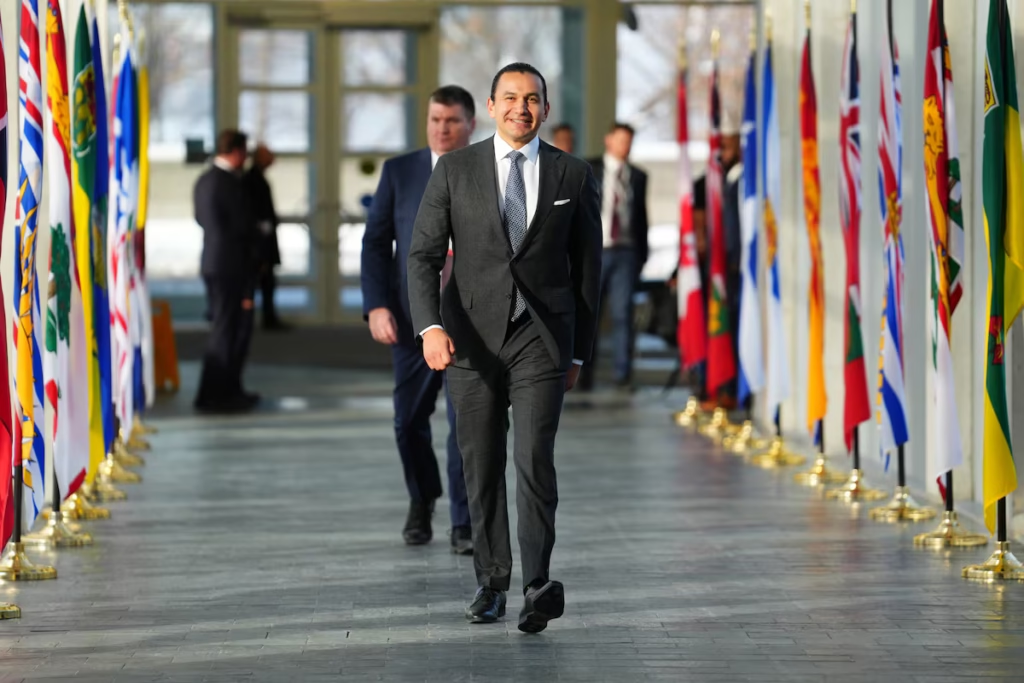
Manitoba politics entered a decisive new chapter today as Premier Wab Kinew stepped before the cameras for what many analysts are calling the most consequential policy briefing of his tenure. As Canada’s first First Nations premier, every announcement Kinew makes carries historical weight, but today’s address went far beyond symbolism.
Whether you live in Winnipeg, Brandon, or a rural community up north, this press conference directly affects your pocketbook, your access to healthcare, and your community’s future. Here is everything you need to know about the policy update that has Manitobans talking.
—
Why the Premier Called This Press Conference Now
The Kinew government has been quietly laying groundwork for several months. Today’s address was not a reaction to a crisis but rather a strategic unveiling of policy packages that have been in development since the last legislative session.
The timing is deliberate. With winter approaching and budget season on the horizon, the Premier used this moment to set expectations for the months ahead. His message was consistent: Manitoba is moving toward a more inclusive, economically resilient future, and these policies are the first major bricks in that foundation.
Observers noted the absence of partisan attacks in the delivery. Instead, Kinew focused on data, community impact, and long-term sustainability—a tone that resonated with both supporters and skeptics in the room.
Three Key Policy Pillars Announced Today
The Premier structured his announcement around three interconnected priorities. Each addresses a longstanding pain point for Manitobans while offering a clear departure from previous administrations’ approaches.
1. Economic Development with Indigenous Partnerships at the Core
Perhaps the most significant shift came in economic policy. Kinew announced a new framework designed to fast-track joint ventures between the provincial government and Indigenous communities. This is not a minor tweak—it represents a fundamental rethinking of how Manitoba does business.
Key elements include:
- Tax incentives for companies that form equity partnerships with First Nations and Métis organizations
- A new Indigenous Procurement Preference for major infrastructure contracts
- Dedicated funding for Indigenous-led small business incubators in rural and northern regions
- A streamlined approval process for resource development projects that include community benefit agreements
The Premier emphasized that this approach isn’t just about fairness—it’s about smart economics. “When we unlock the full potential of every community, Manitoba competes better nationally,” Kinew stated. Early estimates suggest this could create thousands of new jobs over the next five years, particularly in underdeveloped regions.
2. Healthcare Access Gets a Rural-Urban Balance
Healthcare has been a persistent challenge across Manitoba, but rural residents have felt the strain most acutely. Today’s announcement directly targets that disparity.
The Premier outlined a $150 million investment package focused on:
- Expanding telehealth services to connect remote communities with Winnipeg specialists
- Building or upgrading five rural health centres over the next two years
- A new mental health crisis response program available 24/7 across the province
- Recruitment bonuses for nurses and nurse practitioners willing to work in underserved areas
Crucially, this is not just a spending announcement. Kinew also detailed administrative reforms designed to reduce wait times for elective surgeries and diagnostic imaging. The goal is to bring Manitoba’s healthcare wait times in line with the national average within 18 months—an ambitious but measurable target.
3. Infrastructure Preparedness for Harsh Winters
With snow already falling in parts of the province, infrastructure announcements were particularly timely. The Premier committed to a multi-year winter road maintenance strategy that goes beyond the usual annual planning.
Highlights include:
- Pre-positioning of emergency supplies and equipment in northern depots before December
- Expanded public transit routes in Winnipeg’s growing suburbs
- Grants for municipalities to repair aging water and sewer systems before spring thaw
- A pilot program for heated road surfaces at key intersections in high-traffic zones
The infrastructure component is designed to do double duty: improve daily life while also creating construction jobs during a traditionally slow season.
Why This Matters for Every Manitoban
Policy announcements can sometimes feel disconnected from daily reality. This one is different. The changes announced today will ripple through multiple aspects of life in Manitoba.
For families: Better rural healthcare access means shorter drives for emergencies. The mental health initiative aims to reduce wait times for counseling services, which have been a major concern since the pandemic.
For job seekers: The economic partnership model opens up opportunities in sectors like mining, forestry, and clean energy that have historically excluded Indigenous workers and small businesses.
For small business owners: The procurement changes mean more local companies can compete for government contracts. The incubator programs target entrepreneurs who have struggled to access traditional bank funding.
For northern communities: Winter road reliability is not a convenience issue—it is a safety and supply chain necessity. The new maintenance strategy directly addresses isolation during harsh weather months.
Early Reactions and What Comes Next
Reaction from political opponents has been measured so far. Some have questioned whether the announced funding is new money or reallocated from existing programs. Others have called for more detail on timelines.
However, community leaders have largely praised the direction. The Assembly of Manitoba Chiefs issued a statement calling the economic partnership framework “a historic step toward economic reconciliation.” Business groups have expressed cautious optimism, noting that implementation will matter more than promises.
The Premier acknowledged that these policies will not transform Manitoba overnight. He stressed that today’s announcements are the first phase of a longer-term strategy. “This is not a one-time press conference,” Kinew said. “This is the beginning of sustained, accountable progress.”
Looking Ahead
Manitoba is at a crossroads. The Kinew government has chosen to lean into collaboration, inclusivity, and targeted investment rather than austerity or status quo management.
Whether these policies succeed will depend on execution. But for today, Manitobans have a clearer picture of where their province is heading. The Premier’s vision combines economic pragmatism with social equity, and the early signs suggest this approach could become a model for other provinces facing similar challenges.
Keep an eye on the next legislative session, where these proposals will face their first real test. For now, Manitoba is watching—and listening—more closely than ever.