
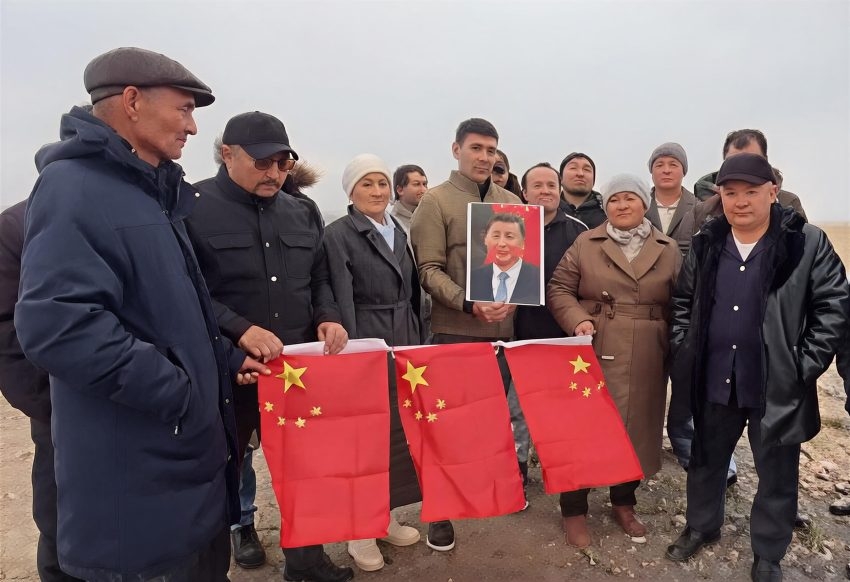
Kazakhstan Sentences 19 Protesters Over China’s Xinjiang Policies
In a move highlighting the complex geopolitical tightrope walked by Central Asian nations, a court in Kazakhstan has sentenced 19 individuals to lengthy prison terms for their involvement in a protest against China’s policies in the Xinjiang region. The verdict, delivered in April 2026, underscores the severe domestic consequences for activism perceived as challenging the interests of Astana’s powerful neighbor, China.
This case has drawn international attention, not only for its connection to the sensitive issue of Xinjiang but also for what it reveals about the limits of dissent in Kazakhstan, a country navigating its relationships with both global powers and its own citizenry.
The Protest and the Charges
The protest at the center of this legal storm took place in front of the Chinese consulate in Almaty, Kazakhstan’s largest city. Demonstrators, primarily ethnic Kazakhs and Uyghurs, gathered to voice their opposition to China’s treatment of Muslim minorities in the Xinjiang Uyghur Autonomous Region (XUAR).
Chinese authorities have long been accused by Western governments and human rights organizations of committing severe human rights abuses in Xinjiang, including the mass detention of Uyghurs and other Turkic minorities in so-called “vocational training centers,” forced labor, and cultural erasure. China vehemently denies all accusations, stating its policies in Xinjiang are necessary for counter-terrorism and economic development.
The Kazakh protesters were subsequently charged under the country’s strict laws concerning the organization of and participation in unsanctioned public assemblies. However, the prosecution’s case took a more serious turn, with authorities alleging the activists’ actions “incited ethnic hatred” and threatened “social harmony.”
The Court’s Verdict and Its Implications
After a closely watched trial, the court handed down sentences ranging from substantial prison terms to restricted freedom for the 19 defendants. The harshness of the sentences sent a clear message about the state’s stance on such forms of protest.
Geopolitical Pressure and Domestic Law
Analysts point to the significant geopolitical dimension of this case. Kazakhstan shares a long border with China’s Xinjiang region and is a key partner in Beijing’s massive Belt and Road Initiative (BRI). Maintaining stable and positive relations with China is a cornerstone of Kazakh foreign policy.
This sentencing is widely seen as an effort by Astana to demonstrate its reliability as a partner to Beijing, assuring China that it will not allow its territory to be used as a platform for criticism of Chinese internal affairs. For Kazakhstan, balancing its economic and strategic ties with China against its own constitutional commitments to civil liberties presents an ongoing challenge.
A Chilling Effect on Civil Society
Beyond international relations, the case has profound implications for civil society within Kazakhstan. Human rights groups within the country and abroad have condemned the sentences, warning of a chilling effect on freedom of expression and assembly.
*
- Activists fear that any criticism of neighboring governments, particularly on sensitive issues, could now be met with severe legal repercussions.
*
- The use of charges like “inciting ethnic hatred” sets a dangerous precedent for silencing dissent under a broad and subjective legal framework.
*
- For the ethnic Kazakh and Uyghur diaspora in Kazakhstan, the verdict is a blow to their ability to advocate for kinfolk across the border.
The Xinjiang Context: A Persistent Global Flashpoint
To understand the weight of this Kazakh court decision, one must appreciate the global controversy surrounding Xinjiang. The region, home to millions of Uyghurs, has been the subject of intense scrutiny for nearly a decade.
China’s establishment of vast internment camps, documented via satellite imagery and survivor testimonies, led to the U.S. and several other countries declaring China’s actions a “genocide” and “crimes against humanity.” In response, China has launched a global campaign to counter this narrative, promoting stories of Xinjiang’s development and stability.
The protest in Almaty was a direct manifestation of this global dispute landing on Kazakhstan’s doorstep. The defendants became casualties in a wider informational and diplomatic war between China and the West.
Regional Repercussions in Central Asia
Kazakhstan is not alone among Central Asian republics in facing this dilemma. Other nations in the region, such as Kyrgyzstan, Uzbekistan, and Tajikistan, also have historical, cultural, and ethnic links to populations in Xinjiang. They are all significant recipients of Chinese investment and are integral to BRI logistics corridors.
The Kazakh sentencing sets a potential benchmark for how other Central Asian governments may handle similar protests. It signals that, despite any private concerns, public criticism of China’s Xinjiang policy is likely to be suppressed to preserve economic and political ties. This reality places diaspora communities and human rights advocates across the region in a increasingly precarious position.
Looking Ahead: Sovereignty and Human Rights
The imprisonment of these 19 protesters raises critical questions about national sovereignty and the universality of human rights.
*
- Where does a country draw the line between respecting the internal affairs of a powerful neighbor and upholding its own citizens’ rights to peaceful protest?
*
- Can economic interdependence come at the cost of stifling fundamental freedoms?
*
- How will the Kazakh public, which has shown increased civic activism in recent years, respond to this assertion of state power?
While the Kazakh government likely views the sentences as a necessary step to ensure stability and maintain a crucial international relationship, the long-term costs to its democratic credentials and social cohesion remain to be seen.
The final chapter of this story is yet to be written. Appeals are expected, and international pressure on Astana may continue. However, the “Almaty 19” have become symbols of the complex and often painful choices faced by nations caught between powerful allies and the principles of free expression. Their case is a stark reminder that in today’s interconnected world, a protest in one country can quickly become a geopolitical flashpoint, with life-altering consequences for those who dare to speak out.

