
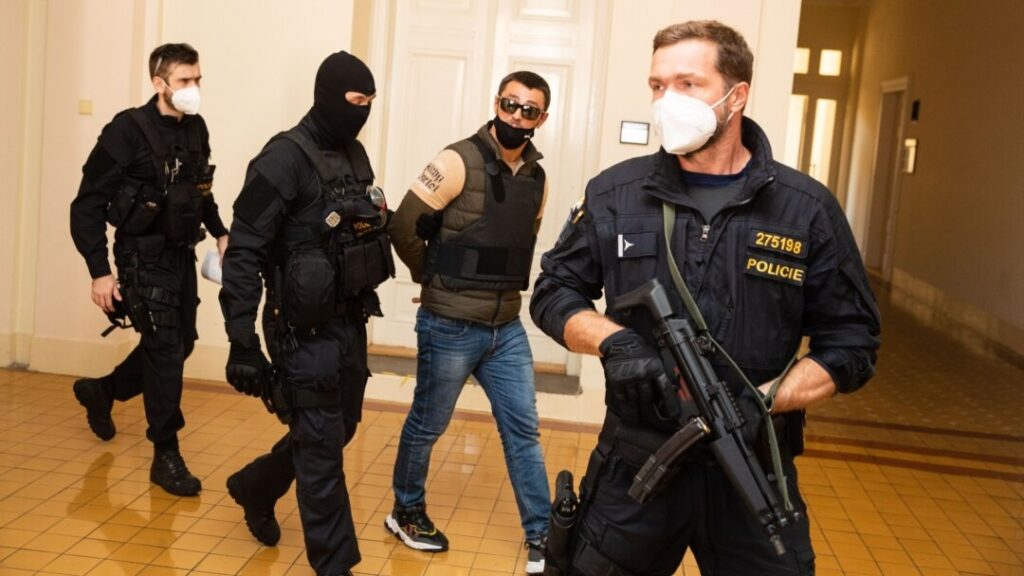
Czech Police Arrest Suspect in Prague Russian Center Bombing Claim
In a swift and decisive operation, Czech police have apprehended a man who publicly claimed responsibility for a recent attack on a Russian cultural and diplomatic center in Prague. The arrest underscores the heightened tensions across Europe linked to the war in Ukraine and the challenges authorities face in monitoring potential acts of politically motivated violence on their soil. The incident, targeting the Russian House in Prague, has sent ripples through the international community, raising questions about security, propaganda, and the spillover effects of the ongoing conflict.
The Incident: An Explosion at the Russian House
The event that triggered this arrest occurred earlier this week at the Russian House (Russky Dom), a complex that houses the Russian embassy’s consular section as well as cultural and educational offices run by the Russian federal agency Rossotrudnichestvo. According to police reports, an explosive device was detonated on the building’s exterior, causing significant material damage to windows and the facade but, crucially, resulting in no injuries.
The attack was not immediately claimed by any group. However, the situation escalated when a man, whose identity has not been officially released, began publicly asserting his involvement. Czech police, having already launched a detailed investigation into the bombing, quickly identified the individual making the claims. The suspect was arrested on suspicion of committing a particularly serious crime of terrorism, a charge that carries a potential prison sentence of up to 20 years.
The Arrest and Investigation Details
Czech law enforcement moved rapidly following the suspect’s claims. The arrest was carried out without incident, and investigators are now piecing together the evidence. Key focuses of the probe include:
- Verifying the suspect’s actual involvement: Police are working to confirm whether the arrested man was indeed the perpetrator or if his public claim was an attempt to take credit for an act committed by others.
- Analyzing the explosive device: Forensic experts are examining the remnants of the device to determine its sophistication, origin, and potential links to other incidents.
- Investigating motives and potential connections: Authorities are delving into the suspect’s background, online activity, and any possible ties to larger networks or ideological groups opposed to the Russian state.
- Assessing the broader security threat: The investigation will evaluate whether this was an isolated act or indicative of a wider trend of targeted violence against diplomatic premises in the Czech Republic.
The Czech Interior Minister, Vit Rakusan, emphasized that “such violent acts have no place in a democratic society” and assured the public that police were taking all necessary measures. The Russian embassy in Prague has been notified of the arrest and has reportedly called for a thorough investigation.
Geopolitical Context: A Tense European Landscape
This incident cannot be viewed in isolation. Since Russia’s full-scale invasion of Ukraine in February 2022, European nations have been on high alert for espionage, sabotage, and politically motivated attacks. The Czech Republic, a staunch supporter of Ukraine, has taken a firm stance against Russian aggression, which has undoubtedly strained bilateral relations.
The Russian House in Prague, like similar centers across Europe, has found itself in a contentious position. While officially promoting cultural exchange, critics accuse these institutions of being vehicles for Russian propaganda and influence operations. This perception has made them potential flashpoints for protest and, in this extreme case, violence.
History of Tensions in Czech-Russian Relations
The relationship between Prague and Moscow has a long and complicated history, marked by the 1968 Warsaw Pact invasion and decades of Soviet domination. In recent years, disputes have flared over:
- The 2021 expulsion of dozens of Russian diplomats from Prague after a massive ammunition depot explosion in 2014 was linked to Russian intelligence.
- Czechia’s provision of heavy military equipment and unwavering political support to Ukraine.
- The inclusion of the Czech Republic in NATO’s enhanced forward presence and security initiatives.
This historical and contemporary friction forms the volatile backdrop against which the attack on the Russian House occurred.
Broader Implications for Security and Diplomacy
The Prague bombing claim and subsequent arrest highlight several critical issues for European security:
- Protection of Diplomatic Missions: Nations have a fundamental obligation under the Vienna Convention to protect foreign diplomatic premises. This attack will force a review of security protocols around such buildings.
- Monitoring of Domestic Extremism: It underscores the need for vigilant monitoring of individuals who may be radicalized by international events to commit violence at home.
- The Risk of Escalatory Cycles: There is a palpable fear that attacks on Russian property could provoke retaliatory actions against Western facilities elsewhere, creating a dangerous cycle of violence.
- Freedom of Expression vs. Incitement: The case will likely fuel debates about where political protest ends and criminal incitement or preparation for violence begins.
For the Czech government, the immediate priority is a transparent and legally sound judicial process. How this case is handled will send a strong message about the rule of law and the state’s monopoly on the use of force.
Conclusion: A Test for Czech Justice and European Stability
The arrest of the suspect in the Prague Russian center case is a first step, but many questions remain unanswered. As the investigation proceeds, it will be crucial to determine whether this was the act of a lone individual or part of a more concerning pattern. The Czech police have demonstrated their capability to respond quickly to such threats.
Ultimately, this incident serves as a stark reminder that the war in Ukraine has tangible security consequences far beyond the battlefield. It tests the resilience of European democracies, their ability to safeguard diplomatic norms, and their commitment to confronting violence without compromising the very freedoms they seek to protect. The world will be watching as Czech authorities navigate this complex and sensitive case in the weeks and months to come.

