Russia’s Oreshnik Missile Strikes in Ukraine: What You Need to Know
Russia has now fired the Oreshnik ballistic missile at Ukraine three times.
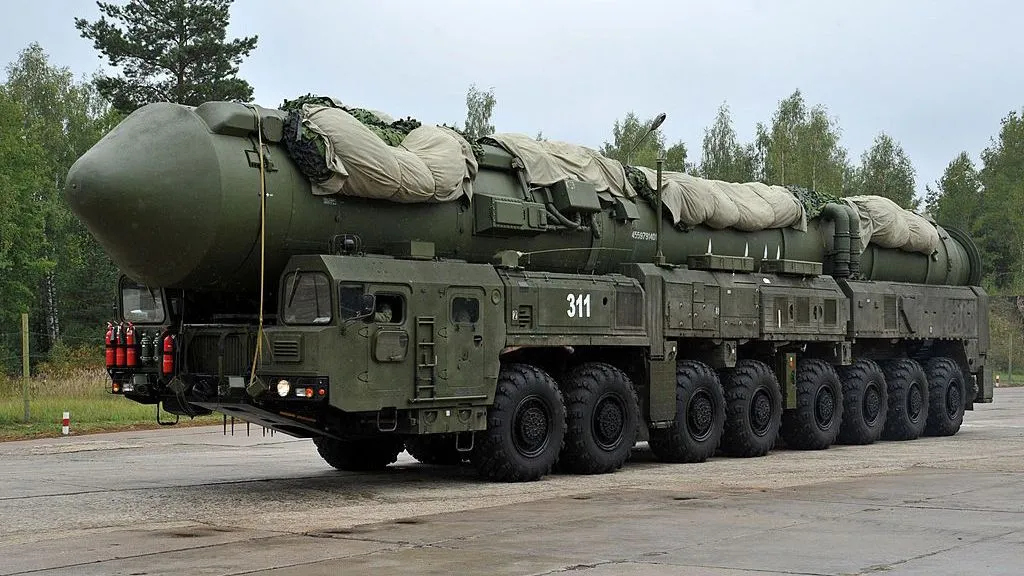
The weapon is nuclear-capable. It travels faster than any air defense system in Ukraine can track. And it carries multiple warheads that split apart before impact.
This is not speculation. This is what the data shows.
What Exactly Is the Oreshnik?
The name comes from the Russian word for hazel shrub. The weapon itself is far less subtle.
The Oreshnik is an intermediate-range ballistic missile (IRBM) derived from Russia’s RS-26 Rubezh program, which dates back to testing cycles that began in 2011. Russia officially initiated development of the Oreshnik variant based on a direct order from President Putin in July 2023.
Here is what makes it distinct from other Russian missiles used in Ukraine:
- Speed: Exceeds Mach 10, roughly 12,300 km/h
- Range: Over 3,000 kilometers, covering all of Europe from Russian launch sites
- Warhead type: MIRV configuration — multiple independently targetable reentry vehicles
- Payload: Up to six reentry vehicles, each potentially carrying six submunitions
- Trajectory: Flies through the upper atmosphere, outside the reach of standard radar
That last point matters most for your understanding of the air defense problem. Ukraine’s existing systems, including Patriot batteries, are not designed to intercept targets moving at these altitudes and speeds.
The Three Strikes: Where, When, and Why
Strike 1 — Dnipro, November 21, 2024
Russia launched the Oreshnik from the Kapustin Yar testing range, covering roughly 800 kilometers in approximately 15 minutes. The MIRV bus released six warheads over a manufacturing plant.
Defense analysts at CSIS noted this was likely the first time a MIRV-equipped missile had been used in combat in the history of warfare.
Damage at the impact site was limited. Ukrainian officials and AFP journalists confirmed a roof was blown off and trees were scorched. The evidence suggested dummy warheads. Russia’s Defense Ministry framed the launch as retaliation for Ukrainian strikes on Russian territory using Western-supplied missiles.
Strike 2 — Lviv Oblast, January 9, 2026
The second Oreshnik strike traveled roughly 1,448 kilometers from Kapustin Yar to western Ukraine, again arriving in under 15 minutes. Russia targeted what Ukrainian officials described as a state enterprise facility.
Kyiv labeled the attack a direct threat to European security, given the strike’s proximity to the EU and NATO borders. Ukrainian debris analysis again pointed to inert warheads.
Tom Karako, director of the Missile Defense Project at CSIS, put it plainly: the system was designed for nuclear payloads. Using it with conventional warheads sends a message to NATO, not just Ukraine.
Strike 3 — Bila Tserkva, Kyiv Oblast, May 24, 2026
The most recent strike targeted Bila Tserkva, a town in greater Kyiv Oblast. This marked the first time the Oreshnik was directed at the capital region.
At least two people were killed and over 80 injured in the broader overnight attack that included drones and other missiles. Several districts across Kyiv suffered damage.
EU foreign policy chief Kaja Kallas described the use of the Oreshnik as political intimidation and reckless nuclear brinkmanship.
Why Ukraine Cannot Intercept It
You might ask: if Western allies have supplied Ukraine with advanced air defenses, why can’t they stop this weapon?
The answer lies in physics and altitude, not politics.
The Oreshnik travels through the stratosphere during most of its flight path. Standard air defense radar systems are optimized for lower-altitude threats. By the time the MIRV bus separates and releases its individual warheads, the terminal velocity exceeds what Patriot batteries are rated to intercept.
Analysts at the Polish Institute of International Affairs confirmed after the first Dnipro strike that the warheads did not perform evasive maneuvers typical of true hypersonic glide vehicles. They re-enter the atmosphere ballistically at hypersonic speeds. That distinction matters: the interception problem is not about maneuverability. It is about speed and altitude combined.
Israel’s Arrow 3 system is one of the few platforms assessed as capable of engaging this type of threat. Ukraine does not have Arrow 3.
What Russia Gets From Using It
The military value of three strikes with dummy or inert warheads is not battlefield destruction. The message is escalation signaling.
Consider the pattern:
- Strike 1 followed Ukraine using Western long-range missiles inside Russia
- Strike 2 followed an alleged Ukrainian drone attack on Putin’s residence
- Strike 3 arrived during a period of ongoing ceasefire pressure and NATO debate
Each launch demonstrates that Russia can reach any point in Ukraine, and by extension, much of Europe, with a weapon current allied air defenses cannot stop. Putin confirmed in November 2025 that Russia had begun serial production of the Oreshnik. Belarus also received a deployment in December 2025, placing the system approximately five kilometers from the Russian-Belarusian border.
The range from Belarus extends the coverage arc westward. From that position, the missile can reach targets across Central Europe.
What This Means for Air Defense Planning
Defense planners watching this conflict need to absorb a specific lesson.
The Oreshnik is not a one-off experimental weapon. Serial production is confirmed. Deployment to a second country is confirmed. Three combat uses in under 18 months are confirmed.
Here is what you should pay attention to going forward:
- Russia has used this missile only with conventional or inert warheads so far
- Each strike has been framed as retaliation for a specific Ukrainian or Western action
- The choice of targets has escalated geographically, moving from Dnipro to Lviv to Kyiv Oblast
The escalation ladder is visible. Each rung corresponds to a perceived provocation.
Whether NATO allies accelerate delivery of longer-range interception systems to Ukraine, or whether diplomatic channels produce a ceasefire before the next launch, that ladder does not disappear. The weapon exists. It is in production. It is deployed in two countries.
The Core Question You Should Be Asking
The Oreshnik has struck Ukraine three times with warheads that caused minimal physical damage. That is a deliberate choice, not a capability gap.
So what happens when Russia decides the message is not being received?
The weapon exists on a spectrum from inert demonstration to full conventional strike to nuclear delivery. Russia has so far used the lowest end of that spectrum. The design, the deployment, and the production timeline all point to a system Russia intends to keep using.
What changes the calculation is not the missile. It is the decision-making behind each launch order.
That is the variable no radar system can track.