Canada’s Finance Minister Seeks Deeper Trade Partnerships in China Visit
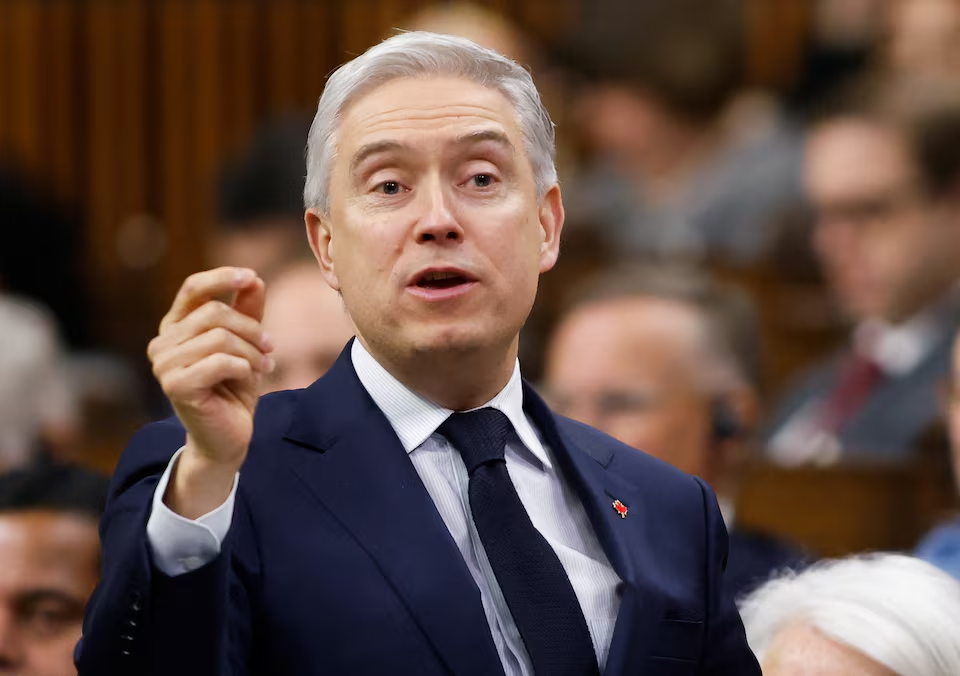
Canada’s Finance Minister, Chrystia Freeland, recently concluded a significant visit to China, marking a pivotal moment in the ongoing economic dialogue between the two nations. The trip, centered on the 10th Canada-China Economic and Financial Strategic Dialogue, underscores a concerted effort to stabilize and deepen a complex trade relationship. Amidst global economic headwinds and geopolitical tensions, this high-level engagement signals a pragmatic push for collaboration in areas of mutual interest, even as fundamental disagreements persist.
Navigating a Complex Economic Relationship
The Canada-China economic partnership is one of both substantial opportunity and notable friction. China remains one of Canada’s top trading partners, with bilateral trade in goods reaching nearly $100 billion in recent years. Key Canadian exports like canola, pulses, and lumber flow east, while a vast array of manufactured goods imports from China fill Canadian stores. However, the relationship has been strained by a series of diplomatic disputes, concerns over foreign interference, and a broader global re-evaluation of supply chain dependencies.
Minister Freeland’s visit, therefore, walked a delicate line. The official agenda focused on constructive economic diplomacy, aiming to foster dialogue on issues like sustainable finance, cross-border investment, and trade facilitation. This approach reflects a Canadian strategy of “de-risking, not decoupling,” a phrase echoed by many Western nations seeking to maintain economic ties while safeguarding national security and economic resilience.
Key Objectives and Discussions in Beijing
The strategic dialogue in Beijing covered a broad spectrum of economic issues. Reports from the meetings highlight several core areas of focus:
- Trade Diversification and Market Access: A primary goal for Canada was to advocate for its exporters, particularly in the agricultural sector. Discussions likely addressed longstanding market barriers and non-tariff obstacles that Canadian businesses face in the Chinese market.
- Collaboration on Green Transition: Both nations have ambitious climate goals. The dialogue explored potential for partnership in sustainable finance and clean technology, areas where Canadian innovation and Chinese manufacturing scale could align.
- Economic Stability and Transparency: In an uncertain global economy, the talks emphasized the importance of predictable rules and transparent practices to underpin bilateral investment and financial flows.
Behind the scenes, it is understood that Minister Freeland also raised pointed concerns on behalf of Canada. These difficult conversations are an integral part of managing the totality of the relationship, even while seeking progress on shared economic interests.
The Broader Context: Global Shifts and Domestic Pressures
This ministerial visit did not occur in a vacuum. It comes at a time of significant transformation in international trade dynamics. The pandemic exposed vulnerabilities in extended supply chains, prompting companies and governments to prioritize resilience and “friend-shoring.” Simultaneously, geopolitical rivalries have made economic interdependence a source of strategic scrutiny.
For Canada, this creates a multi-faceted challenge. The economic benefits of the Chinese market are tangible, yet there is growing public and political wariness. The Canadian government faces pressure to take a firm stance on human rights and foreign interference while also delivering economic prosperity for its industries. Freeland’s mission was to advance a nuanced policy that acknowledges this duality—promoting Canadian business interests without compromising on core values.
What This Means for Canadian Businesses
For exporters, investors, and entrepreneurs, the outcomes of this dialogue have real-world implications. A stabilized and more predictable trading environment with China can offer significant opportunities.
- Agricultural Sector: Any progress on resolving phytosanitary disputes or streamlining customs processes would be a direct boon for Canadian farmers.
- Clean Tech and Natural Resources: Partnerships in critical minerals, hydrogen, or carbon capture could unlock new avenues for growth, provided frameworks for trust and intellectual property protection are strengthened.
- A Word of Caution: Businesses are also reminded of the inherent complexities. The visit reinforces the need for robust risk management strategies, diversification of markets, and a deep understanding of the evolving regulatory and political landscape in both countries.
The message for the private sector is one of cautious engagement. The government is working to open doors and smooth pathways, but the onus remains on companies to conduct thorough due diligence.
Looking Ahead: The Path Forward for Canada-China Trade
Minister Chrystia Freeland’s trip to China is best viewed not as a reset, but as a necessary step in diligent, long-term relationship management. It reflects a mature approach to international economics where dialogue continues even amidst disagreement. The success of this engagement will not be measured by immediate, sweeping deals, but by whether it leads to:
- Concrete steps to resolve specific trade irritants.
- Enhanced communication channels to prevent minor issues from escalating.
- Clearer pathways for collaboration in sectors aligned with both nations’ future-oriented goals, like the green economy.
The road ahead remains complex. Fundamental differences in governance and values will continue to create friction. However, in a world facing shared challenges like climate change and economic instability, maintaining open lines of communication on economic matters is a pragmatic necessity.
A Balanced Approach in an Uncertain World
Ultimately, Canada’s strategy, as evidenced by this visit, seeks a difficult balance. It is an effort to secure economic opportunity while managing strategic risk. The government is signaling that it will not retreat from global engagement with major economies like China, but will do so with clear eyes and a firm stance on issues of principle.
For Canadians, this means a trade policy that aims to protect and create jobs at home while navigating the treacherous waters of 21st-century geopolitics. The deeper trade partnerships Minister Freeland seeks will be built slowly, on a foundation of mutual benefit and clear-eyed realism. The recent dialogue in Beijing was a chapter in that ongoing story, highlighting both the enduring importance and the profound difficulties of one of Canada’s most critical economic relationships. The world will be watching to see what chapters follow.