
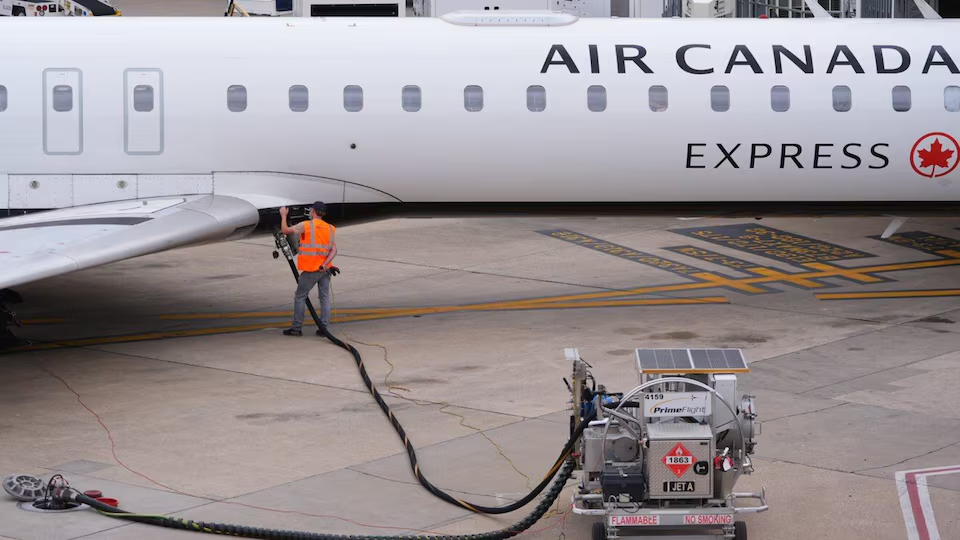
Air Canada Halts JFK Routes as Soaring Fuel Costs Bite
In a dramatic decision that reshapes the landscape of cross-border travel, Air Canada has pulled the plug on all of its services to New York’s John F. Kennedy International Airport (JFK). The airline points directly to crippling jet fuel prices as the reason for this indefinite suspension, marking a retreat from one of the most competitive and prestigious airports in the world. This move is more than a simple schedule change; it’s a stark signal of the intense economic pressures squeezing airline profitability and forcing hard choices about where they fly.
The suspension is effective immediately, cancelling multiple daily flights that connected JFK with major Canadian hubs like Toronto (YYZ) and Montreal (YUL). For passengers, the immediate effect is one less option for direct service to New York’s premier international gateway, a reduction in competition that could lead to higher fares on remaining airlines. The decision underscores how global economic forces can directly alter travel plans and consumer choice overnight.
The Fuel Price Crisis: Why JFK Flights Are No Longer Viable
Air Canada’s statement highlights a “perfect storm” of factors making the JFK route financially unsustainable. But what does that actually mean for an airline’s bottom line?
Jet fuel is typically an airline’s single largest operational expense, often accounting for 20-30% of total costs. Recent months have seen prices surge due to a combination of geopolitical instability, constrained refinery output, and high global demand. For a route like Toronto-JFK, the math becomes particularly challenging.
JFK is primarily a long-haul international airport. This operational reality often requires shorter-haul carriers to employ a practice called “tankering”—carrying extra fuel for the return trip to avoid purchasing more expensive fuel at the destination. On a transborder flight, this added weight burns additional fuel, creating a costly cycle. When fuel prices spike, these thinner-margin, shorter routes are often the first to be scrutinized and cut, as airlines funnel their resources and aircraft into more lucrative long-haul or hub-strengthening operations.
A Ripple Effect Across the Airline Network
This decision isn’t made in isolation. Airlines like Air Canada constantly analyze their entire network. The aircraft and crew used on the suspended JFK routes will almost certainly be redeployed to more profitable markets. This could mean adding frequency to sun destinations, strengthening the hub at Newark, or servicing other transborder cities with stronger yield. The suspension is a clear example of strategic capacity discipline in action.
Immediate Impact: What Air Canada Passengers Need to Know
If you have a booked ticket for an Air Canada flight to or from JFK, the airline is taking steps to accommodate you. Understanding your options is key to avoiding travel disruption.
Primary Rebooking Strategy: Air Canada is automatically rebooking most affected passengers on its extensive network of flights to New York’s other major airports:
- Newark Liberty International Airport (EWR): This is Air Canada’s primary New York-area hub, thanks to its joint venture partnership with United Airlines. Most passengers will likely be re-routed here, offering continued connectivity to United’s vast U.S. and international network.
- LaGuardia Airport (LGA): Primarily a domestic and short-haul airport, LGA may be an alternative for some passengers, though it offers fewer international connections.
Action Steps for Affected Travelers
The airline has stated it is contacting customers directly. To ensure a smooth transition, you should:
- Check your email and the Air Canada app meticulously for updated itinerary notifications.
- Review your new itinerary carefully. Consider if the alternative airport (EWR or LGA) works for your travel plans. Newark, while in New Jersey, has excellent train connections to Manhattan, but travel times differ from JFK.
- Contact Air Canada directly if the proposed alternative is unsuitable. You may be able to request a different routing, a refund, or a travel credit, depending on the fare rules of your ticket.
- Consider the broader travel chain. If you had parking, hotel shuttles, or meetings arranged based on JFK, you’ll need to update those plans.
This situation also serves as a reminder for all future bookings: comprehensive travel insurance that covers airline schedule changes can provide valuable peace of mind in an era of industry volatility.
The Bigger Picture: What Air Canada’s Exit Means for the Market
Air Canada’s withdrawal from JFK creates a noticeable vacuum in the Canada-New York air travel corridor. This has several potential implications for the competitive landscape and passenger choice.
First, with one major competitor gone, remaining carriers like Delta Air Lines (which operates a significant hub at JFK) and American Airlines may face less pressure on pricing, at least in the short term. However, nature and commerce abhor a vacuum. This could present an opportunity for other airlines to step in. Could we see a carrier like Porter Airlines, with its new fleet of Embraer E195-E2 jets, consider a Toronto-Billy Bishop to JFK route? Or will WestJet expand its presence?
Second, it strengthens the strategic position of Newark (EWR) as the dominant Canadian airline hub for the New York region. Air Canada’s deep partnership with United at Newark now becomes its exclusive play in the market, potentially funneling more connecting traffic through that airport. This could make Newark an even more important gateway for travelers heading from Canada to points across the United States and beyond.
A Sign of the Times in the Airline Industry
This move is part of a broader trend of network simplification and optimization. Post-pandemic, airlines are laser-focused on profitability and are not afraid to exit historically prestigious but underperforming routes. It reflects a mature, data-driven approach to network planning where every route must justify its existence financially, not just by its brand prestige. The era of flying somewhere “just to have a presence” is largely over.
Navigating the New Normal of Air Travel
For the savvy traveler, Air Canada’s suspension is a lesson in adaptability. The direct route you’ve always taken may not always be available, as external economic shocks reshape airline networks in real-time.
Here are strategies to consider in this environment:
- Embrace Airport Flexibility: When searching for flights to major metropolitan areas like New York, London, or Paris, always compare all available airports. A slightly longer ground transfer could result in significant savings or better flight times.
- Monitor Fuel Surcharges and Fare Trends: Be aware that high fuel costs don’t just cause route cancellations; they are also baked into fares through fuel surcharges and higher base tickets.
- Leverage Alliance and Partnership Networks: Understanding which airlines are partners (like Air Canada and United) can help you find alternative routings when your primary choice is unavailable.
- Book with Flexibility in Mind: Where possible, opt for fare classes that allow changes or cancellations, especially when booking far in advance in an unpredictable climate.
Conclusion: A High-Profile Casualty of Economic Reality
Air Canada’s suspension of JFK service is a high-profile casualty of today’s challenging economic reality. It demonstrates in stark terms how macroeconomics—a barrel of oil, a geopolitical conflict, a supply chain knot—translates directly into micro-decisions that affect where we can fly and with whom.
While inconvenient for loyal Air Canada flyers who preferred JFK, this decision is a rational business move for the airline. It reinforces a fundamental shift in the industry towards ruthless efficiency and strategic focus. For travelers, the message is clear: the map of air travel is not static. Flexibility, awareness, and a willingness to explore all your options have never been more critical skills for navigating the skies. The path to your destination may just involve a different airport than you initially planned.

