
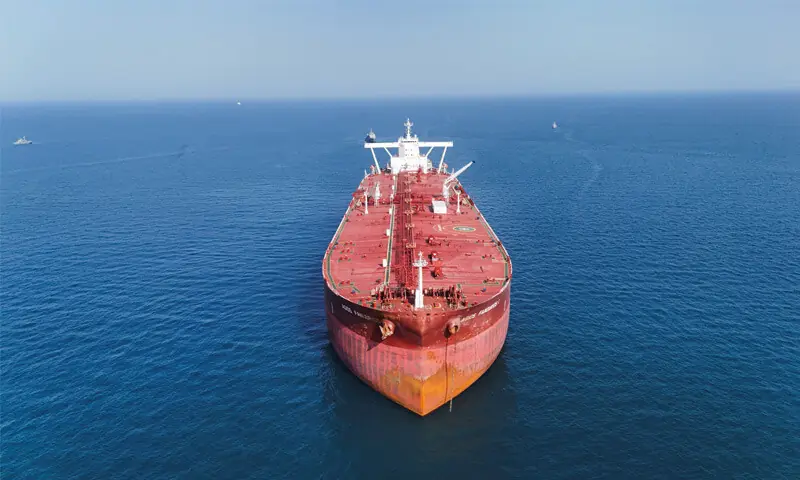
Trump’s Blockade Defiant as Iran Reopens Strait of Hormuz
In a dramatic sequence of statements that has reignited global tensions, the strategic waters of the Persian Gulf have become the latest stage for a high-stakes geopolitical showdown. Iran’s recent announcement to reopen the Strait of Hormuz for international shipping was almost instantly countered by a firm declaration from former U.S. President Donald Trump, who vowed that a stringent blockade on Iranian vessels and ports would remain in full force. This clash of proclamations creates a paradoxical and perilous situation for global trade, energy markets, and maritime security, underscoring a standoff with no clear end in sight.
The Lifeline of Global Energy: Why the Strait of Hormuz Matters
To understand the magnitude of this confrontation, one must first grasp the critical role of the Strait of Hormuz. This narrow sea passage, nestled between Iran and Oman, is arguably the most important maritime chokepoint on the planet.
Consider these staggering facts:
- Approximately 20-21% of global petroleum consumption flows through the Strait.
- It facilitates nearly one-third of the world’s liquefied natural gas (LNG) trade.
- At its narrowest point, the shipping lanes are only about 21 miles wide, creating a vulnerable funnel for tanker traffic.
For decades, control over this waterway has been a primary strategic lever for Iran, offering a powerful card to play in regional and international disputes. For the United States and its allies, ensuring its uninterrupted flow is a matter of global economic security. This inherent tension makes the Strait a perpetual flashpoint, where political posturing can quickly escalate into real-world disruption.
A Calculated Move: Iran’s Decision to Reopen
Iran’s announcement to reopen the Strait was likely a multi-faceted tactical decision, rather than a simple concession.
Projecting Sovereignty and Normalcy
By reopening the waterway, Iranian authorities aim to project an image of control and stability. The message is clear: Tehran, not external powers, dictates the terms of navigation in what it considers its territorial vicinity. This plays well domestically, reinforcing the regime’s narrative of strength and resilience against foreign pressure.
Alleviating Domestic Economic Pressure
Despite the U.S. blockade, maintaining some level of normalized shipping activity is crucial for Iran’s crippled economy. Allowing international traffic—even if complicated by sanctions—helps to slightly ease the tremendous economic isolation caused by years of maximum pressure campaigns. It keeps channels partially open for trade with non-aligned nations and provides a sliver of economic oxygen.
A Diplomatic Signal
The reopening can also be interpreted as a signal to the international community, suggesting Iran’s willingness to de-escalate, at least superficially. It places the onus of continued disruption back onto Washington, framing the U.S. as the recalcitrant party obstructing free navigation.
The Unyielding Stance: Trump’s Sustained Blockade
The response from Donald Trump was swift and unequivocal, leaving no room for ambiguity. The declaration that the blockade will continue is a direct extension of the “maximum pressure” doctrine that defined his administration’s approach to Iran.
The Goals of the Blockade
This policy is designed to achieve several key objectives:
- Strangle Iran’s Economy: By cutting off oil exports and restricting port access, the U.S. aims to deprive the Iranian regime of its vital financial lifeblood, thereby curbing its ability to fund regional proxy groups and its military programs.
- Force Diplomatic Concessions: The underlying theory is that severe economic pain will compel Tehran to return to the negotiating table and agree to a more stringent set of demands regarding its nuclear program and regional activities.
- Demonstrate Military Resolve: Maintaining a naval posture capable of enforcing the blockade serves as a stark demonstration of U.S. power and commitment to its allies in the Gulf, particularly Saudi Arabia and Israel.
Creating a “Shadow Closure”
The practical effect of this juxtaposition—an open strait under threat of blockade—is what analysts call a “shadow closure.” While the waterway is technically open, the risks associated with navigating it skyrocket.
- International shipping companies and insurers must now calculate the severe risk of inadvertently dealing with a sanctioned entity or facing U.S. interdiction.
- This leads to soaring insurance premiums for vessels operating in the region.
- It creates massive logistical and legal uncertainty, causing delays and rerouting that disrupt global supply chains just as effectively as mines or naval vessels in the water.
The Ripple Effect: Global Markets and Security in the Balance
The standoff in the Persian Gulf is not an isolated regional issue; it sends immediate shockwaves across the world.
For Global Energy Markets: The mere threat of disruption in the Strait of Hormuz causes volatility in oil prices. Traders react to headlines, and the uncertainty bred by this political duel can lead to speculative price spikes, impacting everything from gasoline costs to inflation rates worldwide.
For International Law and Navigation: This situation tests the boundaries of maritime law and the principle of freedom of navigation. The U.S. enforcement of a unilateral blockade against a sovereign state’s shipping raises complex legal questions and sets precedents that other nations, including China and Russia, are closely watching.
For Regional Security: The heightened military presence of both U.S. and Iranian forces in such confined waters increases the risk of miscalculation. An accidental collision or a misinterpreted maneuver could quickly spiral into a broader military conflict, drawing in regional actors and global powers.
Historical Echoes and the Path Forward
The current crisis echoes the “Tanker Wars” of the 1980s during the Iran-Iraq conflict, a period that saw attacks on commercial shipping and a significant U.S. naval intervention. History reminds us that the Strait of Hormuz has long been a theater for proxy battles and power projection.
The path to de-escalation remains obscure. It would require a delicate combination of backchannel diplomacy, confidence-building measures, and a potential recalibration of the maximum pressure strategy. For now, the world is left with a stark contradiction: a key artery of global commerce is officially open, yet shadowed by the formidable threat of enforcement, making its waters among the most perilous and politically charged on Earth.
The strategic dance in the Persian Gulf continues. Every tanker that passes through the Strait of Hormuz now does so under the dual specter of regional rivalry and great power confrontation, a moving symbol of how deeply our interconnected world depends on stability in the most unstable of places.

