Rubio Meets Meloni to Ease Iran War Frictions: A Diplomatic Tightrope
The High-Stakes Summit That Could Reshape Transatlantic Strategy
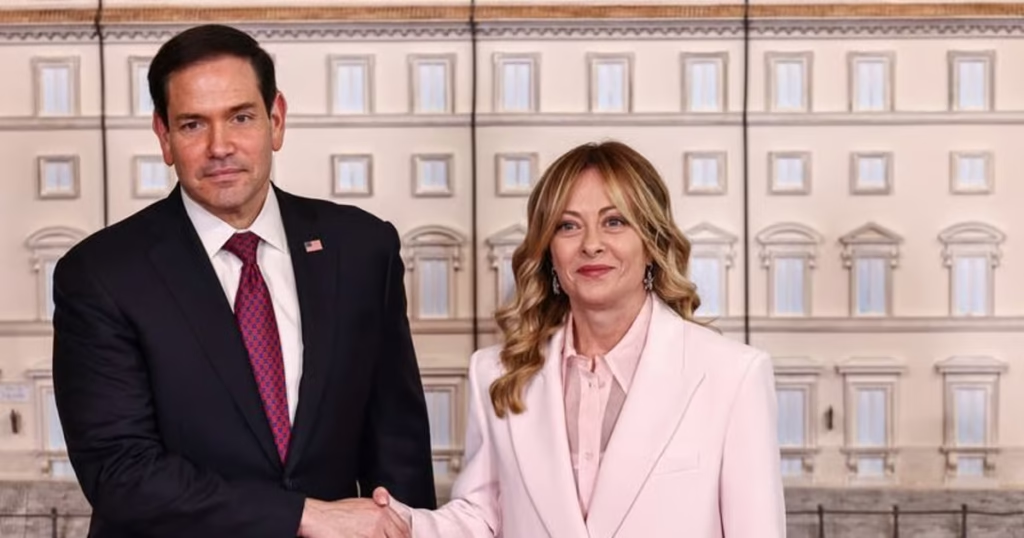
When U.S. Secretary of State Marco Rubio lands in Rome this week, he will step into one of the most delicate diplomatic balancing acts of the current Iran conflict. His meeting with Italian Prime Minister Giorgia Meloni is not a routine bilateral discussion. It is a crisis-management effort aimed at preventing the Western alliance from fracturing under the pressure of wartime disagreements.
This is not a photo opportunity. It is a critical diplomatic effort, and both sides understand the stakes.
Why the Iran War Has Created a Transatlantic Rift
The cracks in U.S.-European coordination have been widening for months. While Washington has consistently argued that military pressure on Iran is necessary, several European capitals — including Rome — have advocated for a more measured approach.
Italy’s position is especially nuanced. Prime Minister Meloni leads a right-wing government that has traditionally aligned closely with U.S. foreign policy. Her political identity is rooted in Atlanticism and strong ties with Washington. However, the Iran war has exposed the limits of that alignment.
Behind the scenes, several major issues are driving tensions:
- Military escalation timelines – The United States wants to maintain operational momentum, while Italy is seeking a clearer exit strategy to avoid a prolonged conflict.
- Economic sanctions and energy dependencies – Italian businesses remain vulnerable to disruptions in global energy markets and the impact of secondary U.S. sanctions.
- Humanitarian corridors – Italy has pushed for stronger civilian protection measures, while U.S. defense officials view some proposals as operationally difficult.
These are not minor policy differences. They reflect fundamentally different strategic priorities and assessments of risk.
The Meloni Dilemma: Between Washington and Domestic Pressure
Prime Minister Giorgia Meloni faces significant political pressure on multiple fronts.
Internationally, she must demonstrate continued loyalty to the United States. Her party, Brothers of Italy, has built its reputation on pro-Western and nationalist principles. A visible split with Washington over Iran could weaken her standing among allies and supporters alike.
Domestically, however, the political calculation is far more complicated.
Public protests have intensified across Italy as concern grows over the human cost of the conflict. Even limited Italian casualties have fueled anti-war sentiment. Coalition partners are under pressure, while opposition parties continue to criticize the government’s position.
Meloni therefore needs to emerge from the meeting with a tangible outcome — ideally some form of diplomatic progress, de-escalation framework, or humanitarian commitment that can be presented positively to the Italian public.
What Secretary Rubio Brings to the Table
Marco Rubio is entering the talks with a clear objective from Washington: preserve coalition unity without compromising broader military goals.
Several areas of compromise are likely to be discussed:
- Enhanced intelligence sharing – Providing Italy with greater insight into operational planning to strengthen coordination.
- Economic protection mechanisms – Offering reassurances for Italian energy companies concerned about sanctions-related disruptions.
- Humanitarian funding commitments – Expanding U.S. support for civilian aid and protection initiatives.
At the same time, Washington is unlikely to agree to firm withdrawal timelines or a suspension of military operations. Those remain core strategic positions for the United States.
The Broader Implications for NATO and the West
The Rubio-Meloni meeting is being closely watched across NATO capitals because it could shape how the alliance manages internal disagreements during active conflict.
If both sides reach a workable understanding, it would demonstrate that the transatlantic partnership can withstand political friction without breaking apart. That would send an important message to allies and adversaries alike.
If tensions remain unresolved, however, the consequences could extend beyond Italy:
- France and Germany may become more vocal in challenging U.S. strategy.
- Smaller NATO members could grow more cautious about committing additional resources.
- Iran and allied groups may view visible Western divisions as a strategic opportunity.
This is why diplomats in Rome are describing the atmosphere as “cautiously optimistic.” The stakes are high, and even limited progress could carry broader geopolitical significance.
What a Successful Outcome Looks Like
Few observers expect a dramatic breakthrough. The conflict is too complex, and the positions remain too entrenched.
Instead, success will likely be measured through smaller but meaningful outcomes:
- Regular senior-level communication – Establishing stronger crisis-coordination channels between Washington and Rome.
- A balanced joint statement – Acknowledging shared goals while recognizing ongoing differences.
- Concrete humanitarian and economic measures – Deliverables that Italy can present domestically while preserving coalition unity.
These steps may not resolve the larger conflict, but they could help stabilize the relationship at a critical moment.
The Historical Precedent Worth Watching
This is not the first time NATO allies have faced serious divisions during wartime. The Iraq War strained the alliance, while the Libya intervention exposed major differences between European and American strategic thinking.
History shows that alliances endure not because members always agree, but because they develop mechanisms to manage disagreements without allowing them to become permanent fractures.
Rubio and Meloni are not attempting to end the Iran conflict in a single meeting. Their goal is more practical: keeping the coalition functioning while tensions persist.
A Final Word of Caution
The divide between Washington and Rome on Iran policy remains significant. Neither side appears willing to make the kind of major concession that would fundamentally reshape the conflict.
Still, diplomacy is often less about solving every problem and more about preventing disagreements from becoming unmanageable.
If Rubio and Meloni leave Rome with clearer communication, continued dialogue, and several concrete agreements, that alone may count as a meaningful success.
The Iran conflict will continue. Pressure within the alliance will remain. But maintaining cooperation between the United States and Italy could prove essential to preserving broader transatlantic stability.
In a conflict dominated by military escalation and geopolitical tension, the most important battle may ultimately be the quiet diplomatic one unfolding behind closed doors in Rome.