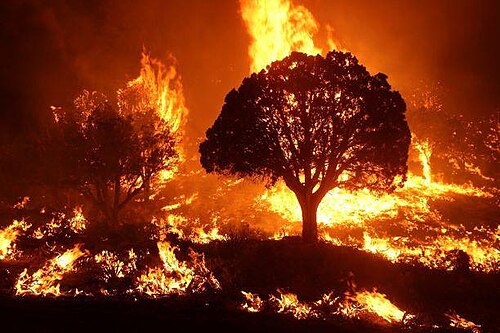
Can $1 Million in Lightning Suppression Prevent Catastrophic Wildfires? B.C. Bets Big on New Tech
British Columbia’s wildfire seasons have grown increasingly brutal, with 2023 alone scorching over 2.8 million hectares. But the provincial government is now pursuing a strategy that sounds like something from a weather-control lab: investing in technology that reduces lightning strikes. This isn’t cloud seeding or rain-making — it’s a targeted approach to neutralize the electrical charge inside storm clouds before bolts ever reach the ground. The $1 million investment in Lightning Suppression Systems marks a significant pivot from reactive firefighting to proactive prevention. But can a handful of ground-based stations really defuse nature’s fury?
Why Lightning Is the Hidden Spark Behind Most Large Fires
Most Canadians think of campfires, cigarettes, or arson as primary wildfire causes. In B.C., the numbers tell a different story.
Up to 60% of wildfires in the province are ignited by lightning strikes. That figure spikes during “dry lightning” events — thunderstorms that produce electrical activity but little to no rain. The moisture evaporates before reaching the ground, leaving vegetation extremely dry and highly flammable.
The 2023 season illustrated this danger clearly. Multiple dry lightning systems moved across the Interior, triggering hundreds of simultaneous ignitions. Fire crews were quickly overwhelmed, and communities like West Kelowna faced evacuations as fires spread faster than suppression efforts could respond.
Inside the Lightning Reduction Technology: How It Works
The technology from Lightning Suppression Systems does not stop storms. Instead, it aims to interfere with how lightning forms inside them.
Here’s the simplified mechanism:
- Storm clouds build strong electrical charge separation between positive and negative regions
- When the voltage difference becomes extreme, a lightning discharge occurs
- Ground-based stations emit low-frequency energy fields designed to subtly disrupt this charge buildup
- Instead of a concentrated strike, electrical energy is dissipated more gradually within the cloud
The goal is not total elimination of lightning, but reduction of high-energy cloud-to-ground strikes in targeted zones.
Early pilot studies (outside Canada) have reported significant reductions in strike frequency within limited coverage areas, though results remain highly dependent on geography and storm conditions.
Why This $1 Million Investment Matters for B.C.
This is a pilot program, not a full deployment — but its significance lies in strategic direction rather than scale.
For decades, wildfire spending has focused on suppression:
- More aircraft
- More firefighting crews
- More retardant drops
But suppression struggles when ignition events occur simultaneously across vast regions.
This new approach shifts the question to prevention: can we reduce ignition in the first place?
Given that lightning accounts for a large share of wildfire starts in B.C., even partial reduction could have outsized impact.
The Economic Logic of Prevention
The financial comparison is stark:
- A single major wildfire suppression operation can cost tens of millions of dollars
- Provincial wildfire spending in severe seasons can exceed hundreds of millions
- Total economic losses (property, tourism, health impacts) can reach billions
Against that backdrop, a $1 million pilot appears modest.
If even one large interface fire is prevented, the investment could pay for itself many times over.
Expert Concerns and Scientific Uncertainty
Despite its promise, the technology faces significant skepticism.
Key challenges include:
1. Proof Problem
Lightning is inherently variable. Determining whether strikes were reduced because of intervention — or natural fluctuation — requires long-term, controlled data.
2. Scale Limitations
Each station covers only a limited radius. B.C.’s fire-prone terrain is vast, meaning widespread deployment would require substantial infrastructure investment.
3. Ecological Role of Lightning
Lightning is not purely destructive. It contributes to:
- Natural forest regeneration cycles
- Soil nutrient replenishment
- Ecosystem diversity through periodic burns
Altering its frequency could have unintended ecological consequences.
What the Pilot Will Measure
The B.C. trial will focus on real-world validation under wildfire conditions.
Key evaluation metrics include:
- Changes in lightning strike density in protected zones
- Correlation between reduced strikes and wildfire ignition rates
- System performance during severe storm events
- Reliability under wind, rain, and variable atmospheric conditions
The goal is not only technical validation, but also policy-relevant evidence for future scaling decisions.
Climate Change Raises the Stakes
The urgency behind this experiment is tied directly to climate trends.
Warmer temperatures are expected to:
- Increase thunderstorm frequency
- Intensify lightning activity
- Dry out vegetation, making ignition more likely
Some climate models estimate that lightning activity could rise significantly with each degree of warming, compounding wildfire risk even if precipitation patterns remain stable.
This shifts wildfire management from a seasonal issue to a structural, long-term challenge.
What This Means for Communities and Firefighters
For communities in wildfire-prone regions, even a modest reduction in lightning-caused ignitions could translate into:
- Fewer evacuation events
- Reduced smoke exposure
- Lower property risk
- Less strain on emergency response systems
For firefighters, the benefit is more immediate: fewer simultaneous ignition points reduce the overwhelming “multi-fire” scenarios that often stretch resources beyond capacity.
The Bigger Picture: A Shift Toward Ignition Prevention
Across wildfire management globally, there is a growing recognition that suppression alone is insufficient.
New strategies increasingly focus on:
- Ignition prevention (like lightning suppression or power line shutoffs)
- Landscape management (controlled burns, fuel reduction)
- Predictive monitoring (AI-based fire risk systems)
B.C.’s investment fits into this broader shift — from reacting to fires to reducing their probability at the source.
Final Thoughts: A High-Risk, High-Reward Experiment
The $1 million lightning suppression pilot is not a guaranteed solution. It is an experiment at the edge of climate adaptation science.
It may succeed, partially succeed, or fail entirely. But its value lies in testing a fundamental question:
Can we meaningfully reduce wildfire risk by intervening before ignition happens?
In a province where lightning remains one of the leading causes of catastrophic fire seasons, even a partial answer could reshape wildfire strategy for decades.
B.C. is not claiming to control the weather. It is trying to control the conditions that turn weather into disaster.