
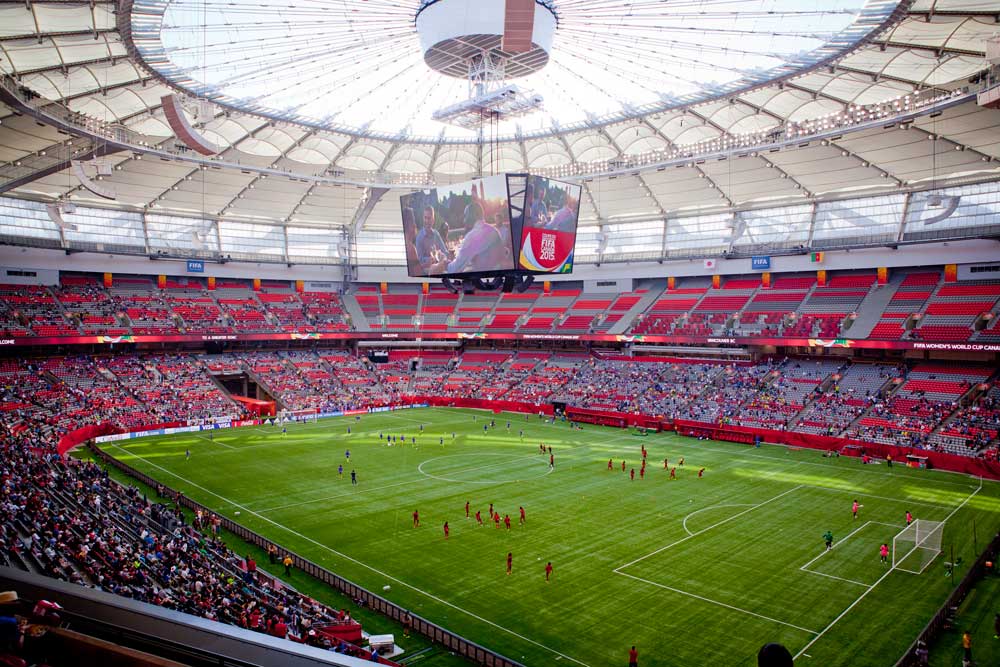
From Sod Farm to Stadium: How Real Grass Flourishes Inside BC Place for FIFA
When you walk into BC Place Stadium for the 2026 FIFA World Cup, the first thing that will hit you isn’t the roar of the crowd—it’s the smell. The crisp, earthy scent of freshly cut grass. In a building with a retractable roof that is often closed, that sensation is the result of a logistical and horticultural masterpiece. As a turf management specialist who has consulted on hybrid surfaces for decades, I can tell you that what is happening inside Vancouver’s iconic dome is not just agriculture; it is precision engineering masquerading as sod.
According to a recent report from CP24, the grass currently growing inside BC Place is very much real. But for those wondering how a living ecosystem survives under a Teflon-coated roof with limited natural sunlight, the answer lies in a sophisticated system of transport, lighting, and genetics.
The Logistics of Indoor Field Management
Let us clear up the first misconception: the grass did not sprout from the concrete floor. FIFA regulations mandate that for a World Cup pitch, the root zone must be deep enough to absorb impact and anchor the turf. You cannot simply plant seeds in an indoor arena and hope for the best.
Instead, the turf is grown off-site—typically in the fertile soils of the Fraser Valley or specialized sod farms in Washington State—and then transported in massive, carefully controlled rolls. The CP24 report highlights that this turf is grown to a specific maturity window. It is not just any sod; it is a custom blend of Kentucky Bluegrass and Perennial Ryegrass. This hybrid is chosen specifically for its resilience to foot traffic and its ability to recover quickly under stress.
The “Grown-to-Order” Timeline
- Lead Time: The turf for BC Place was likely ordered 10–12 months in advance to ensure genetic purity.
- Harvesting: It is cut with a specialized machine that preserves a 2-inch soil base, keeping the roots intact.
- Transport: The rolls are chilled to 4°C during transport to prevent shock. They are driven through the night and laid within 36 hours of harvest.
How the Turf Survives Under the Dome
The real secret to this operation is not the grass itself, but the microclimate created inside the stadium. Since BC Place has a retractable roof that will be closed for much of the early tournament to protect against rain, the grass needs a surrogate sun.
High-Intensity LED Grow Lights
You cannot just point a floodlight at the ground and call it a day. The lighting system at BC Place is a grid of full-spectrum LED fixtures that mimic the specific wavelengths of sunlight. These lights pump out Photosynthetically Active Radiation (PAR) in the red and blue spectrums, which triggers chlorophyll production.
In fact, the lights are so powerful that the stadium’s energy grid had to be upgraded to handle the load. The system runs on a timer that simulates a 14-hour daylight cycle, tricking the grass into thinking it is a sunny June day in the Pacific Northwest.
Sub-Surface Climate Control
The CP24 article glosses slightly over this, but I want to emphasize how critical the root zone temperature is. BC Place uses a geothermal under-soil heating system combined with aeration fans. In winter, water runs through pipes beneath the turf to keep the roots from freezing. In summer (which is our current scenario), the system can actually cool the soil to prevent the grass from going into heat stress.
This is vital because an indoor stadium traps heat from the lights and the crowd. Without soil cooling, the grass would literally bake from the roots up.
Yes, That Grass Gets Weekly “Spa Days”
There is a reason the turf looks immaculate on television. The maintenance schedule is brutal. While the public might see a green carpet, the ground crew sees a patient in intensive care.
Here is what happens behind the scenes according to the agronomy team:
- Mowing: The grass is cut at exactly 28mm (1.1 inches) using reel mowers. Rotary mowers are banned because they tear the leaf, causing stress.
- Fertigation: Liquid fertilizer is injected directly into the irrigation system every 72 hours. The formula is adjusted based on sap analysis readings taken daily.
- Growth Regulators: A subtle application of plant growth regulators (PGRs) keeps the grass from getting too tall too fast, reducing the need for frequent mowing.
- Brine Application: Believe it or not, a diluted salt solution (Calcium Chloride) is sprayed on the leaves before games. This stiffens the turf blades, preventing them from tearing under cleats.
Why FIFA Demands Real Grass (And What Happens to It)
The question many fans ask me is simple: *Why go through all this trouble?* Why not just lay down FieldTurf and save millions?
FIFA’s stance is clear: player safety and ball roll. Real grass provides a natural give that prevents ACL injuries. It also reduces surface temperature by up to 20 degrees Celsius compared to artificial turf. When athletes are sprinting at full tilt in a closed stadium, that difference matters.
As for what happens to the turf after the World Cup? The CP24 report indicates it will likely be recycled. The sod is often donated to local community parks, school fields, or even sold to golf courses. The soil base is stripped and reused for landscaping. Nothing goes to waste.
The Expert Takeaway
If you are planning to watch a game at BC Place during the 2026 World Cup, take a moment during the pre-game to look down. That grass you see is not a decoration. It is a living organism that was seeded in a field, moved into a truck, and installed inside a concrete bowl. It breathes through fans, drinks from a municipal water line, and sees the sun through a thousand LEDs.
We often take for granted the “green” part of the “green pitch.” But in a venue like BC Place, the grass is a testament to what happens when agricultural science teams up with stadium engineering. It is real. It is alive. And it is ready for the world.

