
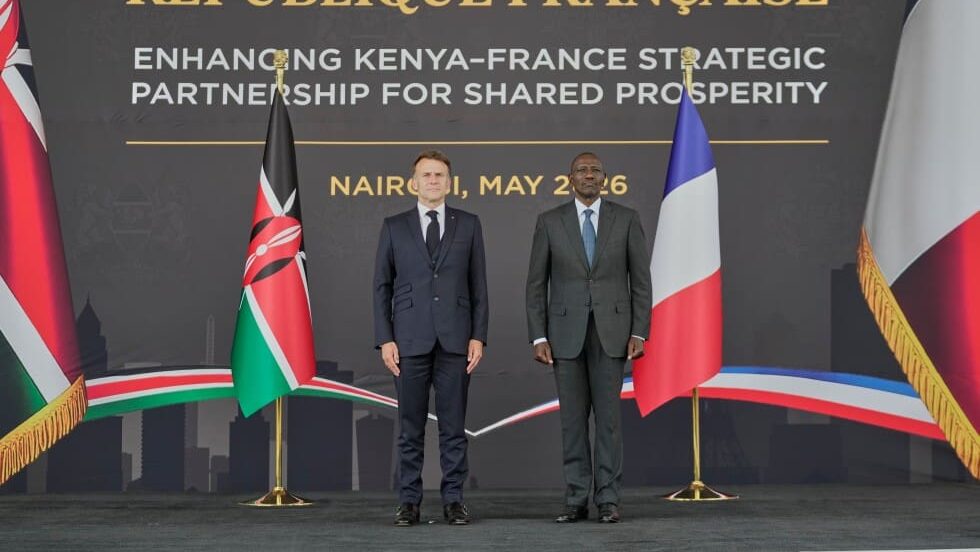
Macron’s $27 Billion Africa Investment: Co-Development or Soft Power Strategy?
French President Emmanuel Macron has unveiled a €25 billion (US$27 billion) investment package aimed at strengthening France’s economic and strategic engagement across Africa. Announced at a high-level Paris summit, the initiative goes far beyond traditional aid, positioning itself as a long-term “co-investment” framework involving governments, private firms and development institutions.
The scale and structure of the plan signal a deliberate effort to reshape France’s role on the continent at a time of intensifying geopolitical competition and shifting alliances across Africa.
A Shift From Aid to Co-Investment
Unlike conventional development assistance, the package is framed as a partnership model. French companies, financial institutions and African stakeholders are expected to jointly fund and execute projects across key sectors.
The approach reflects a broader policy shift: less emphasis on unilateral aid, and more focus on commercially driven development aligned with strategic interests.
Five Core Investment Priorities
The funding is structured around five major sectors considered critical to long-term economic transformation in Africa.
1. Renewable Energy Transition
A significant portion of the investment targets renewable energy expansion, particularly solar, hydroelectric and emerging hydrogen projects.
Key priorities include:
- Large-scale solar power development in high-sunlight regions
- Modernization of existing hydroelectric infrastructure
- Pilot projects in green hydrogen production for future export markets
The objective is to address Africa’s persistent energy gap while positioning the continent as a future supplier of clean energy to Europe.
2. Digital Infrastructure Expansion
The plan also focuses on closing Africa’s digital divide, where internet penetration remains uneven and often limited outside major urban centers.
Proposed initiatives include:
- Expansion of fiber-optic backbone networks
- Construction of regional data centers
- Deployment of affordable digital devices and connectivity tools
Improved connectivity is expected to support economic growth, digital services and financial inclusion.
3. Healthcare and Vaccine Manufacturing
A key strategic component is strengthening Africa’s health sovereignty, particularly in pharmaceutical production.
This includes:
- Development of regional vaccine manufacturing facilities
- Training programs for biomedical researchers and technicians
- Support for faster regulatory approval frameworks across countries
The goal is to reduce reliance on imported medical supplies and improve pandemic preparedness.
4. Transport and Trade Corridors
Infrastructure investment will also target logistics and trade efficiency across the continent.
Planned improvements include:
- Upgrading major rail corridors linking key economic hubs
- Expanding port capacity and freight handling systems
- Introducing digital customs and border processing systems
Lower transport costs are expected to enhance intra-African trade and regional integration.
5. Startup and Innovation Ecosystems
A dedicated funding stream will support African entrepreneurship and early-stage technology companies.
Priority areas include:
- Financial technology and mobile payments
- Agricultural technology and supply chain innovation
- Renewable energy and climate-focused startups
The initiative aims to strengthen local innovation ecosystems and reduce reliance on external capital markets.
Geopolitical Context: Competition for Influence
The announcement comes amid growing geopolitical competition in Africa, where multiple global powers are expanding their economic and strategic presence.
France’s traditional influence in parts of West and Central Africa has weakened in recent years, prompting a recalibration of its approach. The investment package is widely seen as part of a broader effort to rebuild economic ties through commercial engagement rather than military or political leverage.
At the same time, China, the United States and other global actors are also increasing their footprint in African infrastructure, energy and technology sectors.
Debate Over Economic Impact and Influence
The initiative has sparked debate among analysts and economists.
Supporters argue that:
- Africa requires large-scale capital investment and technology transfer
- Public-private partnership models can accelerate development
- Structured co-investment may reduce reliance on debt-heavy financing models
Critics caution that:
- Major contracts may still be dominated by French multinational firms
- Profit repatriation could limit local economic benefits
- Technology transfer and ownership structures remain unclear
The balance between partnership and influence will depend heavily on implementation details and negotiation outcomes.
A Strategic Economic Repositioning
Macron’s $27 billion commitment reflects a broader attempt to reposition France’s economic relationship with Africa. By focusing on energy transition, digital infrastructure, healthcare systems and innovation ecosystems, the plan targets sectors expected to define long-term growth on the continent.
Whether the initiative delivers broad-based development or reinforces existing power asymmetries will depend on how effectively African governments and institutions shape its execution in the years ahead.

