
Flying Roadster Technology and the Future of Innovation
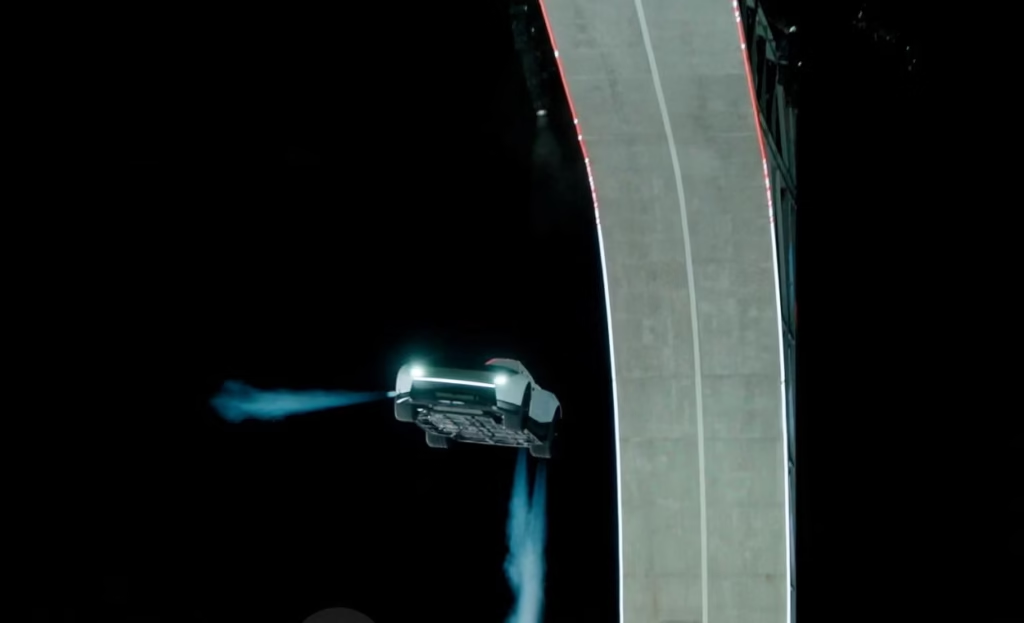
Imagine driving a sports car that can briefly lift itself off the ground using rocket technology. It sounds like something from a science-fiction movie, but Tesla’s latest Roadster demonstration has brought that idea closer to reality, at least as a technological experiment.
On October 16, 2026, Tesla showcased a rocket-equipped version of its Roadster featuring technology developed in connection with SpaceX. The demonstration highlighted how engineering concepts that once seemed unrealistic can inspire new approaches to transportation and vehicle design.
The Washington Post’s editorial board explored the broader significance of the development in an opinion piece published on the same date. Its central argument was that innovations should not always be judged exclusively by whether they immediately solve a practical problem or become commercially useful.
The flying Roadster raises an interesting question: even if a technology appears impractical today, could the research behind it eventually produce something that changes everyday life?
What Makes Tesla’s Rocket-Powered Roadster Different?
Tesla’s Roadster is a high-performance electric sports car, but the demonstrated version adds an unusual capability. Cold-gas thrusters and a specialized suction system were presented as technologies capable of briefly lifting the vehicle and producing movement while airborne.
The demonstration represents an ambitious engineering project involving Tesla and SpaceX, two companies led by Elon Musk. Tesla focuses on electric vehicles and energy products, while SpaceX develops space transportation systems and rocket technology.
Combining ideas from these fields creates opportunities to investigate propulsion, vehicle control, materials, and other engineering challenges. However, demonstrating that a vehicle can briefly leave the ground is not the same as developing a safe, affordable flying car for ordinary roads.
Practical deployment would require solutions for stability, passenger safety, energy use, maintenance, operating environments, and regulatory approval. The rocket-equipped Roadster’s advertised airborne capabilities should therefore be understood as an experimental feature rather than proof that everyday flying cars are ready for widespread use.
According to The Washington Post’s reporting on the unveiling, production of the new Roadster was planned to begin in 2028. The rocket-assisted configuration was not approved for public road use, highlighting the gap between demonstrating a capability and making it available for routine transportation.
Why Impractical Inventions Can Still Become Valuable
Some technologies begin as experiments with limited applications. Their eventual importance may emerge only after researchers discover new uses, improve their performance, or combine them with other innovations.
The Washington Post editorial used several historical examples to illustrate this principle. The laser, for instance, initially attracted interest as a scientific achievement before becoming an essential component of technologies used in communications, manufacturing, medicine, and barcode scanning.
Lasers now help transmit information through fiber-optic networks, enabling high-speed internet connections across long distances. Their development demonstrates how a technology can move from laboratory research into infrastructure that supports everyday activities.
Magnetic resonance research offers another example. Early nuclear magnetic resonance work eventually contributed to the development of magnetic resonance imaging, or MRI, which doctors use to examine internal structures of the human body without relying on conventional X-ray imaging.
Space satellites also illustrate the long-term value of ambitious engineering. Technologies developed for space exploration and satellite operations now support services such as navigation, telecommunications, weather observation, and international connectivity.
These examples do not prove that every experimental project will become commercially successful. Instead, they show why the potential value of research can extend beyond the original product or the immediate purpose that motivated its development.
What the Flying Roadster Reveals About Risk and Creativity
Innovative engineering often requires companies to invest resources before the final benefits are clear. Some projects generate useful discoveries, while others remain expensive demonstrations or fail to achieve their original objectives.
The challenge is determining how much uncertainty is acceptable. A company may pursue an ambitious experiment because it could reveal new technical possibilities, but it must also consider development expenses, safety requirements, market demand, and the opportunity cost of using resources elsewhere.
For Tesla, the Roadster’s rocket-assisted demonstration may help attract attention to its engineering capabilities and its relationship with SpaceX. Yet the demonstration alone does not establish whether the technology will become commercially viable or produce benefits beyond the vehicle itself.
There is also a difference between technical novelty and meaningful progress. A machine can perform an extraordinary trick without improving transportation costs, reducing travel times, or making mobility safer for the public.
To judge the Roadster’s longer-term significance, observers will need to look at what happens after the demonstration. Relevant developments include whether production advances, whether the engineering can be made reliable, and whether the underlying technology leads to useful applications elsewhere.
This approach provides a more balanced way to evaluate ambitious inventions. Rather than dismissing a project because its immediate use appears limited, it is possible to examine both its measurable achievements and the uncertainty surrounding its future value.
Could Experimental Technology Change Everyday Transportation?
Flying cars have fascinated engineers and the public for decades, but moving people safely through the air presents challenges that conventional vehicles do not face in the same way. Aircraft require appropriate operating environments, specialized controls, and safety procedures that cannot simply be ignored because a vehicle also has wheels.
The Roadster’s rocket-assisted design is different from a conventional flying car that uses wings, rotors, or distributed electric propulsion to sustain flight. A brief airborne maneuver does not demonstrate the ability to travel long distances through the air or operate as an ordinary passenger vehicle.
For the technology to become useful beyond demonstrations, engineers would need to establish dependable operation, suitable safety systems, and a realistic approach to maintenance and regulation. Affordability would matter too, because a technology that remains accessible only to a small group of buyers cannot automatically transform transportation for the wider public.
Even if the flying Roadster never becomes a practical commuter vehicle, research associated with it could still have value if it produces transferable engineering knowledge. That possibility remains uncertain, however, and should not be confused with a demonstrated commercial outcome.
The most important question is not simply whether the car can fly for a moment. It is whether the underlying work produces durable improvements that can be measured, replicated, and applied to problems that matter.
What Readers Should Watch as Innovation Develops
The Roadster demonstration offers a useful reminder for anyone following emerging technology: distinguish between a prototype, a successful demonstration, a production-ready product, and a technology that has achieved widespread adoption.
Each stage requires different evidence. A demonstration establishes that a particular capability was shown under specific conditions, while commercial production requires manufacturing readiness, dependable performance, and a workable business model.
Readers can follow future announcements from Tesla and SpaceX for information about production plans, technical specifications, safety limitations, and any changes to the Roadster’s proposed capabilities. Independent reporting and regulatory documentation can help establish which milestones have actually been achieved.
For investors and technology enthusiasts, it is also sensible to separate excitement about an engineering breakthrough from assumptions about a company’s future financial performance. A remarkable demonstration does not, by itself, establish future sales, profitability, or investment returns.
The larger lesson from the flying Roadster is that innovation can be valuable even when its eventual applications are not immediately obvious. Historical examples such as lasers, MRI technology, and satellites demonstrate that research can lead to outcomes beyond its original purpose, although success is never guaranteed.
The next milestone worth watching is whether Tesla moves from demonstration toward production while addressing the technical and regulatory challenges involved. Until then, the Roadster is best understood as a striking engineering experiment—and a reminder that the long-term value of new technology depends on what researchers and companies manage to accomplish after the initial spectacle.