
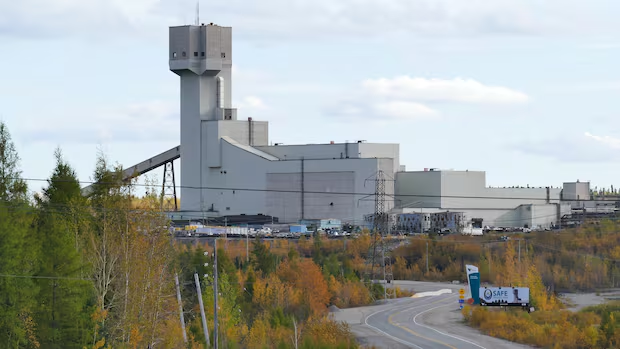
A Major Change for Northern Manitoba’s Mining Industry
A mining operation can influence an entire community for generations, from local employment to businesses that supply equipment, transportation, and other essential services. In Thompson, Manitoba, nickel production has been part of the local economy for more than six decades, making a change in ownership an important development for the northern region.
On October 16, 2026, Exiro Nickel Company completed its acquisition of the Thompson Mine Complex from Vale Base Metals (VBM). The transaction establishes Exiro Nickel as the operator of the mining operations, while Vale retains a minority ownership stake and a long-term commercial relationship with the site.
According to a news release from Natural Resources Canada, the agreement is intended to support the operation’s future, maintain employment, and strengthen Canada’s supply of critical minerals. The transaction is backed by a consortium of investors that includes Exiro Minerals Corp., Orion Resource Partners LP, and Canada Growth Fund Inc.
The ownership change follows a strategic review of the Thompson operations by Vale Base Metals. Rather than ending production at the site, the completed transaction creates a new ownership structure focused on continued operations and future investment.
How the New Ownership Structure Works
Exiro Nickel is now responsible for operating the Thompson Mine Complex. Exiro Minerals Corp., Orion Resource Partners LP, and Canada Growth Fund Inc. collectively hold an 81.1% interest in the company, while Vale Canada Limited, a subsidiary of Vale Base Metals, retains the remaining 18.9% minority interest.
The transaction includes a commitment to make up to US$200 million, equivalent to approximately C$280 million, available for investment in the Thompson operations. The funding is intended to support the mine’s long-term development, operational improvements, and exploration opportunities.
Canada’s involvement includes a commitment announced in February 2026 through the Canada Growth Fund. The federal investment vehicle committed up to US$85 million, approximately C$116 million, as part of the broader transaction.
Vale Base Metals will also remain connected to the operation through a multiyear offtake agreement. Under this arrangement, the company will continue purchasing nickel concentrate produced at the Thompson mill, preserving a commercial link after transferring operational control.
This distinction matters: Exiro Nickel has taken over as owner and operator, but Vale has not completely withdrawn from the business. The arrangement combines a new operating structure with continued participation from the former owner.
Inside the Thompson Mine Complex
The Thompson Mine Complex sits within the Thompson Nickel Belt in northern Manitoba, a region recognized for its nickel resources. The Canadian government’s October 16 announcement describes the belt as the world’s fourth-largest Class 1 nickel sulphide resource.
The complex includes two underground mines, a processing mill, and extensive exploration assets. Government information states that the operation accounts for approximately 10% to 15% of Canada’s annual nickel production, underlining its importance to the country’s domestic mineral supply.
The operation also has a long industrial history. The Thompson Nickel Belt was discovered in 1956, and Inco Limited developed the mining complex. Commercial production began in 1961, and the operation became part of Vale following its acquisition of Inco in 2006.
Exiro Nickel’s announcement identifies the Thompson Mines, known as T1 and T3, the Pipe Mine, and the concentrator as parts of the operation. The company reports annual milling capacity of 2.0 million tonnes, providing a foundation for its plans to develop the complex further.
In addition to existing infrastructure, the operation includes approximately 135 kilometres of prospective exploration assets, according to Natural Resources Canada. These assets provide opportunities to investigate additional mineral resources, although exploration potential does not automatically translate into economically recoverable reserves or future production.
Jobs, Production Growth and Local Economic Impact
Employment is one of the central issues surrounding the transaction. The federal government’s announcement says the investment is intended to maintain approximately 675 local jobs, while Exiro Nickel has emphasized continued operations and a long-term commitment to Thompson.
Those positions matter beyond the mine itself. Mining operations depend on contractors, equipment suppliers, maintenance services, transportation providers, and other businesses that support industrial activity in the surrounding region.
According to reporting by the Winnipeg Free Press on October 16, 2026, Exiro Nickel chief executive Shastri Ramnath outlined an ambition to double annual mining production from one million tonnes to two million tonnes over the next five years. The report also described a plan to develop tunnels toward the Howling Wolf deposit over the following two to three years.
That production ambition should be understood as a company goal rather than an achieved result. Reaching it would depend on operational performance, development work, investment decisions, geological conditions, and other factors affecting underground mining.
For Thompson and surrounding communities, the practical questions will include whether the investment translates into stable employment, additional development activity, and sustained demand for local services. The completed acquisition establishes the ownership structure, but the longer-term economic results will emerge as the operating plan progresses.
Why Nickel Matters to Canada’s Critical Minerals Strategy
Nickel is designated as a critical mineral by the Government of Canada. It is used in stainless steel manufacturing and in certain battery chemistries, as well as in energy storage and other industrial applications.
Maintaining domestic production can help Canada support manufacturers that depend on reliable mineral supplies. It can also contribute to the country’s broader objectives for advanced manufacturing, electric vehicle supply chains, and clean-energy technologies.
However, nickel demand varies by market and application. Not every electric vehicle battery uses the same chemistry or requires the same amount of nickel, so the future value of the Thompson operation will depend on the mix of customers and products it can serve.
The Canada Growth Fund’s participation links the project to federal efforts to support critical-mineral production. Its commitment of up to US$85 million forms part of the wider investment package, rather than representing the entire amount available to the operation.
For the industry, the transaction illustrates how private investors, a government investment fund, and an established mining company can participate in a shared ownership arrangement. The outcome will depend on the partners’ ability to finance and operate the complex responsibly while meeting commercial, environmental, and community obligations.
What Happens Next for Thompson Nickel Mine?
With the acquisition completed and the necessary regulatory and government authorizations received, Exiro Nickel can proceed as the mine’s operator under the new ownership structure. Its next priorities include managing day-to-day operations, evaluating investment opportunities, and advancing its plans for the mining complex.
Workers, contractors, and businesses interested in the project’s development should follow announcements from Exiro Nickel and official updates from the Government of Manitoba and Natural Resources Canada. These sources can provide more reliable information about hiring, construction activity, exploration plans, and future production milestones than preliminary projections alone.
Readers should also distinguish the US$200 million investment commitment from money already spent. The figure describes the amount committed for investment in the operations, not proof that the entire sum has been disbursed or that every planned improvement has been completed.
The Thompson Mine Complex now enters its next phase with a new majority ownership group, continued participation from Vale Base Metals, and federal investment support. Whether the arrangement delivers higher production and long-term economic benefits will become clearer as Exiro Nickel carries out its operating and development plans.
For anyone following Canada’s mining sector, the next developments to watch are progress toward the company’s production targets, investment in exploration and underground infrastructure, and updates on the approximately 675 local jobs the transaction is intended to maintain.