Canada Announces New Investments Following Indigenous Leaders’ Meeting
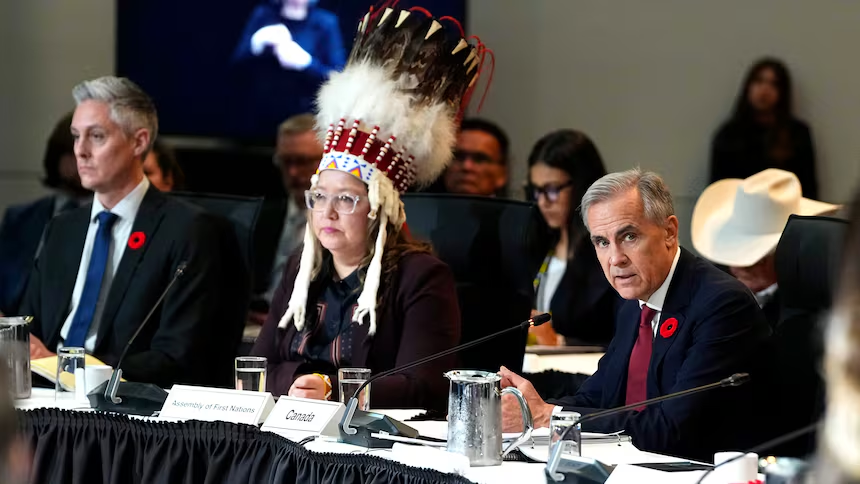
After more than two decades without a dedicated meeting of this kind, First Nations leaders and Canada’s top political leaders gathered in Ottawa on October 26, 2026, to discuss Indigenous priorities, economic opportunities and longstanding community needs. The discussions produced new funding announcements and commitments, but reactions differed over whether the gathering would lead to lasting change.
Prime Minister Mark Carney met with First Nations representatives, provincial premiers and territorial leaders at the John G. Diefenbaker Building on Sussex Drive. The meeting focused on issues ranging from emergency preparedness and policing to economic participation, housing, infrastructure and the future relationship between First Nations and the federal government.
Although the financial commitments represented a concrete outcome, some Indigenous leaders questioned whether the announcements would address deeper disagreements about Indigenous rights, major development projects and government accountability.
Billions in Funding Target Emergency Preparedness
One of the largest announcements involved more than $2.5 billion over five years for emergency preparedness and disaster response in First Nations communities. The funding is intended to strengthen communities’ ability to evacuate residents, provide emergency assistance and rebuild homes and essential infrastructure after disasters.
The federal government identified several programs connected to this investment, including the Emergency Management Assistance Program, the Wildland-Urban Interface firefighting initiative and the First Nations Fire Protection Strategy. These initiatives are intended to help communities prepare for and respond to emergencies, including threats that require coordinated evacuation and firefighting efforts.
The government also announced nearly $450 million in ongoing funding for emergency preparedness. The measures address an important practical concern for communities that need sufficient resources, equipment and planning to protect residents when disasters occur.
For First Nations communities reviewing these announcements, the next questions concern how funding will be distributed, which needs will receive priority and how quickly support will reach local governments. The announcement establishes financial commitments, but the practical results will depend on implementation.
New Money for First Nations and Inuit Policing
Public safety was another major subject of the Ottawa discussions. The federal government announced more than $630 million over four years to renew and expand agreements under the First Nations and Inuit Policing Program.
The announcement also included $250 million in ongoing annual funding. According to the federal government, the program changes are intended to address gaps between policing services available in First Nations communities and those provided to non-Indigenous communities.
In addition, Ottawa committed another $140 million over four years for crime prevention and culturally appropriate community safety initiatives. These funds are intended to support approaches that reflect the needs and priorities of Indigenous communities.
The commitments respond to longstanding discussions about the availability of policing resources and the importance of community-specific safety services. Their impact will depend on how agreements are renewed, what local priorities are identified and whether the funding addresses existing service gaps.
First Nations Could Gain a Greater Share of Major Projects
Economic participation was central to the meeting, particularly as the Carney government works to accelerate major infrastructure and resource developments across Canada. First Nations leaders have emphasized that their communities should have a meaningful role in projects affecting their territories and should share in the economic benefits.
Carney directed the federal finance minister to work with First Nations leaders on new revenue-sharing arrangements. One possibility under discussion is a First Nations Sovereign Wealth Fund, which could provide a mechanism for Indigenous communities to participate more directly in the returns generated by major projects.
The government also announced $260 million over four years for a new Partnerships for Indigenous Workforce Readiness Fund. The initiative is intended to connect Indigenous people with employment opportunities created by major projects through targeted workforce preparation and related support.
Ottawa is also developing an Indigenous-focused component of its $8 billion Team Canada Strong initiative. The proposed stream is intended to help Indigenous workers access paid, entry-level trades jobs and move into employment more quickly.
However, the proposed wealth fund remains a possibility under discussion rather than an established fund with finalized rules. Its structure, participation arrangements and eventual benefits will depend on further work between governments and First Nations leadership.
Debate Over the Future of the Indian Act
The meeting also addressed the Indian Act, the federal law dating to 1876 that continues to shape aspects of the relationship between Canada and First Nations. Carney said he was open to considering reform or even abolition of the legislation as part of a broader effort to modernize that relationship.
The prime minister said he would direct ministers to work with First Nations on a path forward. Any major change would involve significant discussions about governance, rights, responsibilities and the legal arrangements that affect First Nations communities.
The question is especially important because First Nations are not a single political organization with identical priorities. Individual nations have distinct governments, treaties, histories and positions on how their relationships with Canada should evolve.
For that reason, a national commitment to explore reform does not settle what changes should be made or how they would be implemented. Continued engagement with individual First Nations will be essential to determining the direction of future policy.
Why Some Indigenous Leaders Remain Unsatisfied
Despite the announcements, the meeting received mixed reviews. Some leaders welcomed the financial commitments and the possibility of developing new economic arrangements, while others questioned whether the discussions adequately addressed the underlying issues facing First Nations.
Sheldon Sunshine, chief of Sturgeon Lake Cree Nation in northern Alberta, emphasized that the gathering’s significance would ultimately depend on the changes that follow. His remarks reflected a concern that meetings and public commitments must translate into practical results.
Assembly of First Nations National Chief Cindy Woodhouse Nepinak also stressed the need for action on First Nations priorities. She cautioned against treating rapid approval of major projects as the sole measure of national progress, arguing that Indigenous rights and requested legal and policy reforms must also be addressed.
Other leaders expressed reservations about whether the federal government’s infrastructure agenda might overshadow Indigenous concerns. Some also questioned whether the Assembly of First Nations could adequately represent the views of all rights-holding communities and grassroots members.
Cody Diabo, grand chief of the Mohawk Council of Kahnawà:ke, left the meeting early and criticized its approach. Hereditary Chief Na’Moks of the Wet’suwet’en Nation in British Columbia also expressed concern that the gathering could be used to secure support for the federal government’s priorities.
Not all reactions were negative. Abram Benedict, the Assembly of First Nations’ Ontario regional chief, welcomed the investments and the possibility of a sovereign wealth fund, although he noted that the meeting did not produce a firm commitment to hold the gatherings every year.
Will the Meeting Lead to Lasting Change?
The October 26 gathering was the first dedicated meeting between First Nations leaders and first ministers in roughly two decades. The previous comparable meeting was held in 2005, when Paul Martin was prime minister, and resulted in the agreement known as the Kelowna Accord.
The latest discussions come at a time when the federal government is pursuing faster approvals for major projects, while some First Nations leaders are concerned that these efforts could affect their rights and interests. Finding a way to reconcile economic development with Indigenous priorities remains a central challenge.
Carney suggested that a two-year interval would be appropriate for the next meeting. However, no firm annual schedule was established, leaving questions about how regularly the parties will meet to review progress and resolve outstanding issues.
What First Nations Communities Should Watch Next
The next stage will involve turning the announcements into funded programs, updated agreements and practical arrangements with communities. Important developments to monitor include the distribution of emergency management resources, the renewal of policing agreements, the design of the workforce fund and further discussions about revenue sharing.
The federal government’s upcoming budget on November 5, 2026, is another date to watch for additional details about its spending plans. First Nations leaders and community members can review official announcements and consult their respective leadership for information about local eligibility, implementation timelines and funding opportunities.
Frequently Asked Questions
When did the First Nations and first ministers’ meeting take place?
The meeting took place in Ottawa on October 26, 2026, following a day of ceremony on October 25. It was the first dedicated gathering of this kind in approximately two decades.
How much new funding did Canada announce?
Major announcements included more than $2.5 billion over five years for emergency preparedness, more than $630 million over four years for First Nations and Inuit policing, $140 million over four years for crime prevention and community safety, and $260 million over four years for Indigenous workforce readiness.
Was a First Nations sovereign wealth fund created?
No finalized fund was announced. The federal government committed to working with First Nations leaders to explore revenue-sharing mechanisms, including the potential creation of a sovereign wealth fund.
Looking Ahead
The Ottawa meeting produced financial commitments and opened discussions about economic participation and reform of the Indian Act. However, the different reactions from Indigenous leaders demonstrate that funding announcements alone will not resolve every concern about rights, representation and development.
The next measure of progress will be whether governments follow through on their commitments, involve First Nations in decisions affecting their communities and establish clear ways to assess results. The November 5 federal budget and subsequent implementation updates will provide important opportunities to see how the announced measures move forward.