Honoring Uncommon Valor: The Push to Recognize Canada’s Afghan War Heroes
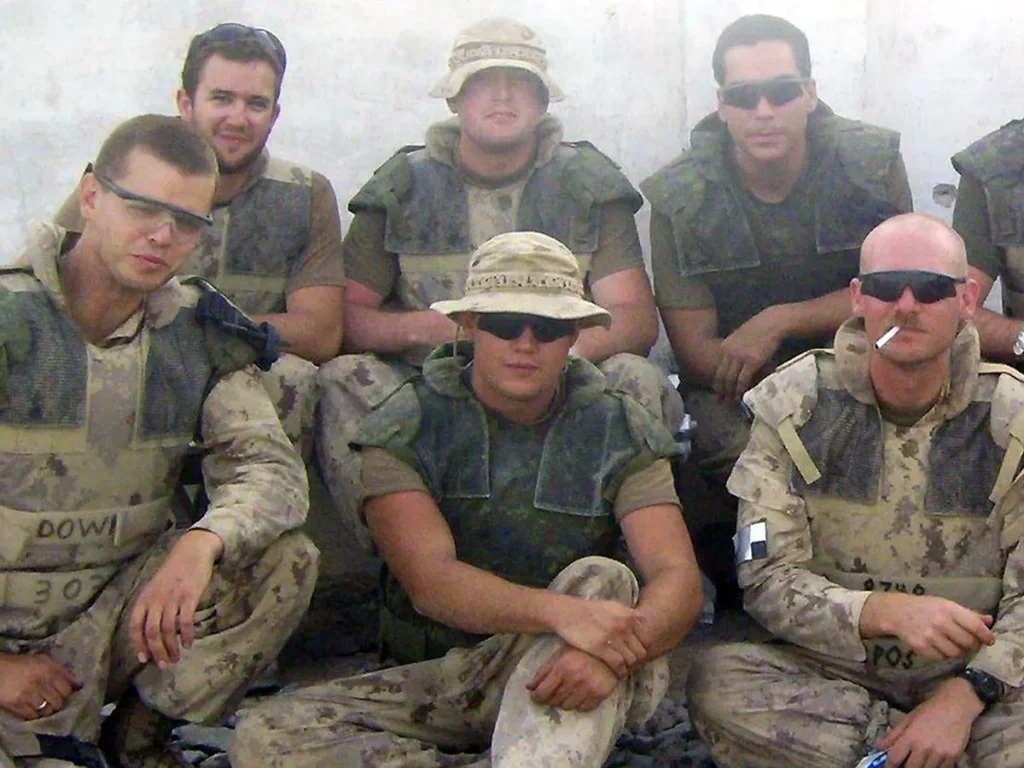
For over a decade, Canada’s men and women in uniform served with distinction in the grueling conflict in Afghanistan. Their courage under fire is the stuff of legend within military circles, yet a growing movement argues that the nation’s highest honor for battlefield bravery remains conspicuously absent from that chapter of history. A dedicated campaign is now gaining momentum, urging the Canadian government to formally review the actions of several service members for a potential, posthumous award of the Victoria Cross (VC)—an award not bestowed upon a Canadian since the Second World War.
The Weight of a Symbol: Canada’s Victoria Cross
To understand the significance of this campaign, one must first appreciate the gravity of the Victoria Cross. Instituted by Queen Victoria in 1856, it is the Commonwealth’s preeminent award for “most conspicuous bravery, a daring or pre-eminent act of valour or self-sacrifice, or extreme devotion to duty in the presence of the enemy.” For Canada, it is a singular symbol of ultimate sacrifice and courage.
Since its creation, 99 Victoria Crosses have been awarded to Canadians, with the last being in 1945. The Canadian version of the medal was established in 1993, but it has never been awarded. This fact sits heavily with many veterans and historians who believe that the intensity and heroism displayed in Afghanistan, particularly during Canada’s combat mission in Kandahar from 2006-2011, undoubtedly produced deeds worthy of this rarest of honors.
Unsung Acts of Extraordinary Courage
The campaign is not about creating new narratives, but about re-examining documented acts of valor with the highest standard of recognition in mind. Proponents point to several specific cases where soldiers performed with what they believe is VC-level gallantry.
Master Corporal Collin Fitzgerald and the Battle of Sperwan Ghar
In September 2006, during the fierce Battle of Sperwan Ghar, Master Corporal Collin Fitzgerald’s platoon was pinned down by devastating enemy fire. With complete disregard for his own safety, Fitzgerald repeatedly exposed himself to draw fire away from his wounded comrades, allowing them to be evacuated. He then charged an enemy machine-gun position alone, eliminating it and changing the course of the firefight. He was awarded the Star of Military Valor, Canada’s second-highest award, but many argue his solo assault under direct fire meets the VC’s “pre-eminent” standard.
Corporal Michael O’Rourke and the Medevac Rescue
In August 2007, Corporal Michael O’Rourke, a medic, was part of a quick-reaction force sent to aid an ambushed patrol. Under relentless rocket and small-arms fire, O’Rourke sprinted across open ground multiple times to treat and evacuate critically wounded soldiers. His actions, performed over hours in close contact with the enemy, were credited with saving numerous lives. He, too, received the Star of Military Valor, yet the sustained, life-risking devotion to duty under such conditions is seen by advocates as emblematic of the VC tradition.
Private Jess Larochelle and the Lone Stand at Pashmul
Perhaps one of the most cited cases is that of Private Jess Larochelle. In October 2006, his reconnaissance platoon was ambushed in the volatile Pashmul region. An RPG strike knocked Larochelle unconscious and killed his crewmate. Regaining consciousness, severely wounded and with his weapon destroyed, he saw Taliban fighters advancing. For the next hour, using only an anti-tank weapon, he single-handedly held the position, breaking the enemy assault and allowing his remaining comrades to regroup and evacuate. He was originally awarded the Star of Military Valor, which was later upgraded to a Conspicuous Gallantry Cross—a rare Commonwealth award. For many, his lone stand is the quintessential candidate for a Victoria Cross review.
The Case for a Formal Review
The campaigners’ core argument is not a guarantee of award, but a plea for due process. They contend that the bureaucratic and cautious approach during the war may have led to recommendations being “down-graded” to ensure they were approved, or that the sheer frequency of bravery in Kandahar inadvertently raised the bar too high internally.
Key arguments for a review include:
- Historical Precedent: Past conflicts have seen retrospective awards after deeper historical analysis.
- Clarity of Standard: A formal review would clearly assess actions against the specific, published criteria of the Canadian Victoria Cross.
- National Healing and Recognition: For the families of the fallen and the veteran community, a rigorous, transparent review is a matter of respect and closure, regardless of the outcome.
- Inspiring Future Generations: Officially recognizing the highest level of bravery defines a nation’s character and sets a standard for future Canadians in uniform.
Navigating the Complex Path to Recognition
The process for awarding a Victoria Cross is arduous by design. It requires exhaustive evidence, witness corroboration, and moves through multiple levels of military and government approval, ultimately requiring the assent of the sovereign. The campaign seeks to initiate this formal process at the ministerial level.
Opponents or skeptics may argue that the existing awards already appropriately honor the bravery displayed, or that revisiting decisions made in the context of the time is problematic. Others may point to the political sensitivities surrounding the Afghanistan mission itself.
A Legacy of Courage Awaits Its Full Measure
The war in Afghanistan left an indelible mark on Canada. Over 40,000 Canadians served, 158 soldiers lost their lives, and countless more carry the invisible wounds of conflict. The campaign to review potential Victoria Cross contenders is, at its heart, about ensuring that the legacy of those who faced the war’s darkest moments is measured by the fullest possible standard of courage.
It is a quest for historical completeness—a nation taking the time to ensure that no act of valor, no matter how old the conflict, has been overlooked. By formally examining these cases, Canada would not only honor individual heroes but would also send a powerful message about the value it places on the utmost bravery in service to the nation. The story of Canada in Afghanistan, one of sacrifice, professionalism, and resilience, deserves nothing less than a complete and thorough assessment of its most courageous chapters.