
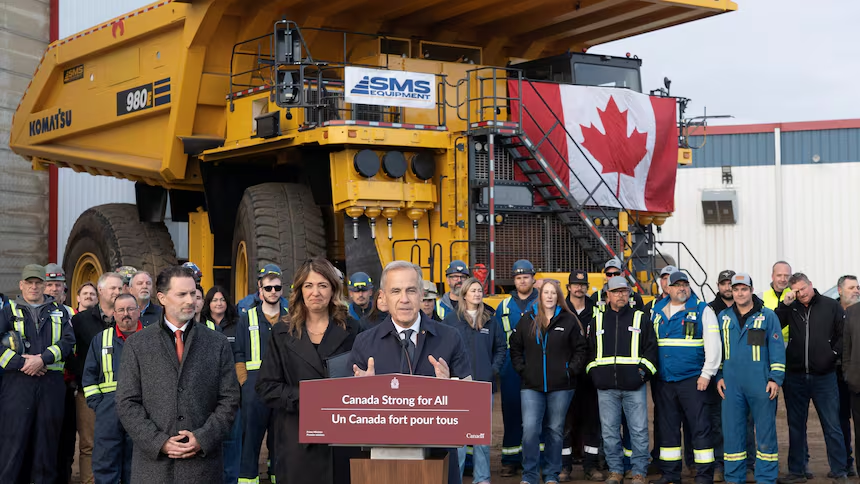
Alberta Oil Pipeline Gains Federal Status as Major Infrastructure Project
Premier Smith celebrates Pacific Link’s designation as a project of national interest. Learn how this 1M bbl/day pipeline aims to create 140,000 construction jobs and $265 billion in provincial royalties over 50 years.
Pacific Link pipeline national interest
Alberta’s West Coast Pipeline Moves Forward with Federal Support
Canada’s energy sector just got a major boost. Premier Danielle Smith announced that Pacific Link—a proposed oil pipeline running to the west coast—has been formally listed as a project of national interest under the Building Canada Act. This designation streamlines the regulatory approval process and signals federal backing for one of Canada’s largest pending infrastructure projects.
The listing represents a significant shift in how Ottawa and Alberta are working together on energy infrastructure. Rather than navigating the standard permitting system, the Major Projects Office will work with the Canada Energy Regulator through a streamlined review process to issue a conditions document by September 1, 2027. Once approved, construction can begin immediately.
What Is Pacific Link?
Pacific Link is designed to transport one million barrels of oil per day from Alberta to Canada’s west coast, opening new export routes to Asia-Pacific markets. Trans Mountain Corporation will develop, construct, and operate the pipeline on behalf of the project proponents, which include the Alberta Petroleum Marketing Corporation, the Government of Canada through Trans Mountain Corporation, and Pembina Pipeline Corporation.
The project follows a familiar pattern in Canadian energy development—moving crude from landlocked production regions to ocean terminals where it can reach global buyers. What makes Pacific Link distinct is its scale and the explicit backing it now carries from both provincial and federal governments working in coordination.
Job Creation and Economic Impact During Construction
According to Premier Smith’s announcement, Pacific Link will create up to 140,000 jobs at its peak during construction, with most of those positions concentrated in Alberta and British Columbia. The construction phase represents a significant economic injection into both provinces, particularly in regions where energy-sector employment has faced volatility.
Once operational, the pipeline is expected to support an additional 50,000 jobs per year across operations, maintenance, production, and trade-related activities. For Alberta in particular, these figures represent sustained employment in a sector that has historically been central to the province’s economy.
Provincial Revenue and Long-Term Fiscal Impact
The financial case for Alberta is substantial. The Department of Treasury Board and Finance estimates that over the roughly 50-plus years Pacific Link will operate, the Government of Alberta will receive more than $265 billion in additional royalties from increased oil production needed to fill the pipeline. That figure assumes stable production and pricing conditions, but illustrates the scale of revenue the province anticipates.
These royalties are earmarked to support core public services—schools, hospitals, and essential infrastructure—according to the provincial government’s framing. For a province facing budgetary pressures, a project generating hundreds of billions in royalty income over decades carries significant weight in policy discussions.
National GDP Growth and Trade Access
At the national level, Pacific Link is projected to generate more than $20 billion per year in GDP growth once operational. That annual economic contribution reflects both the direct value of oil exports and the supporting economic activity across supply chains, logistics, and financial services.
The project also serves a strategic trade objective. Premier Smith emphasized that global allies and trading partners are seeking secure, responsibly produced energy from reliable suppliers. By connecting Alberta oil to Asia-Pacific markets, Canada aims to diversify its export customer base beyond the United States and strengthen relationships with growing economies in the region.
Indigenous Partnership as a Core Component
The announcement explicitly placed Indigenous partnership at the center of the project’s path forward. Premier Smith stated that “working together, we have an opportunity to create lasting prosperity through meaningful participation, ownership and shared success.”
This language reflects the lessons learned from previous pipeline projects that faced Indigenous opposition and court challenges. Rather than positioning Indigenous communities as stakeholders to be managed around, the framing here emphasizes participation and ownership stakes from the outset. Whether that intention translates into genuine revenue-sharing and decision-making power remains to be seen as project details emerge.
The Regulatory Timeline Ahead
The streamlined process has a clear deadline: September 1, 2027. By that date, the Major Projects Office and Canada Energy Regulator will issue a conditions document outlining the requirements Pacific Link must meet to move forward. This compressed timeline compared to standard environmental and regulatory reviews reflects the project-of-national-interest designation.
That accelerated schedule assumes cooperation between all parties involved. Delays could still arise from Indigenous consultations, environmental assessments, or technical challenges. But the federal designation removes one layer of bureaucratic uncertainty and establishes a firm target date for regulatory approval.
Why This Matters Beyond Alberta
For Canada broadly, Pacific Link represents a test case in how federal and provincial governments can coordinate on major energy projects. The partnership between Ottawa, Alberta, and Pembina Pipeline signals that despite disagreements over carbon policy and other issues, consensus remains possible on infrastructure that serves national economic interests.
The project also reflects a strategic decision: rather than moving away from fossil fuel exports, the Canadian government is choosing to unlock new export capacity for oil. This sits in tension with federal climate commitments, but indicates that energy security and economic growth remain central priorities in project approval.
What Happens Next
Between now and September 2027, several processes will run in parallel. The Major Projects Office will conduct environmental and technical reviews. Indigenous consultations will occur, with the outcome potentially reshaping project details. Trans Mountain and Pembina will continue engineering and planning work.
Public input and regulatory scrutiny will also continue. The national-interest designation streamlines approval, but does not eliminate environmental review, consultation requirements, or the ability of affected parties to raise concerns. The next two years will determine whether the accelerated timeline holds or whether complexities emerge.
For workers in Alberta and British Columbia, for Indigenous communities along the pipeline route, and for Canada’s energy sector, Pacific Link’s progress toward operation will shape economic and social outcomes for decades. The federal designation marks a turning point—from proposal to active development track. What unfolds in the regulatory process will reveal whether the “meaningful participation” promised to Indigenous partners becomes reality, and whether the projected jobs and revenues materialize as forecast.