
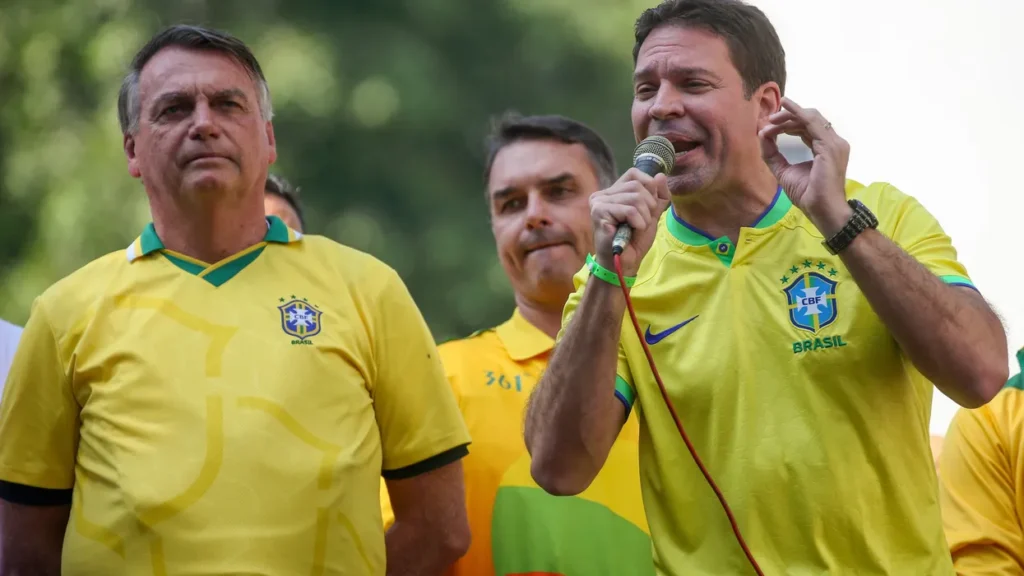
Former Brazilian Intel Chief Arrested by ICE in Florida
In a stunning international development, a former high-ranking Brazilian intelligence official has been taken into custody in the United States. The arrest, executed by U.S. Immigration and Customs Enforcement (ICE) in Miami, Florida, sends ripples through diplomatic and intelligence circles, highlighting the long arm of international law and the complex web of global justice. This case bridges political scandals in South America with U.S. immigration enforcement in a way few could have predicted.
From Intel Chief to ICE Detainee: The Arrest in Miami
The individual at the center of this case is Alessandro Moretti, the former head of Brazil’s Institutional Security Office (GSI), a key intelligence agency. According to reports, Moretti was arrested by ICE agents in the Miami area. He is currently being held at the Krome Detention Center, a facility used by U.S. authorities to detain foreign nationals facing immigration proceedings or extradition.
The arrest did not occur in a vacuum. It is directly linked to his alleged involvement in one of Brazil’s most significant political scandals: the January 8, 2023, attacks on government buildings in Brasília. Following the election of President Luiz Inácio Lula da Silva, thousands of supporters of former President Jair Bolsonaro stormed the Supreme Court, Congress, and the presidential palace. The events drew immediate comparisons to the January 6th insurrection in the United States.
Charges and Accusations from Brazil
Brazilian authorities have been conducting a sweeping investigation into the attacks, seeking to identify both the rioters on the ground and the officials who may have enabled or orchestrated the events. Alessandro Moretti has become a prime target of this probe. Brazilian Supreme Court Justice Alexandre de Moraes, who is overseeing the investigation, has issued an arrest warrant for Moretti, accusing him of a series of grave offenses.
The specific charges against the former intel chief include:
- Alleged Omission and Complicity: Authorities claim Moretti, in his role as head of the GSI, failed to take adequate action to prevent the attacks despite having intelligence that suggested they were being planned.
- Facilitation of a Coup Attempt: More serious accusations suggest he may have actively facilitated the invasion by rioters, potentially by undermining security protocols.
- Abuse of Power: Using his official position to either enable the chaos or obstruct the response to it.
Brazil’s Federal Police have labeled the January 8th events an “attempted violent abolition of the Democratic Rule of Law,” making the charges against Moretti exceptionally severe.
The Path to Florida and the Role of U.S. Immigration Authorities
How did a former Brazilian intelligence chief end up in ICE custody in Florida? Reports indicate that Moretti had been residing in the United States, possibly in the Miami area which is home to a large Brazilian diaspora. His exact immigration status has not been fully disclosed, but his detention by ICE suggests he may have been in violation of U.S. immigration laws.
This is where U.S. mechanisms intersect with international justice. While the U.S. and Brazil have an extradition treaty, the process can be lengthy and requires formal diplomatic requests. ICE’s involvement indicates a more immediate path: detention based on immigration violations paves the way for a quicker removal process. If Moretti is found to be deportable, the U.S. can place him on a plane to Brazil without navigating the full extradition treaty, effectively delivering him to Brazilian authorities.
Political Shockwaves in Brazil and Beyond
The arrest has ignited a political firestorm in Brazil. For supporters of President Lula, it is a sign of justice being served and that powerful figures are not above the law. It validates their narrative that the attacks were a coordinated coup attempt involving figures within the previous administration.
For allies of former President Bolsonaro, the arrest is viewed with deep suspicion. They often frame Justice Moraes’s investigation as politically motivated persecution. Moretti’s detention in the U.S. will likely be cited as evidence of an overreach, further polarizing the already fractured Brazilian political landscape.
Internationally, the case is being closely watched as a test of:
- Judicial Cooperation: How effectively the U.S. and Brazil collaborate on high-stakes, politically sensitive cases.
- Accountability for Political Violence: Setting a precedent for holding intelligence and security officials accountable for failing to protect democratic institutions.
- The Use of Immigration Law: The growing trend of using administrative immigration violations as a tool to apprehend individuals wanted for crimes abroad.
What Comes Next: Extradition, Deportation, and Legal Battles
The immediate future for Alessandro Moretti involves navigating the U.S. immigration court system. His legal team can challenge his detention and fight removal. They could argue he faces political persecution in Brazil, which could lead to a claim for asylum or protection under the United Nations Convention Against Torture. Such a claim would dramatically complicate and prolong the proceedings.
Simultaneously, the formal extradition process is likely underway. The U.S. Department of State and Justice Department will review Brazil’s request and supporting evidence. A U.S. federal judge would ultimately decide if the evidence meets the “probable cause” standard required for extradition under the treaty.
Key questions remain:
- Will Moretti fight his removal all the way to the U.S. Supreme Court, creating a legal saga that could last years?
- What specific evidence does Brazilian Justice Moraes possess regarding Moretti’s actions (or inaction) leading up to January 8th?
- Does his arrest indicate that investigators are moving closer to implicating higher-level figures in the Bolsonaro administration?
A Landmark Case at the Crossroads of Law and Politics
The arrest of a former Brazilian intelligence chief on U.S. soil is more than a routine immigration bust. It is a landmark event sitting at the volatile intersection of law, politics, and international relations. It underscores a global reckoning with the threats to democracy from within state institutions themselves.
For the United States, it represents a delicate diplomatic balancing act. Cooperating with Brazil’s investigation aligns with stated values of defending democracy, but it also involves handing over a former foreign official who may claim he is a political victim. For Brazil, it is a crucial step in its painful and public journey to address a direct assault on its heart of government.
As Moretti awaits his fate in a Florida detention center, his case continues to unfold, promising further revelations and tensions. It serves as a stark reminder that in our interconnected world, the consequences of political actions in one nation can very literally follow you to another, where the long arm of justice, enforced by agencies like ICE, can reach. The outcome will resonate far beyond the walls of the Krome Detention Center, influencing the future of accountability and democratic resilience in the Americas.

