Canada’s $4 Billion Gas Pipeline Expansion Just Got Approved
Breaking: Canada Approves Major $4 Billion Natural Gas Pipeline Expansion – Here’s What It Means
The Canadian energy sector just received a major boost. The Canada Energy Regulator has approved a $4 billion expansion of the NGTL System.
This is more than just another infrastructure project. It’s a strategic move expected to reshape Canada’s energy landscape, strengthen exports, and connect Alberta’s gas fields to global markets.
For months, analysts and industry players waited for this decision. Now that it’s approved, attention shifts to what it means for Canada—and the world.
What is the $4 Billion Pipeline Expansion Project?
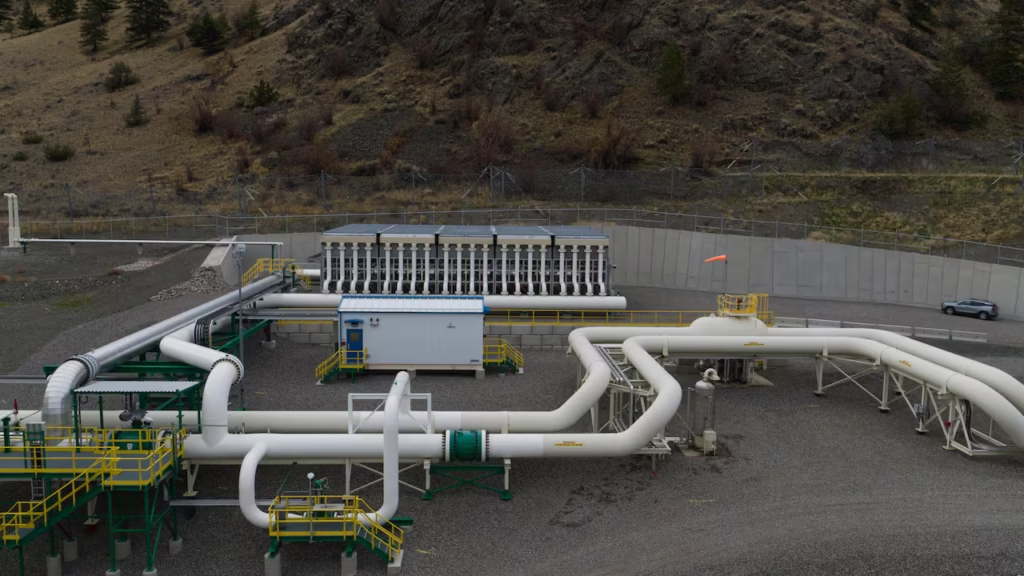
This project expands an existing system rather than building a completely new pipeline. The NGTL system is owned by TC Energy, the same company behind major pipeline developments.
It also supports supply to the Coastal GasLink Pipeline, which feeds export facilities on the coast.
Key details:
- Investment: Around $4 billion CAD
- Location: Northeastern British Columbia and northwestern Alberta
- Source: Montney Formation
- Capacity Increase: About 1.9 billion cubic feet per day
The NGTL system acts as a transport network—moving gas from production sites to processing plants and export terminals.
Why This Expansion Matters Now
Global energy demand is shifting rapidly. The war in Ukraine and reduced reliance on Russian gas have created a supply gap—especially in Europe.
Canada has abundant natural gas, but limited infrastructure to export it efficiently. This expansion helps bridge that gap.
It also supports the LNG Canada Project in Kitimat, ensuring enough supply for full operations.
The Economic Impact: Jobs, Revenue, and Growth
The project is expected to deliver strong economic benefits.
Job Creation
Construction will require thousands of workers across Alberta and British Columbia:
- Engineers and skilled trades
- Equipment operators
- Local contractors and suppliers
There will also be long-term roles in maintenance and operations.
Government Revenue
Increased gas production means higher royalties and taxes, contributing to public funding for services like healthcare and infrastructure.
Energy Market Advantage
By linking Canadian gas to global markets, the country can sell at higher international prices rather than relying solely on North American rates.
The Controversy: Environmental and Indigenous Concerns
Like most pipeline projects, this one comes with debate.
Environmental Conditions
The Canada Energy Regulator has imposed strict requirements:
- Protection of wildlife habitats
- Careful handling of water crossings
- Limits on land clearing and mandatory restoration
- Emissions controls during construction
Indigenous Consultation
Engagement with First Nations communities is a key condition.
Some communities support the project due to economic opportunities, while others remain concerned about environmental and cultural impacts.
A notable development is the push for equity participation—allowing Indigenous groups to hold ownership stakes rather than just receiving compensation.
What Happens Next? Timeline
The project will move forward in stages:
Pre-Construction (2024–2025):
- Final designs
- Route adjustments
- Permits from provincial governments
Construction (2026–2028):
- Land preparation
- Pipeline installation
- Testing and setup
Target Completion: 2028
The timeline aligns with export demand from LNG facilities.
The Bottom Line: A Strategic Energy Move
The approval of this expansion sends a clear signal: Canada is investing in its energy future.
It connects resource-rich regions like Alberta to global demand, supports economic growth, and strengthens the country’s role in international energy markets.
At the same time, success will depend on balancing development with environmental responsibility and Indigenous partnerships.
This project isn’t just about moving gas—it’s about shaping Canada’s position in a rapidly changing global energy landscape.