Why Canada’s Federal Debt Is Drawing Attention Before Budget Day
When a government borrows more money, the consequences extend beyond Parliament Hill. Interest payments can absorb revenue that might otherwise support healthcare, infrastructure, public services, and other priorities, making the country’s financial outlook an important issue for taxpayers.
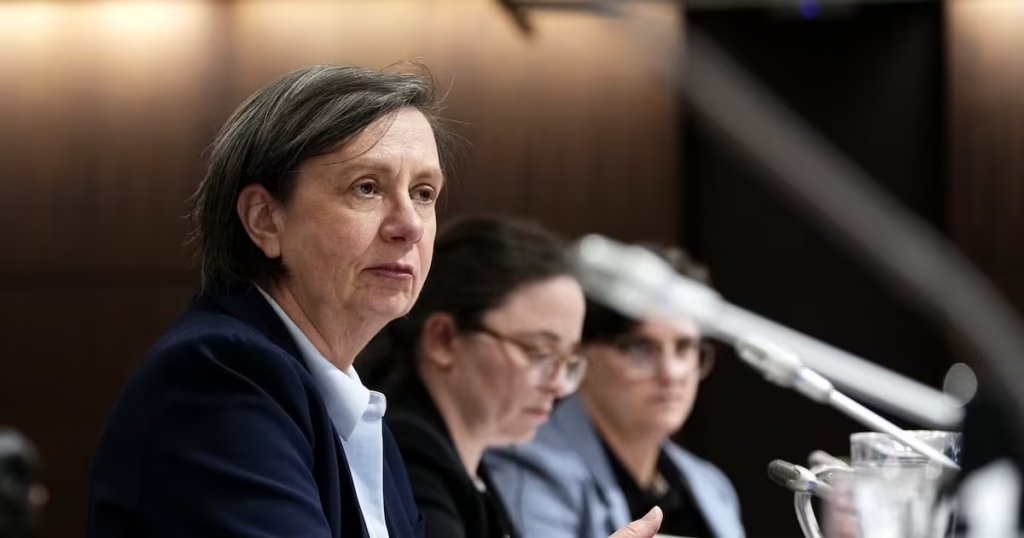
In Canada, the federal government’s borrowing plans are facing renewed scrutiny ahead of its next budget. Parliamentary Budget Officer Annette Ryan has raised concerns about the direction of federal finances, pointing to rising borrowing requirements, slower economic growth, and questions about how effectively the government’s fiscal targets constrain spending.
The discussion comes as Prime Minister Mark Carney’s government prepares to present its federal budget on November 5, 2026. The latest analysis from the Parliamentary Budget Office offers an important reference point for understanding the financial choices facing Ottawa.
What the Parliamentary Budget Officer Is Warning About
On October 20, 2026, the Parliamentary Budget Office released its latest Economic and Fiscal Outlook. The report projected weaker economic growth and greater borrowing over the forecast period than anticipated in its June assessment.
The outlook incorporates economic developments, federal tax and spending measures announced since June, and the effects of new tariffs and counter-tariffs as of October 1, 2026. It does not include additional measures that may be announced in the upcoming federal budget.
Ryan’s concerns focus on the relationship between government spending, borrowing, and the fiscal targets intended to guide financial decisions. The government has outlined plans to invest in major projects, including pipelines and high-speed rail, while managing its operating expenses and overall deficit.
The central question is whether those commitments can be sustained without placing increasing pressure on federal finances. The Parliamentary Budget Office’s projections suggest that the answer will depend partly on the pace of economic growth, the cost of new spending, and how the government manages its borrowing.
Canada’s Economic Growth Forecast Has Weakened
Economic growth matters because a stronger economy generally supports tax revenue through employment, household income, business activity, and consumption. When growth slows, governments may have less revenue available to fund their commitments without increasing borrowing.
The Parliamentary Budget Office now projects Canada’s real gross domestic product (GDP) will grow by 0.9 per cent in 2026 and 1.5 per cent in 2027. Its June outlook had forecast growth of 1.1 per cent in 2026 and 1.6 per cent in 2027.
The revised projections reflect changes in trade conditions involving the United States, including the effects of tariffs. Continued uncertainty in cross-border trade can influence investment decisions, production costs, and demand for Canadian goods.
For the federal government, slower real growth creates a more difficult environment for balancing spending commitments against available revenue. Although nominal GDP growth is projected to be stronger because of inflation and higher oil and commodity prices, that does not necessarily mean the economy is producing more goods and services in real terms.
Federal Deficits and Borrowing Remain Key Concerns
A budget deficit occurs when government expenses exceed its revenue during a fiscal year. Borrowing helps cover that gap, but the government’s overall financing needs can be greater than the deficit reported in its budget.
According to the October outlook, Canada’s federal deficit is projected to reach $63.3 billion in 2026-27. By 2030-31, the deficit is projected to increase to $67.8 billion, which is $9.5 billion higher than the Parliamentary Budget Office forecast in June.
Across the five-year projection period, cumulative deficits are expected to total $333.3 billion. Federal borrowing over the same period is projected to rise by $732.9 billion.
These figures measure different things. Deficits represent the difference between government revenue and expenses under budgetary accounting, while borrowing reflects the government’s broader financing requirements, including transactions that may not immediately appear as expenses in the budget balance.
This distinction is particularly relevant when the government finances capital investments, loans to Crown corporations, or other financial transactions. Such activities can increase borrowing requirements even when their accounting treatment differs from that of ordinary program spending.
Why Debt-to-GDP Is an Important Measure
The size of Canada’s federal debt is only one part of the fiscal picture. Economists and policymakers also examine debt relative to GDP, which compares the government’s debt with the overall size of the economy.
The Parliamentary Budget Office projects the federal debt-to-GDP ratio will rise from 40.8 per cent in 2026-27 to 42.6 per cent in 2030-31. This measure helps assess whether the economy is growing quickly enough relative to the government’s debt burden.
A rising ratio does not, by itself, establish that a government cannot meet its obligations. However, a sustained increase can indicate that debt is growing faster than the economy, potentially reducing the government’s flexibility if economic conditions deteriorate or borrowing costs rise.
Interest payments also compete with other spending priorities. As more revenue is allocated to servicing existing debt, the government may have less room to respond to unexpected economic shocks or introduce new programs without changing taxes, spending, or borrowing plans.
Are the Government’s Fiscal Targets Providing Enough Discipline?
The Carney government has emphasized two fiscal objectives: balancing the operating budget and reducing the deficit relative to the size of the economy. These targets are intended to provide a framework for managing federal finances while allowing investment in long-term priorities.
However, the Parliamentary Budget Office’s October assessment projects that the government will meet only one of its two fiscal anchors over the forecast period. The operating budget is projected to reach a surplus of $6.2 billion in 2028-29, while the deficit-to-GDP ratio is projected to rise in both 2027-28 and 2029-30.
An operating surplus is not the same as a balanced overall budget. The operating measure excludes debt-financed capital spending, meaning the government can achieve its operating target while continuing to run an overall deficit and borrow additional money.
This distinction is important when evaluating major infrastructure and development plans. Capital investments may create assets that deliver benefits over many years, but their financing still affects the government’s cash requirements and overall debt position.
What to Watch for in the November 5 Budget
The federal budget will give Canadians a clearer picture of how the government intends to manage these competing priorities. The Parliamentary Budget Office’s current projections provide a baseline for evaluating whether new announcements improve or worsen the fiscal outlook.
One important detail will be the projected deficit over the medium term. Ryan has indicated that the timing of borrowing and the size of future deficits deserve particular attention, rather than focusing exclusively on the result for a single year.
Another issue is transparency surrounding spending delivered through Crown corporations, loans, and special funds. The Parliamentary Budget Office has highlighted how these arrangements can complicate the relationship between reported deficits and total borrowing requirements.
Readers should also examine the assumptions behind projected revenue, economic growth, and capital investment. Changes in trade conditions, commodity prices, interest rates, and the implementation of new spending commitments could affect the eventual results.
Frequently Asked Questions
When will Canada’s federal budget be released?
The federal budget is scheduled for November 5, 2026. The document is expected to outline the government’s financial plans and provide updated projections for revenue, spending, and the deficit.
Does a higher federal deficit automatically mean Canada is in a debt crisis?
No. A deficit means the government is spending more than it receives in revenue during a fiscal year, but it does not automatically indicate an inability to meet financial obligations. Debt sustainability depends on factors including economic growth, interest costs, revenue, and the government’s longer-term fiscal position.
Where can Canadians check the government’s financial projections?
Canadians can consult the official Parliamentary Budget Office website at pbo-dpb.ca for independent economic and fiscal assessments. The Department of Finance Canada also publishes federal budgets and economic updates that explain the government’s own projections and policy decisions.
What Happens Next for Canada’s Public Finances?
The November budget will provide an opportunity to compare the Carney government’s plans with the Parliamentary Budget Office’s latest projections. The most useful assessment will consider not only the headline deficit but also the government’s total borrowing requirements, debt-servicing costs, and progress toward its stated fiscal objectives.
For Canadians following the issue, November 5 is the key date to watch. Comparing the new budget with the October 20 outlook can help readers identify where the government’s projections differ, which assumptions have changed, and how its spending and borrowing decisions may affect the country’s financial position over the coming years.