
Canada Takes a Position on Russia’s Return to International Hockey
Canada is preparing to host one of the biggest events in international junior hockey, but a major participation dispute has emerged ahead of the tournament. Prime Minister Mark Carney has announced that Russian athletes will not be allowed to represent their country at the upcoming World Junior Hockey Championship in Alberta.
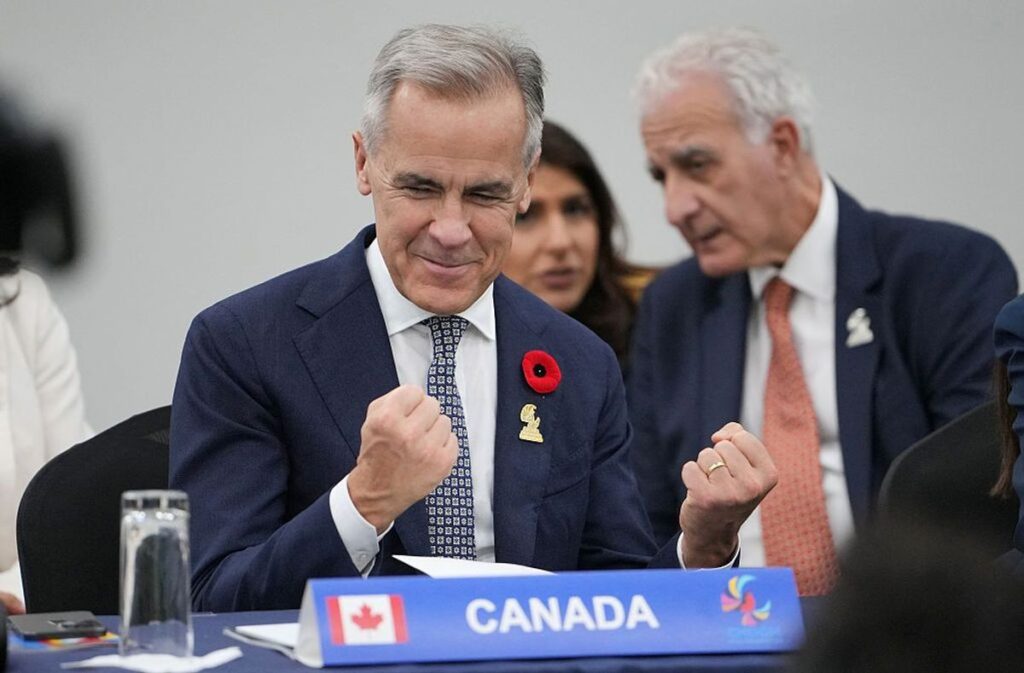
The announcement came on November 3, 2026, during a press conference in Antigua, where Carney was attending the Commonwealth Heads of Government Meeting. His statement also addressed Belarusian athletes, confirming that Canada’s restrictions would apply to both countries while Russia’s war against Ukraine continues.
The decision places Canada’s immigration policies at the center of an international sports dispute following a recent ruling by the Court of Arbitration for Sport (CAS) concerning Russia’s eligibility to compete in international ice hockey.
When and Where Will the 2027 World Junior Championship Take Place?
The 2027 International Ice Hockey Federation (IIHF) World Junior Championship is scheduled to take place from December 26, 2026, to January 5, 2027, in Alberta, Canada.
The tournament will be hosted across two cities: Edmonton and Red Deer. Both communities are preparing to welcome international teams, supporters, and hockey fans for the annual under-20 competition.
The event brings together national teams competing for the world junior title. Canada is among the participating countries, alongside other established hockey nations, including Sweden, Finland, the United States, Czechia, and Germany.
With the tournament approaching, the question of Russian participation has become an important issue for organizers and international hockey authorities.
Why Is Russia’s Participation Being Disputed?
Russia and Belarus have faced restrictions in international hockey since February 2022, following Russia’s full-scale invasion of Ukraine and Belarus’s support for the military campaign.
The International Ice Hockey Federation previously excluded Russian and Belarusian national teams from its competitions. These restrictions were connected to concerns involving safety, security, and the organization of international sporting events.
However, the situation changed on October 30, 2026, when the Court of Arbitration for Sport issued a ruling overturning the IIHF’s exclusion decision and allowing the Russian Ice Hockey Federation to enter teams in international competitions.
The decision created uncertainty for upcoming tournaments, particularly the World Junior Championship in Alberta, where preparations and team arrangements were already underway.
The IIHF expressed disappointment with the CAS ruling but acknowledged its responsibility to implement the decision. The federation also indicated that changes involving participating countries could require adjustments to competition formats, schedules, travel arrangements, accommodation, and security planning.
Mark Carney Explains Canada’s Position
During his November 3 press conference in Antigua, Carney made clear that the Canadian government would not permit Russian and Belarusian athletes to represent their countries in competitions hosted in Canada while the war against Ukraine continues.
He specifically addressed the upcoming junior tournament, confirming that Russian players would not be participating under their national representation.
The announcement reflects Canada’s continuing position on Russia’s invasion of Ukraine. It also establishes that the federal government intends to use its domestic legal authority rather than automatically follow the international sports ruling.
Canada’s position is not limited to the sporting eligibility decisions made by the IIHF. The government is also considering the immigration requirements that determine whether foreign athletes and sporting officials can enter the country.
How Canada’s Immigration Laws Affect Russian Athletes
According to the Kyiv Independent, the Canadian government plans to use provisions under the Immigration and Refugee Protection Act to prevent Russian and Belarusian athletes and officials from entering Canada to compete under their countries’ national symbols.
This distinction is important because an international sports organization determining that a team is eligible to compete does not automatically guarantee that its athletes will receive permission to enter the host country.
Canada’s immigration framework gives the federal government authority to make decisions concerning entry into the country. Consequently, the CAS ruling does not automatically override Canadian immigration requirements.
There is also an important distinction involving athletes who compete under neutral designations. The reported Canadian position allows individual athletes competing as neutrals to be considered for entry on a case-by-case basis.
This means the restrictions should not be interpreted as an automatic prohibition against every individual athlete holding Russian or Belarusian citizenship. The central issue is whether athletes and officials are participating as representatives of their respective national teams.
What Does the Canadian Government Say About the Restrictions?
Global Affairs Canada issued a statement explaining the government’s position on Russian and Belarusian representation in international sporting competitions.
The statement emphasized that Canada’s policy remains connected to the continuing war against Ukraine and Belarus’s involvement in supporting Russia.
The government also distinguished between national representation and individual participation. Its position is intended to prevent the Russian and Belarusian governments from using sporting events hosted in Canada to obtain political recognition through their national teams.
Accordingly, individual athletes competing under neutral designations may still be considered for participation, subject to Canadian entry requirements.
This distinction is particularly relevant to international sports organizations because eligibility to compete and permission to enter a host country are separate matters.
How Are Hockey Organizations Responding?
Canada’s announcement comes amid wider disagreements within international hockey. Several European national federations have also expressed opposition to playing against Russian teams while the war in Ukraine continues.
According to reports, Norway, Denmark, Sweden, and the Czech Republic have announced that their national teams will refuse to play Russia at the 2027 men’s world championship in Germany.
Other hockey organizations have raised concerns about the potential consequences of Russia’s return to international competition.
The Swedish Ice Hockey Association has maintained its position against playing Russia under the current circumstances. Finland, meanwhile, has also expressed opposition to participating in competitions involving Russian and Belarusian teams.
These positions demonstrate that the disagreement extends beyond Canada’s hosting arrangements. International hockey organizations are facing questions about how to organize competitions when participating countries hold different positions on Russia’s eligibility.
What Happens to the 2027 World Junior Tournament?
The immediate concern is how the participation dispute will affect the competition scheduled for December 26, 2026, through January 5, 2027.
Hockey Canada has been communicating with the IIHF and other stakeholders regarding the consequences of Russia’s potential return to international competition.
The tournament’s preparations include established schedules, participating teams, accommodation arrangements, and venue planning. Any significant change in the participating countries could require coordination among the governing bodies and organizers.
Edmonton and Red Deer remain the designated host cities. Rogers Place in Edmonton and Marchant Crane Centrium in Red Deer are the scheduled venues for the preliminary-round games.
The final tournament arrangements will depend on decisions involving the IIHF, Canadian authorities, and the participating national associations.
Frequently Asked Questions
Will Russia participate in the 2027 World Junior Hockey Championship?
Prime Minister Mark Carney has stated that Russian athletes will not be permitted to represent Russia at the tournament in Canada. The federal government intends to use Canadian immigration laws to enforce its position.
When will the 2027 World Junior Championship begin?
The competition is scheduled to run from December 26, 2026, to January 5, 2027, in Edmonton and Red Deer, Alberta.
Are Belarusian athletes also affected?
Yes. Canada’s announced restrictions apply to Russian and Belarusian athletes and officials seeking to participate under their respective national symbols. Individual athletes competing under neutral designations may still be considered for entry.
What to Watch Before the World Juniors Begin
The next important development will be how the International Ice Hockey Federation responds to Canada’s immigration position following the October 30 CAS ruling.
Hockey Canada and the IIHF will also need to address any organizational consequences arising from the disagreement. Fans should monitor official tournament announcements for updates concerning participating teams, schedules, and competition arrangements.
For supporters planning to attend games in Edmonton or Red Deer, the practical step is to follow the official Hockey Canada ticketing and tournament updates rather than relying on earlier team announcements.
With the opening games scheduled for December 26, 2026, the coming weeks will be important in determining the final arrangements for the championship. Canada’s position has been made clear, but the international sporting and administrative consequences will continue to develop as the tournament approaches.