
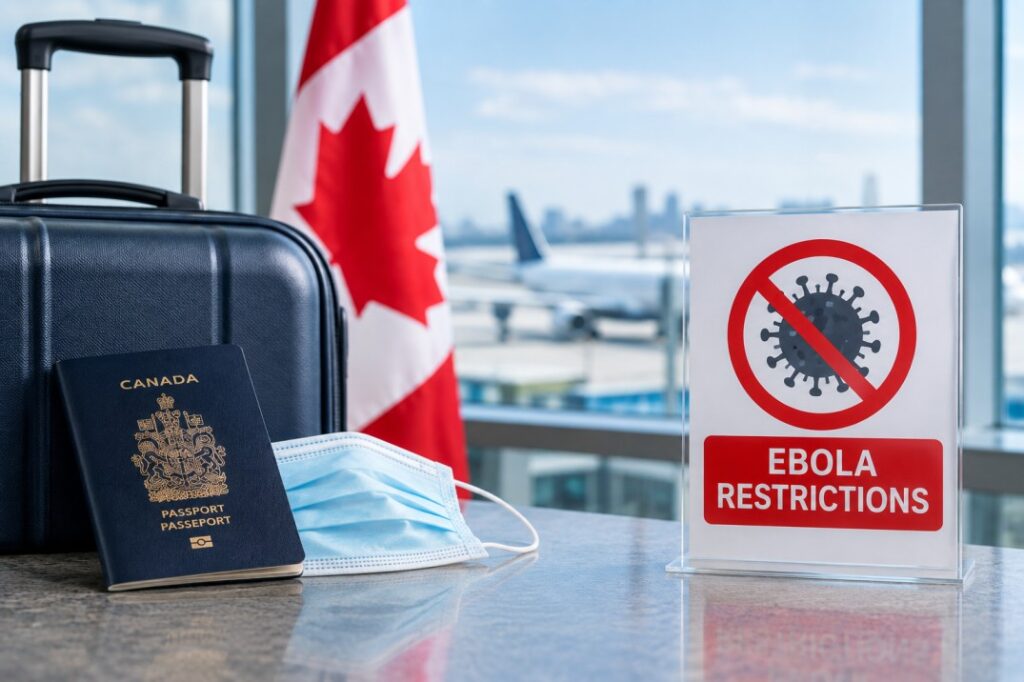
Canada Tightens Immigration Entry Rules During Ebola Outbreak
Canada extends immigration restrictions for 60 days through November 27, 2026, suspending travel documents for residents of Democratic Republic of Congo, Uganda, and South Sudan due to Ebola disease concerns.
Ebola border restrictions Canada
Canada’s Response to the Growing Ebola Threat
On September 28, 2026, Immigration, Refugees and Citizenship Canada (IRCC) announced an extension of temporary border measures aimed at preventing the spread of Ebola disease. The decision reflects ongoing concern about the outbreak in the Democratic Republic of Congo and the risk it poses to neighbouring countries, including Uganda and South Sudan. The measures will remain in place for an additional 60 days, extending until November 27, 2026.
This is not a new policy, but rather a continuation and extension of existing restrictions that had already been implemented. The government has determined that the risk level remains high enough to warrant keeping these safeguards active at Canada’s borders.
What the Extended Measures Actually Mean
The core of the extended policy is straightforward: immigration documents remain suspended for residents of countries classified as having a high or very high risk of Ebola disease outbreak. This suspension applies specifically to the Democratic Republic of Congo, Uganda, and South Sudan.
If your last country of residence at the time of your application was one of these three nations, you cannot travel to Canada right now. This restriction applies regardless of whether you already have an approved visa, permit, or electronic travel authorization in hand. A previously approved document does not override the current travel suspension.
The restriction affects people at different stages of the immigration process. Those who have already received approval for entry cannot use those documents to travel. Those in the middle of applying for immigration benefits will see their applications continue to be processed, but they will not be finalized while the measures remain in effect.
Who Is Affected by These Restrictions
The primary group affected includes anyone whose most recent country of residence before applying was the Democratic Republic of Congo, Uganda, or South Sudan. This can include Canadian citizens abroad, permanent residents returning to Canada, international students, temporary workers, and people applying for permanent residency from these regions.
Someone who lived in Uganda but was born in Kenya, for example, would be subject to the suspension if Uganda was their last country of residence when they filed their application. The rule focuses on recent residence history, not citizenship or birthplace.
Family members applying together from these regions are also affected. If a household includes someone whose last residence was in one of these three countries, the travel suspension extends to the entire application in most cases.
How IRCC Is Handling Pending Applications
Immigration, Refugees and Citizenship Canada has committed to continuing to process new and existing applications that are affected by these measures. However, there is a critical distinction: processing will continue, but finalization will not happen while the restrictions are in place.
This means caseworkers will still review your documents, conduct background checks, verify credentials, and move your file forward administratively. But the final approval that would normally allow you to travel to Canada will be held until after November 27, 2026, at the earliest.
Applications that were already in progress when the measures were first introduced will resume movement once the 60-day extension expires. IRCC has not indicated whether the restrictions will be lifted on that date or extended further, so applicants should monitor official government announcements in early November.
The Broader Context: Why These Specific Countries
The Democratic Republic of Congo has been the epicenter of the Ebola outbreak. Uganda and South Sudan, as neighbouring countries, face elevated risk of disease transmission due to geographic proximity and cross-border movement of people.
Ebola outbreaks typically spread through direct contact with infected individuals or their bodily fluids. While the virus does not spread through the air, the concern in public health is that travellers from affected regions could carry the virus during the incubation period, which can last up to 21 days. A person may not show symptoms but could still transmit the disease after arriving in Canada.
By suspending travel documents for residents of these three countries, Canada aims to reduce the probability of an infected individual entering the country during the most active phase of the outbreak.
What This Means for Your Immigration Timeline
If you are waiting for approval to travel to Canada and your last residence was in the Democratic Republic of Congo, Uganda, or South Sudan, expect delays extending at least to late November 2026. Even if your application reaches final approval status before that date, you will not receive the document needed to actually board a flight and enter Canada.
This creates practical challenges. Travel plans should not be booked during this window. Employers expecting you to start work or educational institutions anticipating your arrival may need to be notified of potential delays. Family reunification timelines may need adjustment.
One actionable step is to contact IRCC directly to confirm your application status and the most recent estimate for when travel might resume. The Help Centre at IRCC can provide application-specific information that goes beyond the general extension announcement.
When Will These Restrictions End
The current extension runs through November 27, 2026. That date is firm as of the September 28 announcement, but it is not necessarily final. IRCC will assess the Ebola situation in late October and early November to determine whether to lift the measures, extend them again, or adjust which countries are included.
The government’s decision will depend on whether the outbreak in the Democratic Republic of Congo shows signs of containment and whether cases in Uganda and South Sudan are declining. Public health guidance from Canadian health authorities will inform that decision.
Applicants should plan to hear from IRCC around mid-November regarding the status of restrictions after November 27. Following official IRCC channels and the government’s travel advisories is the best way to stay informed about changes.
Checking Your Application Status During This Period
IRCC continues processing applications even though finalization is paused. You can monitor progress through your online account on the IRCC website. Log in to check your application status and see what stage your file has reached.
If your application shows movement—such as new requests for documentation, completion of background checks, or other processing steps—that is normal and expected. It does not mean you will receive approval to travel before November 27, but it does confirm your application is moving through the system.
Keep all documentation organized and be ready to provide additional information if IRCC requests it. Responding quickly to any requests from IRCC will help ensure your application is ready for finalization as soon as the restrictions lift.
Planning Ahead: What To Do Now
If you are affected by the extension, focus on ensuring your application file is complete and accurate. Verify that IRCC has all necessary documents, including medical exams, police certificates, and proof of funds if required.
Update your contact information with IRCC if you have moved. Ensure the email address and mailing address in your account are current so you receive notifications when your application status changes.
Mark November 27, 2026, on your calendar as a checkpoint date. Around that time, check official government announcements to see whether restrictions have been lifted or extended further. Having this date as a reminder will help you stay ahead of any changes that affect your immigration plans.