Carney Faces Test as Separatist PQ Likely Wins Quebec
Prime Minister Mark Carney confronts major political challenges as Quebec’s Parti Québécois moves toward majority government control in upcoming election.
Carney Quebec separatism
A New Political Challenge Emerges for Canada’s Federal Leadership
Prime Minister Mark Carney is about to face a political test that has largely disappeared from the national conversation for over a decade. As Quebec prepares to vote on October 5, polling data suggests the Parti Québécois will likely secure government, with the party moving into majority territory in recent surveys. This outcome would place a sovereigntist government in Quebec City for the first time since 2014, when Premier Pauline Marois led a PQ administration that lasted less than two years.
The challenge isn’t simply about managing another provincial government. It’s about managing one elected explicitly on a mandate that includes holding a referendum on Quebec independence.
Understanding the Sovereignty Movement’s Return
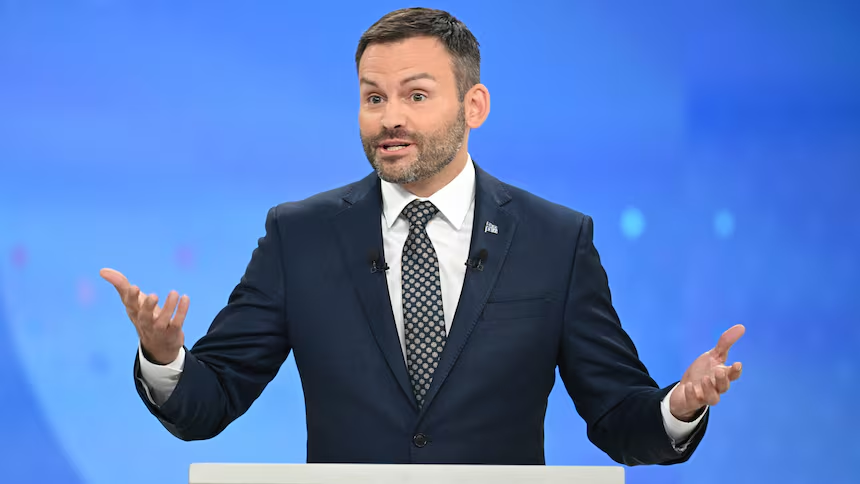
The last time a PQ government held office under Pauline Marois, there was virtually no discussion of holding a referendum. That represents a significant shift from the current PQ leader Paul St-Pierre Plamondon, who has made sovereignty central to his campaign platform.
To understand the stakes, you need to look back further. The 2003 Quebec election saw Bernard Landry attempt to revive the sovereignty movement by promising a referendum if he could achieve “moral certainty” he would win. Landry lost that race to Quebec Liberal Leader Jean Charest. More than two decades later, St-Pierre Plamondon is reviving that sovereigntist energy with considerably more electoral momentum behind him.
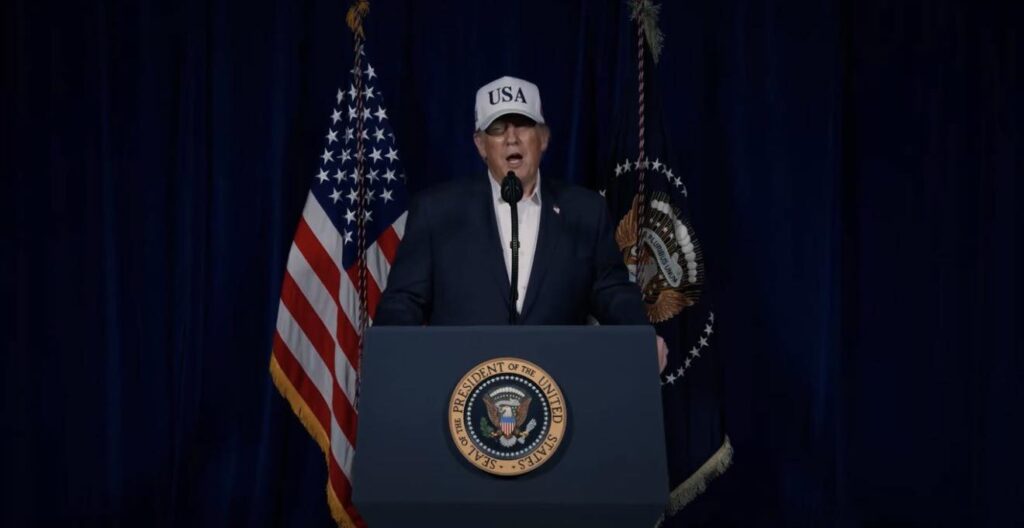
St-Pierre Plamondon has made one strategic decision that affects immediate timeline: he has pledged not to hold a referendum until after U.S. President Donald Trump leaves office. He cited the volatility of the Trump administration and potential impacts on referendum results as his reasoning. This decision should not, however, be mistaken for a lack of commitment to the separatist cause.
The Confidence Gap in Sovereignty Support
Despite St-Pierre Plamondon’s personal optimism about sovereignty, public opinion polling shows only 30 percent of Quebecers are interested in a referendum at all. This gap between leadership conviction and public appetite represents a political tension that will define the coming period.
The PQ leader has invoked Jacques Parizeau, a former premier and PQ leader, who once said “we shouldn’t be afraid of democracy.” This framing suggests that even if immediate referendum support is low, the PQ plans to make the case for sovereignty throughout their mandate.
How a PQ Victory Changes Federal-Provincial Relations
Carney’s government has been focusing on economic growth initiatives this week, including expansion of an LNG plant on the West Coast and referral of a high-speed rail strategy in Alberta to the Major Projects Office. The West Coast pipeline is expected to be designated a project of national interest to expedite approval. These economic projects are meant to grow the Canadian economy and address political challenges, particularly in the West ahead of the October 19 Alberta referendum on separation.
But Quebec presents a different dynamic. All provinces negotiate with Ottawa for jurisdiction and additional resources. Only one would do so with a mandate to hold a referendum on leaving Canada entirely.
St-Pierre Plamondon has already telegraphed how his government would operate differently. He has promised to eliminate the intergovernmental affairs minister position, replacing it with a minister of independence. This new role would be specifically tasked with advancing gains for Quebec, signaling a more aggressive negotiating posture with the federal government.
The Coordination Challenge for Team Canada
In recent years, federal and provincial coordination—what officials call “Team Canada”—has been essential to responding to the trade war with the United States. A PQ government in Quebec would make that coordination considerably more difficult to maintain.
St-Pierre Plamondon has also criticized what he views as federal failures affecting Quebec. In an interview with La Presse, he pointed to what he characterizes as declines in French language protections, inadequate health transfer funding, and immigration policy that he says has been undermined by federal action. These grievances will likely form the basis for his government’s demands on Ottawa.
Keeping the country united behind a coherent strategy becomes measurably harder when one province is led by a government explicitly working toward separation, even if a referendum remains years away.
Carney’s Strengths and the Road Ahead
Carney does have political advantages heading into this challenge. His personal popularity remains high across Canada, including in Quebec, which is also his political power base. He holds 44 of the 78 federal ridings in Quebec, giving him significant elected representation in the province.
That political foundation matters when the task becomes proving to Quebec that it is a valued part of the federation. Carney must demonstrate federal commitment to Quebec’s interests while simultaneously refusing to provide fuel to the separatist movement by making concessions under pressure.
What to Watch for in the Coming Months
The immediate political test will arrive as early as Monday following the October 5 election results. How Carney’s government responds to a PQ victory—what tone is struck, what meetings are scheduled, what commitments are made—will set the tenor for federal-provincial relations over the next several years.
The timing matters significantly. A sovereigntist government in Quebec, combined with Western separation sentiment (evidenced by the October 19 Alberta referendum), creates a pressure test for Canadian federalism. Managing both simultaneously requires strategic discipline and careful communication.
For Carney, the coming period will determine whether his government can navigate this challenge while maintaining the economic and political coordination necessary to address external pressures like the U.S. trade situation. The stakes extend well beyond Quebec’s borders.