
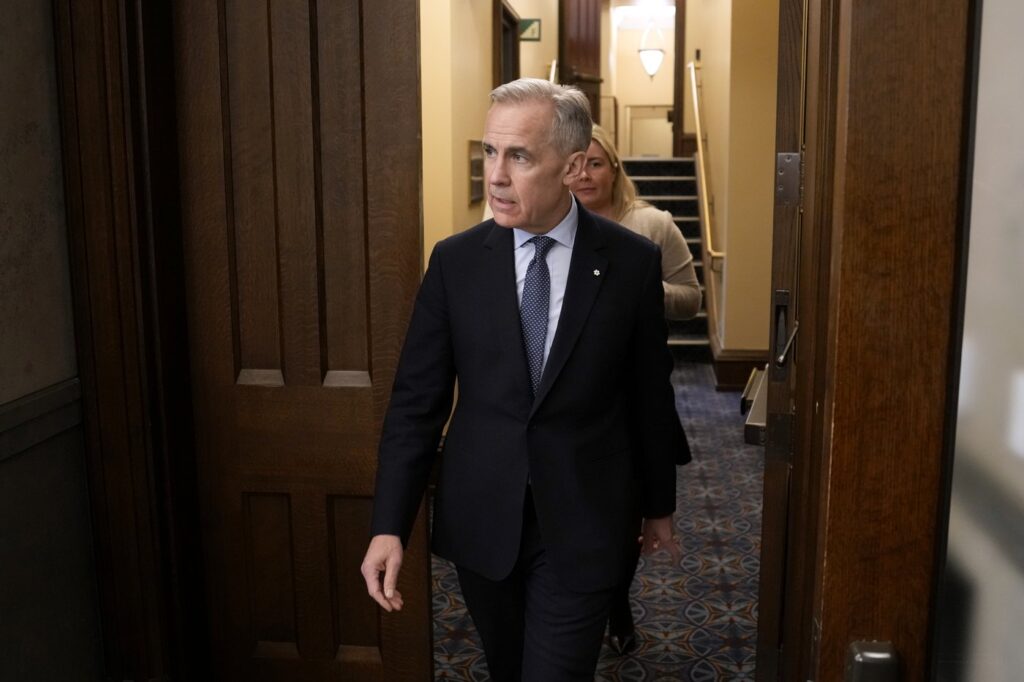
Mark Carney Rejects New Concessions for U.S. Trade Talks
In a firm declaration that has resonated across Canadian political and economic circles, former Bank of Canada Governor Mark Carney has publicly rejected the notion of offering new concessions to the United States in upcoming trade talks. The statement, made during a recent public appearance, serves as a powerful stance on the future of the Canada-United States-Mexico Agreement (CUSMA) as it approaches its first scheduled review in 2026.
Carney’s position underscores a significant shift in the Canadian approach to trade negotiations with its largest partner. Rather than preparing to make defensive concessions, his message advocates for a strategy of assertive advocacy, focusing on protecting Canadian interests and leveraging the nation’s evolving economic strengths in a changing global landscape.
The Context: CUSMA and the Looming Review
The CUSMA, which replaced NAFTA in 2020, is a cornerstone of North American economic integration. A built-in clause mandates a joint review every six years, with the first one slated for 2026. This process allows member countries to discuss the agreement’s functioning and propose amendments. Given the unpredictable nature of U.S. politics and trade policy, speculation has been rife about potential American demands for changes that could favor U.S. industries at the expense of its partners.
Historically, trade negotiations with the U.S. have often placed Canada in a position of making difficult compromises to preserve access to the vital American market. Carney’s comments directly challenge this historical dynamic, suggesting that Canada’s bargaining position is stronger than it has been in the past.
Why Carney Says Canada Should Stand Firm
Mark Carney’s argument against new concessions is not based on protectionism but on a clear-eyed assessment of Canada’s modern value proposition. He points to several key areas where Canada holds significant leverage and must not undervalue its contributions:
- Energy Security and Critical Minerals: In a world reeling from energy volatility and racing to secure supply chains for the green transition, Canada is a stable, democratic supplier of both traditional energy and the critical minerals essential for electric vehicles and batteries. This strategic asset is a major point of leverage.
- The Integrated Auto Sector: The North American automotive industry is deeply integrated across the three CUSMA countries. Disrupting this carefully negotiated balance, particularly the rules of origin that support manufacturing in all three nations, would harm U.S. automakers and consumers as much as anyone.
- Agricultural Market Access: Canada’s supply-managed sectors (like dairy) have perpetually been a target in U.S. trade talks. Carney implies that further concessions in these areas are unacceptable, as they would undermine domestic agricultural stability without proportional gain.
- Economic Stability and Partnership: Beyond specific sectors, Canada represents a reliable, rules-based economic partner that shares a massive border with the U.S. The stability and predictability of this relationship have immense, often understated, value for American business.
The Risks of a Concession-Based Strategy
Carney’s warning highlights the perils of entering negotiations from a position of weakness. A strategy premised on making concessions could lead to:
- A gradual erosion of Canadian economic sovereignty in key sectors.
- Precedent-setting compromises that weaken Canada’s position in all future international trade discussions.
- Minimal tangible returns, as concessions might be made without securing meaningful improvements in U.S. market access or the resolution of long-standing irritants like Buy American policies.
Instead, Carney advocates for a proactive agenda. This means Canada should enter the talks with its own list of objectives aimed at modernizing the agreement and fixing existing problems, rather than simply reacting to a U.S. wish list.
Carney’s Proposed Framework: Advocacy Over Accommodation
So, if not concessions, what should Canada’s strategy be? Carney’s vision involves a platform of assertive advocacy, focusing on areas that benefit both nations and align with future global trends. Potential Canadian priorities could include:
- Strengthening Dispute Resolution: Reinforcing the mechanisms that allow for impartial settlement of trade disagreements is crucial for a smaller economy dealing with a larger partner.
- Advancing the Digital Economy: Updating CUSMA to better facilitate cross-border data flows, digital trade, and e-commerce.
- Deepening Climate and Clean Energy Cooperation: Formalizing partnerships on green technology, carbon pricing compatibility, and infrastructure to build a competitive North American clean economy.
- Labor Mobility and Recognition: Exploring frameworks to make it easier for professionals to work across borders, addressing shared labor market challenges.
Political and Public Reception
Carney’s comments have been interpreted by many as a clear articulation of a potential governing philosophy, fueling further speculation about his political future. The stance aligns with a growing public sentiment in Canada for a government that defends national interests more robustly on the world stage, particularly in dealings with the United States.
Business groups are likely divided. Export-dependent sectors may fear any tension that could disrupt trade, while others, particularly in technology and green energy, may welcome a more forward-looking agenda that moves beyond defending 20th-century compromises.
The Road to 2026: Preparation is Key
The 2026 review may seem distant, but trade negotiations require years of preparation. Carney’s intervention serves as an early marker, setting the tone for the domestic debate Canada needs to have. It calls for:
- A comprehensive analysis of what is and isn’t working in the current CUSMA from a Canadian perspective.
- Building a broad national consensus on core priorities that are non-negotiable.
- Initiating early and continuous dialogue with U.S. and Mexican counterparts, industry, and labor to shape the agenda.
Conclusion: A Defining Moment for Canadian Trade Policy
Mark Carney’s rejection of new concessions is more than a simple policy position; it is a call for a fundamental shift in mindset. It argues that Canada’s role in North America is not that of a junior partner perpetually on the defensive, but of an indispensable ally with unique assets. As the world grapples with supply chain reshoring, energy security, and the climate transition, Canada’s value has never been clearer.
The approach to the 2026 CUSMA review will be a defining test of this philosophy. Will Canada navigate the talks from a position of confident advocacy, as Carney suggests, or will it fall back into a familiar pattern of concession-based bargaining? The answer will have profound implications for the country’s economic sovereignty and its place in the North American economy for decades to come. The message is clear: the time to prepare for a strong, principled stance is now.

