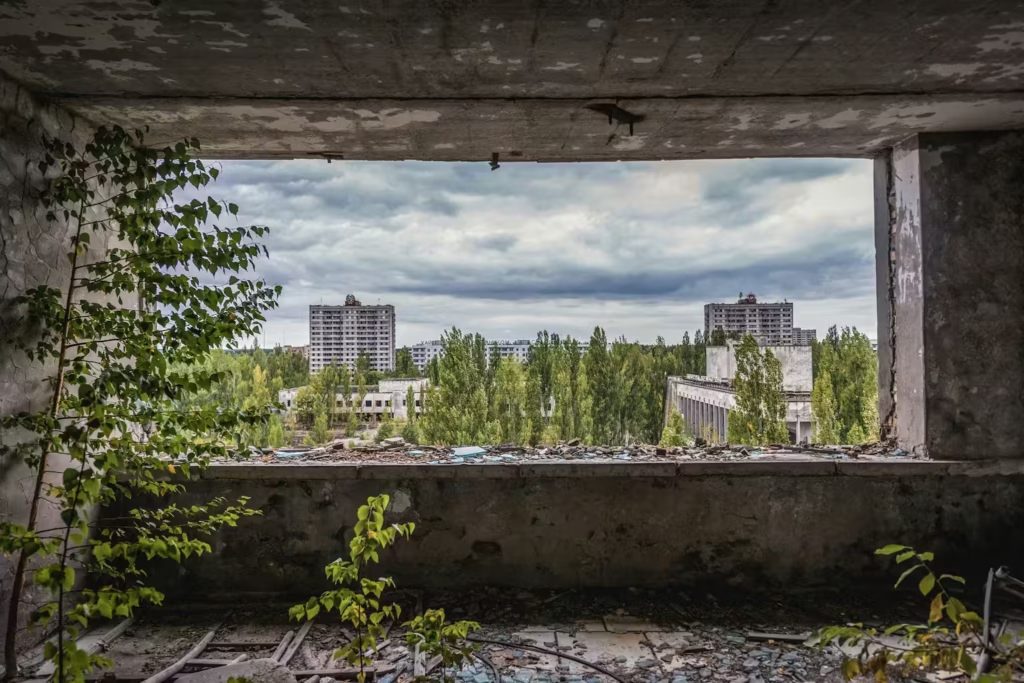
How Nature Reclaimed Chernobyl’s Radioactive Exclusion Zone
In the spring of 1986, the Chernobyl Nuclear Power Plant became the epicenter of the worst nuclear disaster in history. The explosion and subsequent fire spewed a plume of radioactive material across Europe, forcing the permanent evacuation of over 100,000 people from a surrounding area spanning thousands of square kilometers. Overnight, towns like Pripyat were transformed from bustling Soviet communities into silent, frozen monuments to human error. This area, known as the Chernobyl Exclusion Zone, was deemed a dead landscape, poisoned for centuries to come.
Yet, in the nearly four decades since the disaster, something extraordinary has happened. In the profound absence of humans, nature has staged a remarkable and unexpected comeback. The Exclusion Zone, far from being a barren wasteland, has become an accidental sanctuary where wildlife thrives in ways that challenge our understanding of radiation’s long-term ecological impact.
The Unintended Wildlife Sanctuary
When humans retreated, the forest began to advance. Concrete cracked under the pressure of roots, and asphalt streets were reclaimed by moss and grass. The most iconic images of this reclamation are the deserted streets of Pripyat, where trees now grow from the roofs of apartment buildings. But beyond the ghost towns, a more vibrant transformation was underway.
Scientists and observers began to document a stunning resurgence of animal life. Species that had been scarce or absent for generations in the region started to reappear, their populations flourishing without the pressures of habitat destruction, hunting, and agriculture.
A Thriving Ecosystem Against the Odds
The list of species now calling the Zone home reads like a European wildlife census. Key populations include:
- Large Mammals: Herds of Przewalski’s horses, once extinct in the wild, were introduced and have thrived. Populations of Eurasian lynx, brown bears, and gray wolves have rebounded dramatically, with wolf densities reportedly seven times higher than in comparable reserves outside the Zone.
- Ungulates: Roe deer, red deer, and most notably, moose and wild boar roam the forests and meadows in significant numbers.
- Avian Life: The area is a haven for birds, from majestic birds of prey like white-tailed eagles and eagle owls to rare species like the greater spotted eagle and the massive black stork.
- Other Fauna: Beavers have reshaped waterways with their dams, and even elusive predators like the raccoon dog are common.
This resurgence presents a profound paradox: How can life thrive in an environment still contaminated with radiation?
The Paradox of Radiation and Resilience
The flourishing of wildlife in Chernobyl does not mean the radiation is harmless. Studies have shown clear genetic and physiological effects on organisms, from increased rates of albinism in swallows to higher frequencies of cataracts in animals. The radiation is a constant, low-level stressor.
However, the scientific consensus that has emerged suggests a critical, two-part explanation for the rebound:
- The Absence of Humans is a Greater Benefit: For wildlife, the pressures imposed by human activity—deforestation, pollution, hunting, road traffic, and agriculture—appear to be more immediately destructive than the chronic presence of radiation. The Zone offers space, abundant food sources, and complete freedom from persecution.
- Rapid Evolutionary Adaptation: Some research indicates that certain species may be evolving at an accelerated rate to cope with the radioactive environment. Studies on tree frogs, for instance, show that darker-pigmented individuals (better protected from radiation) are now dominant within the Zone. Natural selection is actively favoring more resilient traits.
In essence, for many animal populations, the trade-off has been in their favor. The cost of dealing with radiation is outweighed by the immense benefit of a vast, human-free territory.
A Fragile Peace, Threatened Again
The narrative of Chernobyl’s rewilding took a dark and tragic turn in February 2022. During the initial stages of the full-scale invasion of Ukraine, Russian forces occupied the Exclusion Zone for over a month. Tanks churned up contaminated soil, soldiers dug trenches in the Red Forest (one of the most radioactive areas on Earth), and fires sparked by military activity threatened to release radioactive particles into the atmosphere once more.
This military intrusion highlighted the enduring and precarious nature of this accidental Eden. It served as a stark reminder that the Zone’s recovery is not a finished story but a fragile, ongoing process. The long-term ecological consequences of this military disturbance are still being assessed, but the event underscored that human conflict remains the single greatest threat to this unique sanctuary.
Lessons from the Exclusion Zone
The story of nature’s return to Chernobyl is not a simple feel-good tale. It is a complex, sobering, and deeply instructive case study.
- Nature’s Tenacity: It demonstrates the incredible resilience of natural ecosystems when given the space and opportunity to recover. Life finds a way, even in the most inhospitable of circumstances.
- A Mirror on Our Impact: Perhaps its most powerful lesson is as a mirror. The Chernobyl Exclusion Zone acts as a controlled experiment, showing us with startling clarity just how profound and destructive the everyday footprint of human civilization is on the natural world.
- A Cautionary Symbol: It stands as a permanent warning of the devastating, long-term consequences of technological catastrophe, while simultaneously symbolizing the possibility of renewal.
The forests of Chernobyl are still radioactive. The wolves and bears carry isotopes in their bones and muscles. Yet, they are there, living, breeding, and reclaiming the land. The Zone is no pristine wilderness; it is a post-apocalyptic ecosystem, a testament to both our capacity for destruction and nature’s powerful, enduring will to rebuild. It forces us to reconsider what we mean by “natural” and challenges us to imagine a world where, for better or worse, nature ultimately writes the final chapter.