
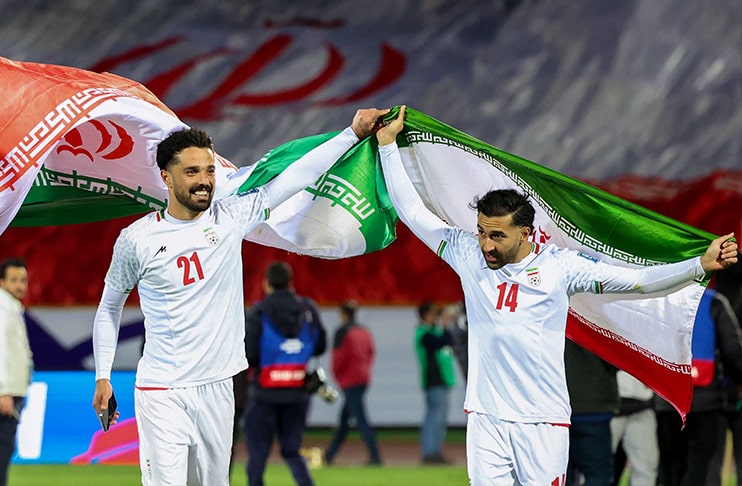
FIFA Confirms Iran’s World Cup Participation Amidst Political Tensions
In a move that underscores the complex intersection of global sports and geopolitics, FIFA has officially confirmed that the Iranian national soccer team will participate in the 2026 FIFA World Cup, to be hosted across the United States, Canada, and Mexico. This decision comes directly from FIFA President Gianni Infantino, effectively ending months of speculation and debate over Iran’s eligibility given the strained diplomatic relations between Tehran and Washington, D.C.
The announcement serves as a powerful reminder of FIFA’s foundational principle: that football should be a unifying force, transcending political divides. However, it also sets the stage for a World Cup tournament where the pitch will inevitably become a backdrop for narratives far beyond the beautiful game itself.
The Geopolitical Backdrop: A Tense History
The question of Iran’s participation was never purely a sporting one. The political context is deep and fraught. For decades, relations between the United States and Iran have been characterized by sanctions, proxy conflicts, and profound mutual distrust. The prospect of the Iranian team playing on American soil—potentially in cities like Los Angeles, Dallas, or New York—raised legitimate logistical and security concerns.
Key points of tension include:
- Ongoing U.S. sanctions against Iran, which complicate everything from financial transactions for team operations to broadcasting rights.
- The shadow of the 2022 World Cup in Qatar, where the Iranian team made powerful political statements in support of protests happening in their homeland, leading to scrutiny from their own government.
- Security protocols for players, staff, and traveling fans in an environment where emotions and political sentiments run high.
President Infantino’s confirmation is a clear assertion that FIFA intends to navigate these choppy waters. In his statement, he emphasized the world governing body’s commitment to inclusivity and the separation of sport from politics, a stance that is often easier stated than applied.
Infantino’s Stance: Football as a Bridge
A Deliberate Decision for Unity
Gianni Infantino’s leadership has frequently revolved around expanding the game’s global footprint, but this decision is arguably one of his most politically significant. By firmly stating Iran’s place in the tournament, Infantino is betting on the power of football to act as a diplomatic bridge, however temporary.
The FIFA President likely faced pressure from multiple sides: those advocating for sport’s political neutrality, and those arguing that Iran’s inclusion legitimizes a regime accused of human rights abuses. His decision to proceed with inclusion aligns with historical precedent—sports bodies often prefer to keep nations within the fold rather than enact bans that can be seen as politicizing the game themselves.
This move carries several implicit messages:
- FIFA’s authority over the tournament roster is absolute, even when host nations have political objections.
- The World Cup is an event for all qualified nations, not just those in geopolitical alignment with the hosts.
- The organization is prepared to work with authorities to ensure safety and smooth operations for all participating teams.
Logistical and Security Challenges Ahead
With the sporting decision made, the monumental task of logistics begins. The U.S. Soccer Federation, local organizing committees, and federal agencies will now need to collaborate closely to facilitate Iran’s participation.
Navigating Sanctions and Finances
One of the most immediate hurdles is the U.S. sanctions regime. Special licenses or exemptions will be required to allow the Iranian Football Federation to move money for expenses like hotel accommodations, training facilities, and equipment. FIFA will likely need to act as an intermediary or guarantor to ensure these financial channels are open and compliant with international law.
Ensuring Safety and Protests
Security will be paramount. Iranian players and officials have historically been targets of protest—both from exiled Iranian groups opposing the regime and from other factions. U.S. law enforcement will need to develop sophisticated plans to protect the team while also safeguarding the right to peaceful protest. The potential for symbolic gestures by players on the field, as seen in Qatar, adds another layer of complexity for organizers aiming to keep the focus on football.
Expected focal points for organizers will include:
- Secure, controlled travel routes between hotels, training grounds, and stadiums.
- Designated, managed areas for protests to ensure they do not spill into operational zones.
- Continuous dialogue between FIFA, Iranian officials, and U.S. security details to preempt issues.
The Bigger Picture: Sport and Politics Inextricably Linked
While FIFA strives to separate sport from politics, the Iran-U.S. dynamic at the 2026 World Cup will prove once again that they are inseparable. The tournament will be a global spotlight, and every match Iran plays—especially on U.S. soil—will be analyzed through a political lens.
For the Iranian players, it represents a unique and intense challenge. They will carry the hopes of a nation onto a field in a country their government labels “The Great Satan.” Their performances and any actions they take will be dissected at home and abroad. For American fans and officials, it will be a test of hospitality and the core Olympic spirit of respect for competitors, regardless of national origin.
The 2026 World Cup was always destined to be a landmark event due to its expanded format and three-host configuration. Iran’s confirmed participation now guarantees it will also be a profound case study in how global sports navigates the world’s most entrenched diplomatic fissures. FIFA has made its choice: the show will go on, and football will attempt to build its bridge. The world will be watching to see if it holds.

