Australia’s Repatriation of IS Families: Security Risks vs. Humanitarian Duty
The sound of jet engines on the tarmac at a secure Australian airfield this week carried more than the usual hum of international travel. It signaled a major policy reversal—and a deeply divisive national moment. Two aircraft landed carrying Australian women and children who had spent years in Syrian detention camps, all of whom are linked to the Islamic State group.
For years, the Australian government resisted bringing these citizens home, citing national security concerns. Now that the first flights have landed, the debate has shifted from whether to repatriate them to how Australia will manage their reintegration. The decision marks a turning point in post-caliphate policy, raising difficult questions about security, responsibility, and humanitarian obligation.
Who Exactly Are the Returnees?
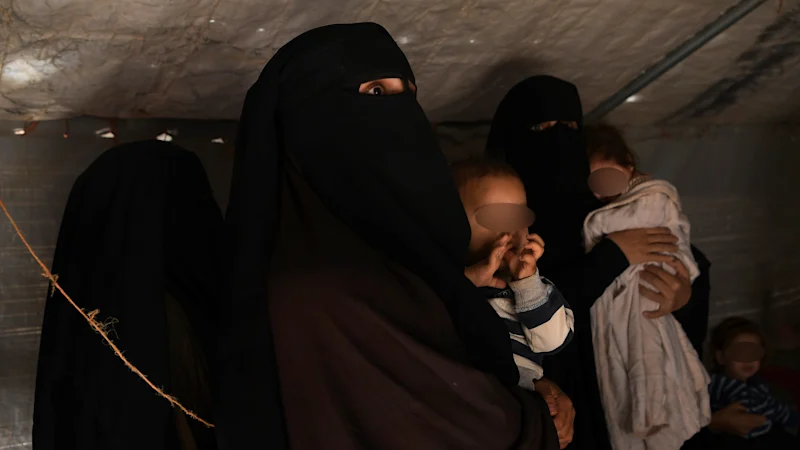
The passengers are not former battlefield commanders or senior operatives. They are primarily the most vulnerable survivors of the Islamic State’s collapse: women who accompanied fighters and children raised in its aftermath.
Following the defeat of Islamic State territorial control in 2019 by the Syrian Democratic Forces (SDF) and coalition partners, thousands of foreign nationals were placed in detention camps across northeastern Syria, particularly Al-Hol.
Conditions in these camps have been widely described as severe:
- Overcrowding and poor sanitation
- Limited access to healthcare and education
- Sporadic violence and insecurity
- Deep psychological trauma among children
Australia, like several Western countries, initially declined repatriation. Security agencies warned that some women may retain extremist sympathies. Over time, however, worsening humanitarian conditions and sustained international pressure prompted a reassessment.
The individuals brought back in this operation were selected under strict criteria:
- Children under 10, many born in or brought to camps at a very young age
- Women assessed as low risk based on intelligence reviews
- Individuals who agreed to participate in monitoring and de-radicalization programs
Authorities emphasize that each case was individually assessed, and higher-risk individuals remain in Syria under continued detention or legal review.
The Security Debate: Managed Risk or Dangerous Gamble?
Opponents of repatriation argue the move introduces avoidable domestic security risks. Their central concern is whether affiliation with a terrorist organization can ever be fully neutralized through time and rehabilitation.
Upon return, adult repatriates are subject to strict controls:
- Continuous surveillance by counterterrorism authorities
- Mandatory participation in de-radicalization and counseling programs
- Criminal investigation and prosecution where evidence exists
However, critics argue that monitoring systems are not infallible. Past international cases have shown instances of re-engagement with extremist networks after repatriation.
Supporters of the policy counter that leaving citizens in Syrian camps presents an even greater long-term risk. In those environments, children grow up in conditions of ideological exposure, trauma, and lawlessness, with no formal education system or rehabilitation structure.
From this perspective, repatriation is not a reduction of risk but a transfer of control: bringing individuals into a regulated system where monitoring, prosecution, and intervention are possible.
The Human Cost of Prolonged Detention Abroad
Beyond security concerns lies a more complex ethical question: the status of citizenship and responsibility.
Many of those repatriated are Australian citizens, including children who had no agency in their relocation to Syria. Some were taken as toddlers and have no memory of life in Australia.
Their circumstances raise difficult realities:
- Language barriers, with many speaking only Arabic
- Lack of formal education or structured schooling
- Deep psychological and developmental impacts of camp life
Humanitarian organizations, including UNICEF and Amnesty International, have long argued that indefinite detention of children in conflict zones violates international legal and moral standards. From this view, repatriation is not optional—it is a duty of citizenship.
How Reintegration Will Work
The reintegration process is structured, controlled, and long-term. Returnees do not immediately return to normal community life.
Initial steps include:
- Placement in secure, undisclosed accommodation facilities
- Medical screening and psychological evaluation
- Separation of individuals if risk assessments require it
Long-term measures include:
- Education and vocational training programs
- Psychological counseling and de-radicalization support
- Ongoing monitoring by social services and law enforcement
Experts describe the process as resource-intensive and uncertain in outcome. Success depends on sustained engagement over years, not months.
Broader Counterterrorism Implications
Australia’s decision reflects a wider international policy dilemma. Governments across Europe and North America continue to debate how to handle citizens detained in former Islamic State territories.
Different approaches have emerged:
- Some countries have repatriated citizens under controlled conditions
- Others have revoked citizenship, effectively blocking return
- A few have pursued hybrid legal and humanitarian strategies
Australia’s model—selective, intelligence-led, and tightly controlled—sits between these extremes. It reflects an emerging consensus that long-term security risks cannot be managed entirely offshore.
The Bottom Line
The repatriation of women and children linked to the Islamic State group represents a critical policy shift for Australia. It reflects a move away from indefinite offshore containment toward controlled domestic management of risk.
The decision carries no easy answers. It is shaped by competing imperatives: national security on one side, and legal and humanitarian responsibility on the other.
Ultimately, the success of this policy will not be measured in the immediate aftermath of the flights, but over years of monitoring, rehabilitation, and social reintegration. The central question remains unresolved: whether a society can safely reintegrate individuals shaped by one of the most extreme ideological environments of the modern era—without compromising its own security in the process.