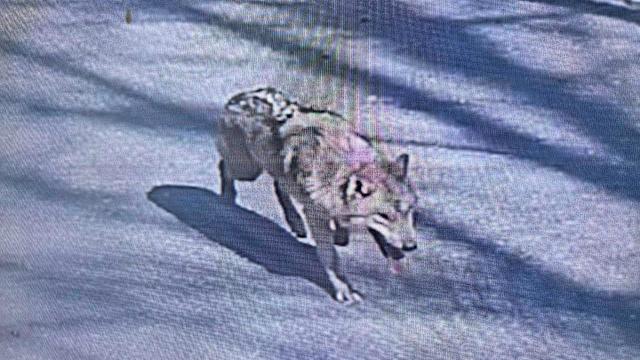
The Viral Hunt for South Korea’s Runaway Wolf, Neukgu
In the dense, misty forests of South Korea, a real-life drama has been unfolding that feels more like a movie plot than a wildlife incident. The escape and subsequent pursuit of a young male wolf named Neukgu from a national park has gripped the nation, spawning viral social media posts, intense media coverage, and a massive, high-tech search operation. This isn’t just a story about a lost animal; it’s a modern-day saga of human-wildlife conflict, public fascination, and the complex challenges of conservation.
From Park Resident to Public Enigma: The Great Escape
The saga began at the National Institute of Ecology’s Sobaeksan Center in Danyang County. Neukgu, whose name means “snowy” in Korean, was born in captivity in 2022. In late May 2024, during a routine cleaning of his enclosure, the clever wolf managed to slip past his keepers and vanish into the vast, rugged expanse of Sobaeksan National Park.
What followed was a search effort of unprecedented scale. Authorities deployed a small army of personnel and technology, including:
- Over 100 personnel from the environment ministry, police, and local governments.
- Specialized hunting dogs trained to track wildlife.
- Numerous drones equipped with thermal imaging cameras to scan the dense forest canopy.
- Over 50 camera traps strategically placed to capture his movements.
Despite this technological dragnet, Neukgu proved to be an elusive ghost, his natural instincts kicking in as he navigated the mountainous terrain he was, until then, only familiar with from behind a fence.
The Social Media Frenzy and Public Obsession
While officials were concerned, the South Korean public was captivated. The story of the “runaway wolf” exploded on social media platforms. Neukgu became an unlikely online celebrity, with netizens creating memes, fan art, and even parody songs. The public’s imagination ran wild, fueled by a mix of concern, admiration for his cunning, and a deep-seated cultural fascination with wolves, which hold a significant place in Korean mythology as both feared predators and sacred creatures.
This public sentiment created a unique dynamic. The search wasn’t just a bureaucratic operation; it was being watched, commented on, and emotionally invested in by millions. Sightings reported by citizens—though often unverified—added to the communal detective work. The tone was largely sympathetic, with many rooting for Neukgu’s freedom and survival, a stark contrast to the fear that might accompany such an event elsewhere.
A Delicate Balance: Safety vs. Sympathy
Authorities, however, had to walk a tightrope. While acknowledging the public’s affection, they consistently emphasized the potential risks. Wolves are apex predators, and Neukgu, despite his captive upbringing, is a wild animal with instincts for hunting. Officials issued repeated warnings to the public:
- Do not approach the wolf if spotted.
- Secure pets and livestock in areas near the park.
- Report sightings immediately to the official hotline, not on social media.
The primary goal remained the safe capture and return of Neukgu to his enclosure, both for public safety and his own well-being, as he lacked the skills to thrive long-term in the wild and could pose a danger to farm animals.
Broader Implications: Conservation in the Spotlight
The Neukgu incident has sparked a much larger conversation in South Korea about wildlife, conservation, and coexistence. Wolves were officially declared extinct on the Korean Peninsula in the early 20th century due to hunting and habitat loss. Neukgu is part of a captive population maintained for research and public education, a living reminder of a lost part of Korea’s natural heritage.
His escape has forced a public reckoning with complex questions:
- How do we manage captive-born wildlife?
- What is the future for large predator conservation in a densely populated country?
- Can modern societies truly coexist with animals that once roamed freely?
The intense, sympathetic public reaction suggests a strong public desire for a connection with native wildlife, even as the practical realities remain challenging.
The Elusive Outcome and Lasting Legacy
As of this writing, Neukgu remains at large, his fate unknown. Each potential sighting sends a new ripple of excitement through the online community. The search, though scaled down, continues in a monitoring phase.
Regardless of the final chapter, the story of Neukgu, the runaway wolf, has left an indelible mark. It is a 21st-century fable that unfolded in real-time, blending cutting-edge technology with ancient myths, bureaucratic procedure with viral memes. It highlighted the power of a single animal to capture a nation’s heart and mind, and it placed South Korea’s relationship with its wild past squarely in the spotlight.
Neukgu’s journey—from a captive enclosure to a symbol of wildness and freedom—reminds us that the lines between the natural world and our human domains are often thinner than we think, and that the call of the wild, even for a captive-born wolf, can be irresistibly powerful.