How a Planned Fight Triggered a North Carolina Park Shooting
A sunny afternoon at a community park in North Carolina turned into a scene of terror and tragedy when what began as an arranged altercation between two individuals exploded into a mass shooting. Authorities report that the incident, which left multiple people injured, underscores a dangerous and escalating pattern where planned, localized conflicts can rapidly spiral out of control, putting entire communities at risk.
This event serves as a stark reminder that violence is rarely contained. What starts as a dispute between a few can, in an instant, shatter the peace and safety of dozens of innocent bystanders. The investigation into the park shooting reveals a chain of events that moved from confrontation to chaos with terrifying speed.
From Confrontation to Chaos: The Timeline of Violence
The gathering at the park was not spontaneous. According to law enforcement officials, the roots of the violence lay in a premeditated agreement between two parties to settle a dispute with a physical fight. This planned encounter set the stage for the disaster that followed.
Key events unfolded as follows:
- Individuals involved in a prior dispute arranged to meet at the public park to fight.
- Crowds, including spectators and unrelated families, were present at the park enjoying the day.
- The initial fight commenced but lasted only briefly before at least one participant produced a firearm.
- Gunfire erupted, transforming the park from a recreational space into a active shooting scene.
- Panic ensued as people ran for cover, leading to multiple victims being struck by gunfire.
The swift escalation from fists to firearms highlights a critical and deadly trend. The presence of a weapon, especially in a volatile, emotionally charged environment where crowds have gathered, almost guarantees that the outcome will be severe.
The Aftermath: Community Trauma and Law Enforcement Response
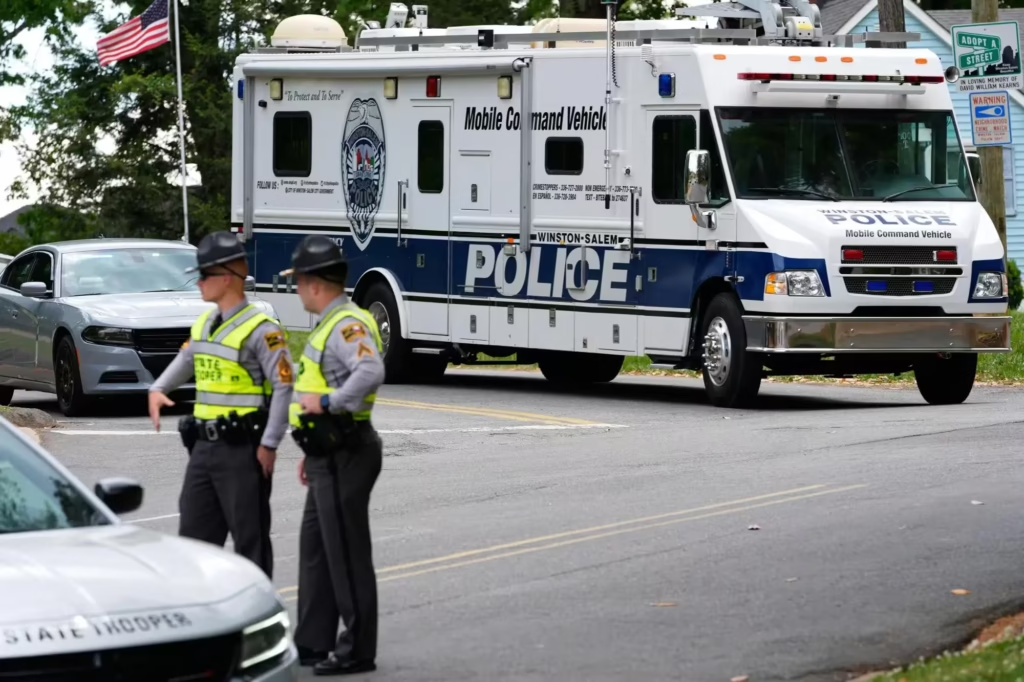
The immediate aftermath of the shooting was one of confusion and urgent response. Emergency services flooded the area, tending to the wounded and securing the scene. While official counts were initially fluid, authorities confirmed that several individuals sustained gunshot wounds and were transported to local hospitals. Miraculously, no fatalities were reported, but the psychological scars on the community will be deep and lasting.
Law enforcement agencies launched a large-scale investigation, combining witness interviews, evidence collection from the scene, and the review of any available video footage. The focus quickly turned to identifying the shooter or shooters involved. The complex nature of the event—with its mix of participants, spectators, and victims—presented significant challenges for investigators working to piece together the exact sequence of events and determine criminal charges.
Why Do Planned Fights So Often Turn Deadly?
This incident is not an isolated one. Across the country, arranged fights, often orchestrated through social media or word-of-mouth, have a disconcerting habit of ending in gun violence. Several factors contribute to this lethal pattern:
The Audience Effect: The presence of a crowd removes the privacy of a dispute. The pressure to “win” or save face in front of peers can intensify emotions and reduce the likelihood of backing down or de-escalating.
The Weaponization of Disputes: In an era where firearms are readily accessible, the step from physical combat to armed combat has become tragically short. Participants or onlookers may bring weapons “just in case,” instantly raising the stakes.
Lack of Control: These gatherings exist outside any structured environment. There are no referees, no rules, and no security. Once a weapon is introduced, the situation is entirely in the hands of individuals acting on fear and adrenaline.
Broader Implications for Public Safety
The North Carolina park shooting forces a difficult conversation about public safety and prevention. Parks are designed as safe havens for community and recreation, not as battlegrounds for personal disputes. This violation of public space strikes at the heart of community trust.
Community leaders and law enforcement are now faced with pressing questions:
- How can we better monitor and respond to social media chatter or rumors that hint at planned violent gatherings?
- What proactive measures can be taken to secure public parks and community spaces without making them feel like fortresses?
- How do we address the root causes of conflict among young people and provide alternative, non-violent paths for conflict resolution?
Prevention is complex, but it must involve a multi-faceted approach that includes community engagement, youth outreach programs, responsible firearm ownership, and swift law enforcement intervention at the earliest signs of planned group violence.
Healing and Moving Forward: A Community’s Challenge
For the residents who frequent the park, the path to healing will be long. The sense of safety has been violently disrupted. Moving forward requires more than just increased police patrols; it demands a communal effort to reclaim the space.
Vigils, community meetings, and partnerships between residents, local government, and law enforcement can begin to rebuild the fractured trust. Furthermore, this event should serve as a sobering lesson, especially for young people, about the unpredictable and catastrophic consequences of choosing violence as a solution. A fight planned between two can, in the blink of an eye, alter—or end—the lives of many who are simply in the wrong place at the wrong time.
The tragedy in North Carolina is a loud and clear alarm. It tells us that the concept of a “fair fight” in today’s climate is a dangerous fantasy. When tempers flare and crowds gather, the introduction of a gun is never a controlled variable. It is the point at which a dispute becomes a potential massacre, turning a community park into a crime scene and forever changing the lives of all involved.