Quebec election campaign in final stretch
Quebec voters are casting early ballots as parties make final pitches before Oct. 5
Quebec election 2026
One Week Until Quebec Decides Its Next Government
Quebec’s provincial election race has reached its critical final week, with party leaders crisscrossing the province to convince voters before polls close on October 5, 2026. The campaign intensity is building as early voting gets underway, giving Quebecers who prefer to vote in advance a chance to cast their ballots before election day.
Early polling stations were open on Sunday and remain open on Monday from 9:30 a.m. to 8 p.m. Voters can find their polling location on the registration notice mailed to their home or on the Elections Quebec website. The trend toward advance voting has grown significantly—37 percent of Quebecers used this option during the 2022 provincial election.
Turnout Numbers Show Strong Early Participation
As of Monday morning, 13.79 percent of Quebecers had already voted in advance polling. Some ridings are seeing notably higher participation than others. Louis-Hébert in the Capitale-Nationale region led with 23.62 percent of voters already casting ballots, while Vanier-Les Rivières in Quebec City followed at 21.04 percent.
The disparity across the province is notable. Ungava, the largest and most northern provincial electoral district in Quebec, had the lowest turnout so far at 4.8 percent. This geographic variation suggests different levels of engagement among voters in different regions as election day approaches.
What Voters Care About Most
Those who showed up at advance polling stations cited several issues weighing heavily on their minds. Health care, the economy, language, and environmental concerns emerged as central to how voters planned to cast their ballots. These themes have dominated campaign discussions throughout the final week.
One unexpected topic has also dominated conversations on the campaign trail: allegations of foreign interference. Coalition Avenir Québec leader Christine Fréchette sparked controversy when she warned that American operatives might attempt to help the sovereigntist Parti Québécois gain power to destabilize the Canadian federation. She later walked back those claims, ultimately confirming there was no evidence of foreign interference in the provincial election.
The Polls Paint a Clear Picture
Multiple polls released as the campaign entered its final days show consistent patterns. The Parti Québécois leads voter intentions at 30 percent across three recent surveys. The Quebec Liberal Party sits in second place at between 23 and 26 percent, positioning itself as a viable alternative.
The Coalition Avenir Québec, which currently holds a majority government with 79 members in the National Assembly, has slipped significantly. Recent polling shows the CAQ at 16 to 19 percent, well below the support levels needed to maintain its current position. In one poll aggregator projection, the CAQ is estimated to win zero seats in the election.
The Quebec Conservative Party is positioned in third place with 17 to 18 percent support, while Québec Solidaire holds around 8 to 10 percent. Notably, 76 percent of Quebecers surveyed said they plan to cast a ballot, and 71 percent of voters reported they have already made their final choice—up from 59 percent one week earlier.
Sovereignty Remains a Key Issue
The question of Quebec sovereignty continues to influence voter decisions. When asked whether they would vote “yes” or “no” in a sovereignty referendum if one were held today, 63 percent of respondents said they would vote “no,” while only 25 percent said they would vote “yes.” An additional 12 percent were unsure.
When asked about the likelihood of a referendum if the PQ came to power, 19 percent said they were “very sure” it would happen and 33 percent said they were “mostly sure.” By contrast, 22 percent said “probably not” and 8 percent believed a vote would not occur at all. Nineteen percent had no opinion on the matter.
Regarding the outcome of a potential referendum, 40 percent of respondents said the “no” side would probably win, while 27 percent were certain the vote would go against independence. Only 4 percent said the “yes” side would definitely come out victorious, with an additional 10 percent saying it could probably happen. Twenty percent did not know.
Party Leaders Present Final Visions
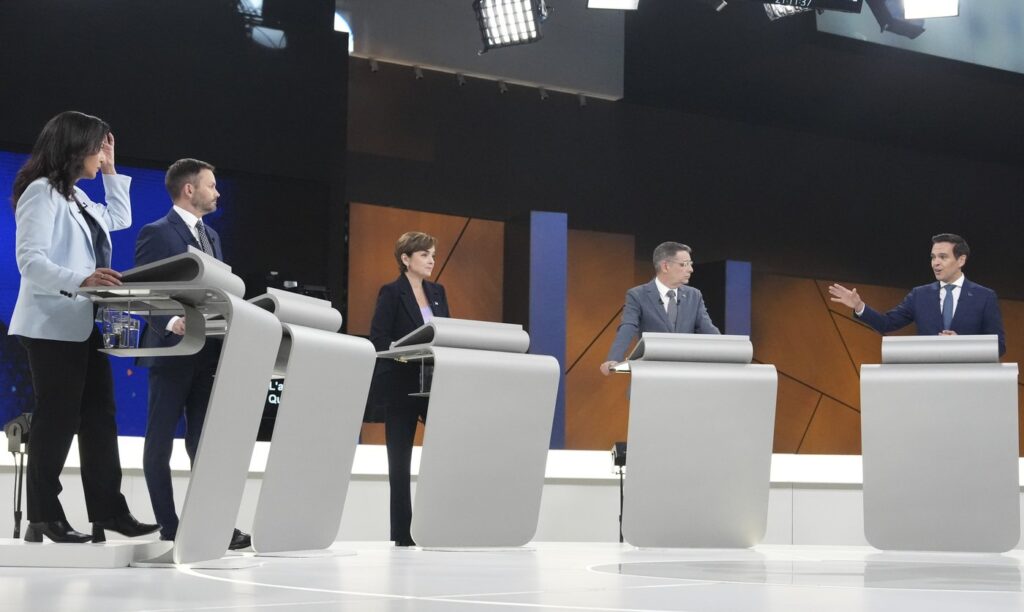
PQ Leader Paul St-Pierre Plamondon indicated he plans to “put the pedal to the metal” in the final week, eyeing a majority government. According to poll aggregator data, the PQ is projected to win 67 seats—three more than the 64 needed to form a majority. Plamondon ranked highest when voters were asked who would make the best premier, with 26 to 32 percent naming him depending on the poll.
The PQ also addressed healthcare directly. Plamondon pledged to resolve disruptions in obstetric services within a month of taking office, citing excessive centralization under the current CAQ government. He met with healthcare professionals and patients in Lac-Mégantic and other affected regions, committing to remove recruitment barriers that currently prevent local managers from hiring staff.
The Quebec Conservative Party presented its infrastructure plan on Monday, proposing to allocate 80 percent of the Quebec Infrastructure Plan budget to maintenance and repair of existing assets rather than new construction. Leader Éric Duhaime and party candidates argued this approach would deregulate the construction industry and improve productivity among contractors.
Québec Solidaire focused on mental health, pledging to provide services at 400 CLSC access points with multidisciplinary teams including social workers, psychologists, and nurses. Spokesperson Ruba Ghazal stated the party aims to ensure anyone visiting a CLSC for mental health care could see a counselor the same day.
Government Satisfaction at Historic Lows
Current government satisfaction numbers show voter frustration. Only 4 percent of those surveyed were “very satisfied” with the current government, while 26 percent were “satisfied.” On the negative side, 31 percent were “unsatisfied” and 30 percent were “very unsatisfied,” with an additional 11 percent undecided. This 74 percent desire for a new government represents a nine-point increase from earlier in the campaign.
When asked who would make the best premier, CAQ Leader Christine Fréchette came in second with 18 percent. Liberal Leader Charles Milliard and Conservative Leader Éric Duhaime each received 14 percent, while Québec Solidaire’s Ruba Ghazal was at 9 percent. Eighteen percent of respondents selected “none of the above.”
Geographic and Demographic Splits
Voting preferences vary significantly by region and demographic group. Montreal voters lean toward the Liberals, while the rest of Quebec favors the PQ. In Quebec City, the Conservative Party has particular strength. Among francophone voters, the PQ maintains a commanding 37 percent, an 18-point lead over the PCQ at 19 percent.
Men show stronger support for the PQ at 34 percent, while women lean toward the Liberals at 26 percent. The PQ leads among voters aged 18 to 34, with Conservatives remaining their second choice. Among voters aged 50 to 64, the Liberals are the top choice.
Heading Into Election Day
Before the National Assembly was dissolved, the Coalition Avenir Québec held 79 seats. The Quebec Liberal Party had 18, Québec Solidaire held 11, the Parti Québécois had 7, and the Quebec Conservative Party had 1, with 9 independent members.
With advance voting now underway and the final week of campaigning underway, the race will intensify. Voters have until October 5 to cast their ballots, either early or on election day itself. The outcome will reshape provincial politics and determine Quebec’s direction on critical issues from healthcare to sovereignty.