Future Environmental Technologists Tackle Real-World Challenges in Saskatchewan
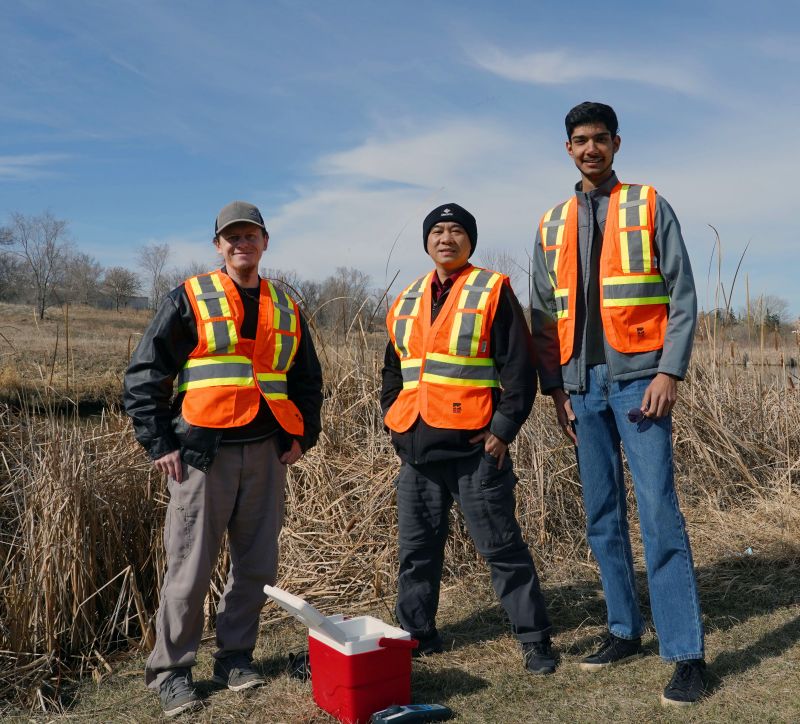
The journey from classroom theory to on-the-ground impact is a critical bridge in any technical field. For students in Saskatchewan Polytechnic’s Environmental Technology program, this transition is realized through ambitious capstone projects. These final-year endeavors are not just academic exercises; they are real-world consultations that leave a tangible mark on communities and industries across the province. Recently, three standout students—Liam Fitzgerald, Taya Soetaert, and Kira Pilon—demonstrated the power of this applied learning model by tackling diverse and pressing environmental issues, from water quality to sustainable agriculture.
Capstone Projects: Where Classroom Knowledge Meets Community Need
The capstone project is the culmination of the two-year Environmental Technology diploma. It requires students to partner with an external client—a municipality, a First Nation, a non-profit, or a business—to identify, research, and propose solutions for a genuine environmental challenge. This process mirrors the exact workflow of a professional environmental technologist.
Students learn to navigate client relationships, budget constraints, fieldwork logistics, and complex data analysis, all while adhering to strict environmental regulations. The result is a win-win: organizations gain valuable, professional-grade research and recommendations at minimal cost, and students graduate with a formidable portfolio piece and direct industry experience. The projects of Fitzgerald, Soetaert, and Pilon perfectly illustrate this symbiotic relationship.
Liam Fitzgerald: Mapping a Path to Cleaner Water for the RM of Lumsden
Liam Fitzgerald partnered with the Rural Municipality (RM) of Lumsden No. 189 to address a critical infrastructure concern: private water well quality and septic system management. With many residents relying on groundwater, the municipality lacked a comprehensive spatial understanding of potential contamination risks.
Fitzgerald’s project involved:
- Conducting extensive fieldwork to survey and catalogue existing wells and septic systems.
- Utilizing Geographic Information Systems (GIS) software to create detailed, interactive maps plotting the locations and conditions of these systems.
- Analyzing the proximity of septic systems to water wells to identify areas at higher risk of groundwater contamination.
His final deliverable was more than just a map; it was a powerful decision-making tool. The GIS database provides the RM with a clear visual representation of their water infrastructure landscape, enabling them to prioritize inspections, plan future development more safely, and proactively protect their shared groundwater resource. For Fitzgerald, the project was a revelation in the practical application of spatial data for public health and environmental protection.
Taya Soetaert: Cultivating Sustainability with the Saskatchewan Alliance for Water Sustainability
Taya Soetaert turned her focus to the agricultural sector, collaborating with the Saskatchewan Alliance for Water Sustainability (SAWS). Her mission was to investigate and promote regenerative agricultural practices that improve soil health and water retention—a vital goal in a province where agriculture is king.
Soetaert’s research was multifaceted:
- She created an in-depth literature review and resource guide on proven regenerative practices, such as cover cropping, reduced tillage, and diversified crop rotations.
- She developed a practical cost-benefit analysis template for farmers, helping them quantify the potential economic and environmental returns of transitioning to these methods.
- Her work culminated in a professional presentation to SAWS members, translating complex agri-environmental science into accessible, actionable information.
By bridging the gap between research and practical farm management, Soetaert’s project empowers producers to make informed decisions that benefit both their operations and the long-term resilience of Saskatchewan’s land and water. Her work underscores the role of the environmental technologist as a crucial conduit of information and innovation.
Kira Pilon: Building a Framework for the Future with the Town of Dalmeny
Kira Pilon embarked on a forward-looking project with the Town of Dalmeny, aiming to future-proof the community’s planning processes. Her task was to develop the foundational research for a Municipal Climate Change Adaptation Plan.
This complex project required Pilon to:
- Perform a detailed climate change vulnerability assessment for Dalmeny, identifying key areas of risk such as infrastructure, public services, and natural assets.
- Research best practices and case studies from other municipalities that have successfully implemented adaptation strategies.
- Synthesize her findings into a formal report that outlines recommended actions, potential funding sources, and a phased implementation strategy for the town council.
Pilon’s work provides Dalmeny with a critical roadmap to enhance its climate resilience. It moves the conversation from abstract concern to concrete planning, demonstrating how environmental technologists are essential players in helping communities prepare for and adapt to our changing climate.
The Lasting Impact of Applied Learning
The successes of Fitzgerald, Soetaert, and Pilon highlight the immense value of Saskatchewan Polytechnic’s hands-on, client-driven approach to education. These students did not wait until graduation to start their careers as environmental professionals; they began the moment they took on their capstone projects.
The real-world impact of these projects is profound. The RM of Lumsden now has a tool to safeguard drinking water. Saskatchewan farmers have clearer pathways to sustainable production. The Town of Dalmeny is better equipped to face climate challenges. This model creates a ripple effect of positive change, where student learning directly contributes to the environmental and economic health of Saskatchewan.
A Bright Future for Saskatchewan’s Environment
As these three future technologists move into the workforce, they carry with them not just a diploma, but proven experience in problem-solving, client communication, and technical analysis. They are entering a field that is more critical than ever, tasked with monitoring our ecosystems, ensuring regulatory compliance, and developing solutions for sustainable resource management.
Programs like the one at Saskatchewan Polytechnic are essential in building this skilled workforce. By trusting students with real community challenges, they foster a generation of technologists who are ready to hit the ground running. The capstone project is more than a final assignment; it’s a first step in a career dedicated to stewardship, innovation, and leaving a positive mark on the landscape of Saskatchewan and beyond. The work of Liam Fitzgerald, Taya Soetaert, and Kira Pilon is a compelling testament to the power of education that doesn’t just teach about the world, but actively engages with it to make a difference.