
Trans Mountain Pipeline Reaches Full Capacity as Global Energy Demand Soars
For over a decade, the Trans Mountain Expansion (TMX) project has been a focal point of national debate, symbolizing the complex intersection of economic ambition, energy security, and environmental stewardship. This spring, that long-awaited project has shifted from a monumental construction site to a fully operational artery for Canadian energy. After years of delays, regulatory hurdles, and escalating costs, the expanded pipeline is now flowing at its full capacity, marking a pivotal moment for Canada’s oil sector as it meets surging global energy demand.
A New Era for Canadian Energy Exports
The completion of the TMX expansion is more than just an infrastructure milestone; it’s a fundamental shift in market access for Canadian oil producers. For years, the industry has been constrained by pipeline capacity, forcing heavy crude to trade at a significant discount and limiting its reach to primarily one customer: the United States.
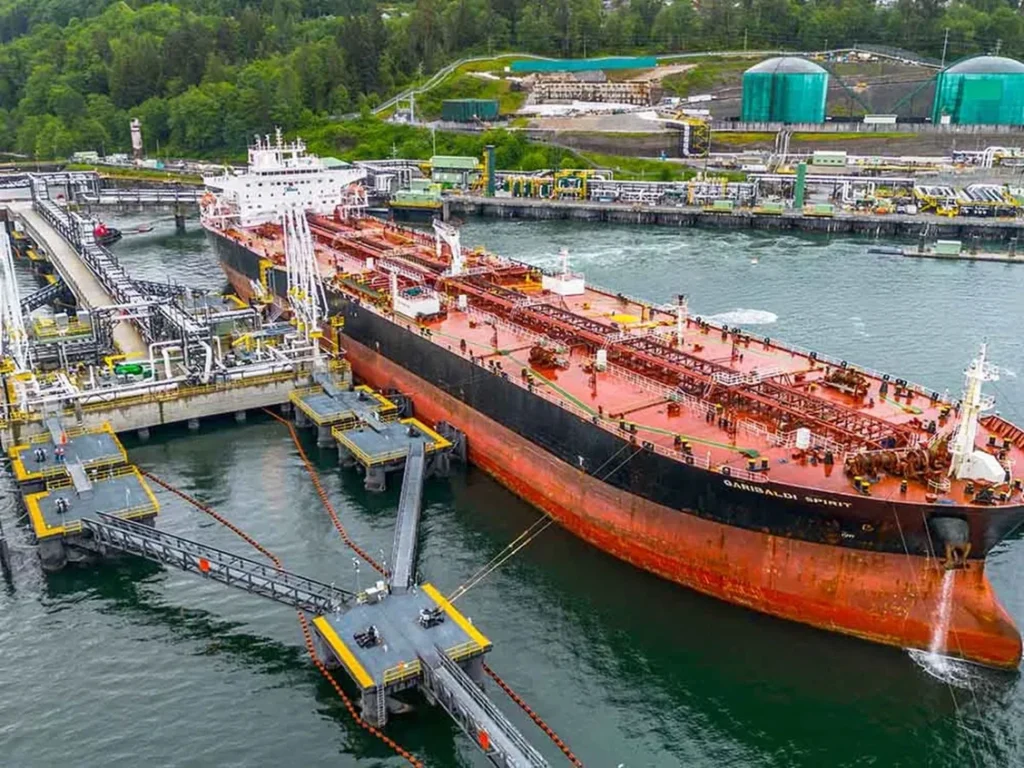
With the twin pipelines now operating, capacity has skyrocketed from approximately 300,000 barrels per day to 890,000 barrels per day. This tripling of volume is a game-changer, enabling Canadian crude to travel from the heart of Alberta’s oil sands to the tidewater port in Burnaby, British Columbia. From there, it can be loaded onto tankers and shipped to markets across the Pacific Rim, including key refining centers in China, India, and South Korea.
Why Global Demand is Driving the Need for TMX
The pipeline’s operational debut coincides with a period of intense global energy demand and geopolitical uncertainty. Several factors are creating a perfect storm where new export capacity is critically needed:
- Post-Pandemic Recovery & Industrial Growth: Global economic activity continues to rebound, driving up consumption of all energy sources, including oil.
- Geopolitical Volatility: Conflicts in Eastern Europe and the Middle East have disrupted traditional supply chains, forcing nations to seek stable and reliable energy partners. Canada, with its vast reserves and political stability, is positioned as a supplier of choice.
- Marine Fuel Regulations: New international shipping rules require cleaner-burning fuels. Alberta’s heavier crude is an ideal feedstock for producing these very low-sulfur fuels, creating a new and growing market niche.
As Keith Chiasson, executive vice-president of Cenovus Energy, highlighted at a recent energy conference, this is a historic opportunity. “We finally have the opportunity to get our products to the world,” he stated, emphasizing that access to global pricing will benefit the entire Canadian economy through increased royalties, taxes, and jobs.
Navigating the Challenges: Costs, Controversy, and Community
The path to this point has been extraordinarily difficult. The project’s price tag ballooned from an initial estimate of $7.4 billion to a staggering $34 billion, making it one of the most expensive infrastructure projects in Canadian history. This has led to scrutiny over tolling rates and the long-term financial model for shippers.
Furthermore, the expansion has been a lightning rod for environmental and Indigenous rights protests. Concerns over marine safety, potential spills, and the impact on endangered species like the Southern Resident killer whales remain paramount for many communities and advocacy groups. The project’s history underscores the delicate balance Canada must strike between resource development and its climate commitments.
The Immediate Impact on Prices and Producers
The market has already begun to respond. Even before full capacity was reached, the increased flow of oil to the coast began to narrow the discount between Canadian heavy crude (Western Canadian Select) and the North American benchmark (West Texas Intermediate). This differential is a key indicator of the industry’s health.
- A narrower discount means more revenue stays in Canada.
- It improves the economics for oil sands producers, potentially enabling more investment and production.
- It provides a tangible, immediate benefit to Alberta’s and Canada’s treasury.
For the first time, Canadian producers have genuine optionality. They can choose to sell to U.S. refineries or to buyers in Asia, depending on who offers the best price. This competition is a powerful force for maximizing value.
The Road Ahead: Opportunities and Ongoing Responsibilities
While the “open for business” sign is now lit, the work is far from over. The coming months will be a critical test of the pipeline’s operational reliability and the industry’s ability to manage the logistics of significantly increased tanker traffic in the Port of Vancouver.
Moreover, the success of TMX brings with it heightened responsibility. The industry and government face ongoing pressure to:
- Demonstrate world-leading marine and pipeline safety protocols.
- Continue investing in technologies that reduce the carbon intensity of oil sands production.
- Deepen meaningful partnerships and benefit agreements with Indigenous communities along the route.
A Strategic Asset in a Transitioning World
The Trans Mountain Expansion arrives at a complex time in the global energy narrative. Even as the transition to lower-carbon energy accelerates, the world’s demand for reliable oil and gas will persist for decades. In this context, TMX is not just a pipeline for today’s market; it is a long-term strategic asset.
It ensures that Canada can competitively supply the energy the world still needs while generating the wealth required to fund the innovation and infrastructure of a cleaner future. The revenues from this project can, and should, be a catalyst for investment in renewables, carbon capture, and other technologies that align with national climate goals.
The full operation of the Trans Mountain pipeline is a chapter closing and a new one beginning. It is the culmination of immense effort and controversy, and the starting gun for Canada’s broader engagement with global energy markets. How this chapter is written—how the economic benefits are realized and the environmental safeguards upheld—will define its legacy for generations to come. One thing is certain: Canada’s energy landscape has been permanently altered.

