
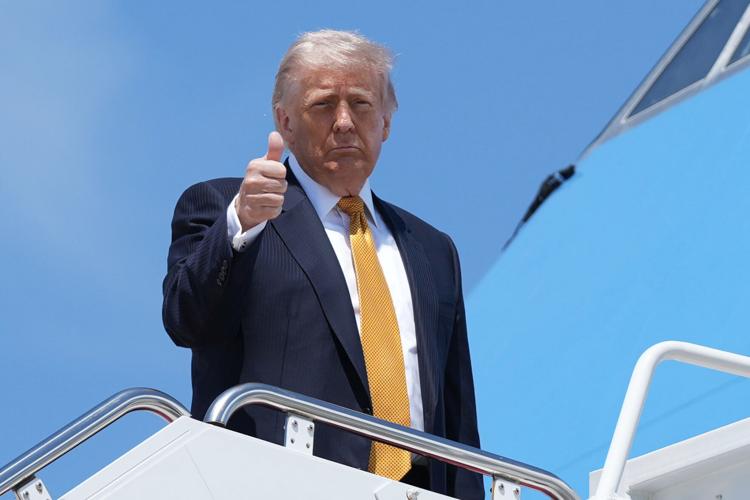
Trump Downplays Iran Tensions with Xi Ahead of High-Stakes Beijing Summit
When the leaders of the world’s two largest economies sit down together, every gesture is a signal, every omission a statement. As Donald Trump heads to Beijing for a pivotal summit with Chinese President Xi Jinping, the looming question isn’t just about trade or technology—it’s about whether Iran will become an unexpected wedge or a quietly managed side note.
In the days leading up to the meeting, Trump has deliberately softened the rhetoric on Iran, framing any U.S.-China differences over Tehran as minor wrinkles in an otherwise strong relationship. This is no accident. With billions of dollars in trade negotiations, the future of North Korean diplomacy, and the escalating tech rivalry all on the agenda, neither leader can afford to let Iran hijack the conversation.
But can two superpowers truly compartmentalize such a volatile issue? The answer will shape global oil markets, Middle Eastern stability, and the very framework of nuclear nonproliferation.
The Stakes in Beijing: More Than Just a Handshake
This summit is being billed as a high-stakes reset—or at least a tactical pause—in a relationship that has seesawed between cooperation and confrontation. Trump’s team has framed the meeting as an opportunity to “build on areas of mutual interest,” with Iran deliberately placed on the back burner.
China, meanwhile, enters the room with its own priorities:
- Trade imbalances and tariff de-escalation remain the top Chinese concern, with Beijing hoping to lock in concessions.
- North Korean denuclearization is a shared goal, but China wants a seat at the table, not just a supporting role.
- Technology competition—from 5G to semiconductors—is the quiet elephant, with both sides wary of escalation.
Against this crowded backdrop, Iran risks becoming a distraction neither side wants to tackle head-on. Yet ignoring it entirely could create dangerous blind spots.
Iran: A Historical Point of Contention
To understand why Iran is such a delicate topic, one only needs to look at the fundamental divergence in U.S. and Chinese policy:
The United States, under Trump’s previous administration and continuing with a “maximum pressure” approach, has pursued unilateral sanctions designed to choke off Iran’s oil revenues. Washington sees Tehran as a destabilizing force in the Middle East and believes economic isolation is the only path to negotiation.
China, by contrast, has remained one of Iran’s largest oil customers and a vocal opponent of extraterritorial sanctions. Beijing insists on the legitimacy of the Iran nuclear deal (JCPOA) framework and refuses to cut ties with Tehran simply because Washington demands it.
This isn’t a minor disagreement—it’s a clash of worldviews. Trump’s team is aware that pushing China too hard on Iran could poison trust on trade talks, while Xi knows that any public break with Washington over Iran would invite even more aggressive sanctions on Chinese entities.
Trump’s Calculated Minimization
The former president’s strategy of downplaying the Iran rift is both pragmatic and risky. By publicly stating that “we have a very good relationship with President Xi,” Trump is sending a clear message: this summit is not the place for ultimatums.
His calculation appears to be:
- Prioritize the broader agenda. Trade and technology offer bigger, more immediate economic wins than a hardline stance on Iran.
- Buy goodwill. By not pressing Xi on Iran, Trump can ask for concessions elsewhere—perhaps on intellectual property or market access.
- Keep the door open for later. Since Iran is not time-sensitive for the U.S. in the same way as trade deadlines, it can be revisited in a different forum.
However, critics argue that minimizing differences doesn’t resolve them. Iran’s nuclear progress continues, and China’s role as a buyer of Iranian oil undermines the very sanctions the U.S. has spent years building.
China’s Delicate Balancing Act
President Xi arrives in Beijing with his own tightrope to walk. On one hand, China values its strategic autonomy and has long resisted pressure to align its foreign policy with Washington. On the other hand, the Chinese economy is deeply intertwined with global markets—and a full trade war with the U.S. is a lose-lose scenario.
Beijing’s likely approach during the summit:
- Reiterate commitment to the JCPOA without directly confronting Trump’s position.
- Emphasize mutual economic benefits of continued oil trade with Iran, framing it as a matter of energy security rather than political defiance.
- Offer symbolic gestures—perhaps slowing purchases or increasing transparency—without making concrete promises.
The risk for China is that Trump’s “downplaying” today could become tomorrow’s leverage. If the U.S. feels deceived later, the blowback could be severe.
What the Beijing Summit Means for Global Energy and Security
The outcome of this meeting will ripple far beyond the conference room. Here’s what’s at stake:
Global Oil Markets: Any signs of a U.S.-China deal on Iran—or even a tacit agreement to look the other way—could stabilize crude prices. If China continues buying Iranian oil without obstruction, sanctions lose teeth. If it cuts back, Iran’s revenue stream tightens further.
Middle East Stability: A unified U.S.-China front (however unlikely) would put pressure on Iran. A divided front gives Tehran room to maneuver. Saudi Arabia, Israel, and other regional players are watching closely.
Nuclear Diplomacy: The JCPOA is already on life support. If China and the U.S. cannot even agree on a framework for discussing Iran’s nuclear program, prospects for any new deal vanish.
Personal Relationships: Trump and Xi have a history of alternating between public friendship and bitter recrimination. This summit could either reset the tone or worsen personal animosity—and that personal dynamic still matters in high-level diplomacy.
Key Takeaways for Readers
As the Beijing summit unfolds, keep these points in mind:
- Trump is strategically sidestepping Iran to preserve momentum on trade and security issues that he considers more urgent.
- China will likely avoid a direct confrontation, but won’t abandon its Iran relationship without a major quid pro quo.
- The global market reaction will offer the first real test of whether the downplaying act is genuine or just a postponement.
- No permanent resolution is expected. Iran will remain a point of friction that could flare up after the summit, depending on how other negotiations progress.
The truth is that in a world of superpowers, no single issue lives in isolation. Trade, oil, security, and ego are all braided together. Trump’s decision to downplay Iran with Xi may be smart diplomacy—or it may be the calm before a far noisier storm.
Stay tuned. The handshake in Beijing will be analyzed for weeks, but the real answers will come from what happens after the cameras leave. The world isn’t just watching the summit; it’s watching to see whether two giants can manage a disagreement without letting it consume everything else.

