
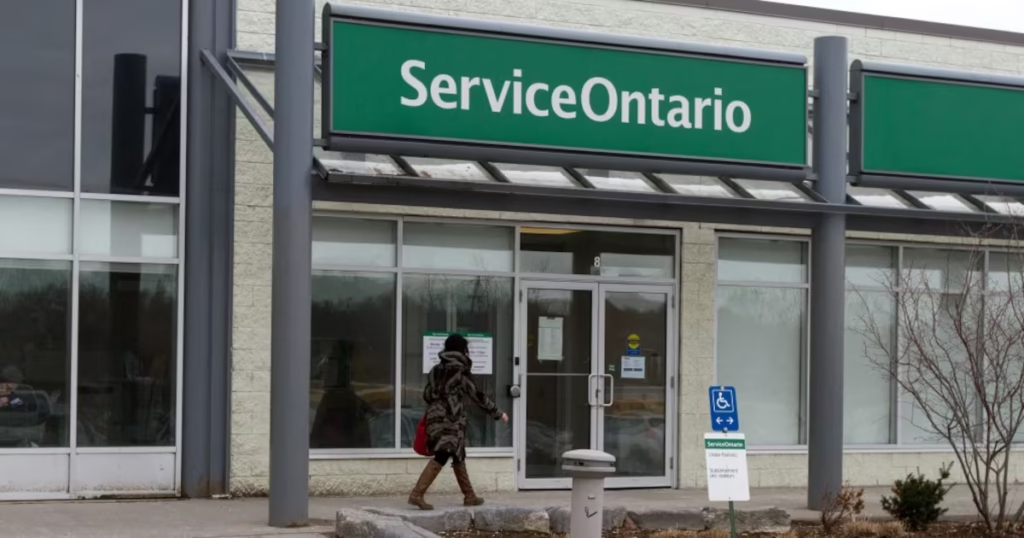
ServiceOntario Insider Fraud: Employee and Three Accomplices Charged in Vehicle Registration Scam
The integrity of Ontario’s vehicle registration system has come under scrutiny following the arrest of a ServiceOntario employee and three other individuals in connection with an elaborate fraud ring. The charges, stemming from a multi‑month investigation, allege that the insider used her position to process fraudulent vehicle transactions, enabling stolen or cloned cars to be legally registered. This case exposes a critical vulnerability in government service centers and raises urgent questions about oversight, training, and the growing sophistication of identity‑related fraud.
How the Alleged Fraud Worked
According to investigators, the scheme operated between 2022 and early 2024, leveraging inside access to the Ministry of Transportation’s databases. The ServiceOntario employee – whose identity has not been publicly released pending trial – is accused of bypassing verification protocols to register vehicles that had been reported stolen, or to issue permits for vehicles with tampered VINs (vehicle identification numbers).
Key methods believed to be used in the operation:
- VIN cloning: The fraud ring allegedly copied legitimate VINs from legally owned cars and placed them on stolen vehicles. The ServiceOntario employee then processed the registration as if the vehicle were the original.
- Fake documentation: The group is accused of fabricating bills of sale, safety certificates, and lien releases, all of which were accepted by the insider without proper scrutiny.
- Multiple transactions under false names: Stolen identities were used to register vehicles, making it difficult for police to trace ownership after the fact.
The three other charged individuals – described as “facilitators” – are believed to have sourced the stolen vehicles, provided false documents, and recruited unwitting buyers. Some of those buyers may have been innocent consumers unknowingly purchasing a vehicle with a fraudulent history.
The Scale of the Investigation
The probe was led by the Ontario Provincial Police’s (OPP) Auto Theft and Fraud Unit in partnership with ServiceOntario’s internal audit team. Investigators analyzed thousands of transactions over an 18‑month period before zeroing in on a pattern of anomalies: registrations that occurred outside typical hours, repeated use of the same employee ID for high‑risk vehicle types, and documents that failed basic consistency checks.
Breakdown of the charges:
- ServiceOntario employee: Fraud over $5,000, breach of trust, unauthorized use of a computer system, and uttering forged documents.
- Three accomplices: Conspiracy to commit fraud, possession of property obtained by crime, and identity theft.
The accused are scheduled to appear in court in mid‑2025. If convicted, they could face sentences ranging from several years to a decade in federal prison, especially given the breach‑of‑trust charge against the government worker.
Why This Case Matters for Every Ontario Driver
Vehicle fraud is not a victimless crime. It affects insurance premiums, road safety, and the resale market. When a stolen car is re‑registered through fraud, the actual owner remains liable for tickets, tolls, and even accidents caused by the criminal driver. The resale value of legitimate vehicles can also drop if buyers become wary of VIN matching.
Red Flags for Consumers
While the investigation focused on an inside job, experts warn that similar schemes often rely on consumer complacency. Ontario residents who purchase used vehicles should watch for these warning signs:
- Price too good to be true – deep discounts on late‑model vehicles often signal a stolen or cloned car.
- VIN inconsistencies – check that the VIN on the dashboard matches the door pillar, the ownership documents, and the vehicle history report.
- Pressure to complete the sale quickly – fraudsters prefer cash transactions and avoid paperwork delays.
- Out‑of‑province plates or temporary permits issued by an unknown ServiceOntario location.
Consumers can also request a UVIP (Used Vehicle Information Package) from ServiceOntario, which shows lien and registration history. However, as this case demonstrates, even official records can be corrupted from the inside.
Systemic Gaps: What Failed?
Industry fraud analysts point to several systemic weaknesses that allowed this scheme to persist for so long.
Lack of Segregation of Duties
In many ServiceOntario centers, a single employee can access both the registration and permit‑issuing modules without supervisor approval for high‑value transactions. The accused allegedly processed entire transactions alone, with no second‑pair‑of‑eyes requirement for vehicles valued over $50,000.
Outdated Verification Technology
While the government has invested in digital odometer checks and VIN scanning, the system still relies heavily on manual document review. Fraudsters have become adept at creating forged documents that pass a cursory glance by a busy counter worker.
Insufficient Whistleblower Protections
Several former ServiceOntario employees have told media that they noticed irregularities but were discouraged from reporting because of a “team culture.” Anonymous reporting channels exist, but few employees use them for fear of retaliation.
What ServiceOntario Is Doing Now
In response to the charges, the Ministry of Public and Business Service Delivery announced immediate changes:
- Mandatory two‑factor authentication for any transaction involving a VIN change or a permit replacement.
- Random audits of 10 % of all registration transactions, doubled from the previous 5 %.
- Enhanced training for all counter staff on identifying fake safety certificates and cloned VINs.
- Increased collaboration with the Canadian Police Information Centre (CPIC) to flag stolen vehicles in real time.
Critics, however, argue that these measures are reactive. “The system should have caught this pattern years ago,” says fraud prevention specialist Dr. Anika Sharma, author of *The Hidden Cost of Auto Theft*. “When a single employee processes 200 high‑risk transactions in a month with zero rejections, that’s a statistical anomaly that any basic analytics tool would flag. The fact that it took a police investigation says volumes about the ministry’s data governance.”
The Bigger Picture: Auto Theft Epidemic in Ontario
This incident is the latest in a series of revelations about vehicle fraud in the province. Auto theft rates in Ontario rose by 72 % between 2020 and 2023, according to the Équité Association. Stolen cars are often shipped overseas or re‑registered domestically using fraudulent means.
How ServiceOntario fits into the ecosystem:
- It is the sole issuer of vehicle permits and plates in the province.
- It holds the golden copy of all VIN and ownership records.
- Any compromise at this level creates a cascade of fraudulent titles that can take years to unwind.
The current case may only represent the tip of the iceberg. Police believe other ServiceOntario employees may have been involved but have not yet been identified. A dedicated hotline has been set up for whistleblowers, offering immunity from prosecution for those who come forward early.
What Happens Next?
Legal proceedings are expected to be lengthy. The defense may argue that the employee was coerced or that the computer system’s logs are unreliable. However, the crown’s case is bolstered by parallel financial records showing unexplained deposits into the employee’s personal accounts totaling over $180,000 during the period of the alleged fraud.
Recommendations for Policymakers
Fraud experts have called for a complete overhaul of the way ServiceOntario handles high‑stakes transactions. Recommendations include:
- Implementing biometric login for all employees accessing vehicle databases.
- Creating a centralized fraud detection unit that cross‑references registration data with insurance claims and police reports.
- Mandating video recording of all customer‑facing transactions at ServiceOntario centers.
None of these measures are cheap, but the cost of inaction is far higher. Each fraudulent registration facilitates other crimes, including drug trafficking and violent offenses committed with stolen vehicles.
Final Thoughts from an Industry Perspective
The ServiceOntario employee charged in this scam is a stark reminder that fraud prevention is only as strong as the weakest link in the chain. While technology can flag suspicious behavior, human oversight – and the willingness to act on red flags – remains irreplaceable. For consumers, the lesson is clear: trust but verify. Even an official ServiceOntario registration may no longer be a guarantee of a vehicle’s history.
As the case unfolds, eyes will be on the court to see whether the full extent of the network is exposed. Meanwhile, every Ontario driver should double‑check their own vehicle’s paper trail. A few minutes of verification today could save thousands of dollars – and a world of legal trouble – tomorrow.
Stay informed. Stay vigilant. And always question the paper trail.

