
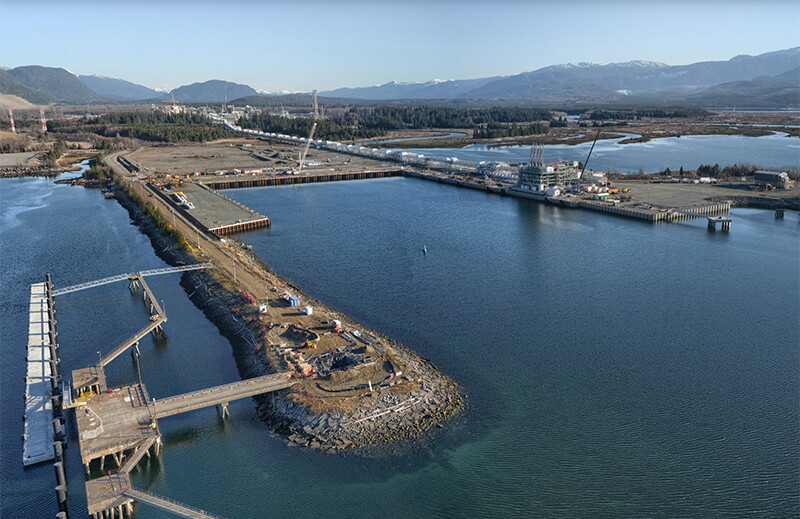
Canada LNG Project Reaches Historic Investment Milestone
Canada has just approved a $33 billion private sector investment that will reshape its energy exports for decades to come. The LNG Canada Phase 2 expansion project reached its final investment decision in September 2026, unlocking transformative growth for the country’s liquefied natural gas sector and creating thousands of jobs across British Columbia.
A Record-Breaking Investment for Canada
The $33-billion investment in LNG Canada Phase 2 ranks as the second-largest single private investment in Canadian history. This milestone represents far more than a corporate decision—it signals global confidence in Canada’s ability to execute major infrastructure projects and deliver energy to international markets reliably.
The facility, located in Kitimat, British Columbia on the traditional territory of the Haisla Nation, will double the terminal’s export capacity to 28 million tonnes of LNG annually. When Phase 1 began exporting low-carbon LNG in June 2025, it marked the first time LNG had ever been exported directly from Canada to customers worldwide.
How This Project Came Together
The path to this investment decision began in September 2025, when Canada’s government referred LNG Canada Phase 2 to the Major Projects Office (MPO). Over the following year, the MPO provided dedicated support to move the project toward approval and construction, working closely with British Columbia and industry partners.
The project is a joint venture involving Shell Canada (40%), PETRONAS (25%), PetroChina (15%), Mitsubishi Corporation (15%), and KOGAS (5%). These global partners bring technical expertise, natural gas supply access, and direct connections to international markets.
Jobs and Economic Impact
LNG Canada Phase 2 will create more than 4,000 direct jobs during the construction phase alone. Beyond employment, the project has already awarded nearly $5 billion in contracts and procurement to First Nations and local businesses across the region, demonstrating a commitment to local economic participation from the earliest stages.
Coastal GasLink Phase 2, a companion project led by TC Energy, will add infrastructure capacity to support the expanded LNG terminal. This $2 billion-plus investment will double the existing 670-kilometre pipeline’s capacity through new compressor stations and facility upgrades, creating over 2,000 jobs when construction begins in 2027.
Indigenous Partnership at the Core
The project advances historic Indigenous equity opportunities through an agreement with MNT Investments LP, representing the Gitga’at, Gitxaála, Haisla, Kitselas, and Kitsumkalum Nations. The five First Nations have an option to invest up to $1 billion to acquire majority ownership of the facility’s new 225,000-cubic-metre Phase 2 LNG storage tank.
This sale-leaseback structure ensures long-term revenue streams for local communities and establishes First Nations as core infrastructure owners and long-term economic partners on the North Coast. To date, the project has awarded more than $4.9 billion in contracts and subcontracts to Indigenous-owned and local area businesses in British Columbia.
Environmental Standards and Clean Energy
Leveraging Canada’s clean electricity advantage, greenhouse gas emissions from LNG Canada’s Kitimat operation are expected to be lower than those of any facility of a similar size operating anywhere in the world today. This positions Canadian LNG as a competitive choice for countries looking to transition away from coal-fired power generation.
By displacing coal-fired electricity in overseas markets, the project directly supports international climate goals while expanding Canadian exports of low-carbon energy. The facility’s location on an ice-free harbour provides year-round shipping access, allowing rapid transport of LNG to partners in Asia and Europe.
Strategic Trade and Energy Security Benefits
The expansion strengthens Canada’s trade ties across the Indo-Pacific and enhances the country’s role as a reliable energy supplier to global markets. At a time of geopolitical uncertainty, the project demonstrates Canada’s ability to deliver secure, affordable energy to international partners.
The Western Canada Sedimentary Basin, one of the world’s most prolific natural gas resource basins, supplies the feedstock for the LNG Canada facility. The Coastal GasLink Phase 2 expansion will allow Canada to maximize the value of these resources by increasing pipeline capacity to move natural gas from Dawson Creek to the LNG terminal.
The Major Projects Office Role
The Major Projects Office played a critical role in moving this project from referral to final investment decision within approximately one year. As a dedicated convener and single point of contact for projects of national interest, the MPO brings together federal government departments and agencies to establish clear pathways through regulatory processes.
The MPO combines public and private sector experience to support decision-making by proponents, Indigenous Peoples, investors, and governments. This streamlined approach reflects Canada’s commitment to maintaining high environmental and social standards while reducing delays in project approvals.
Coastal GasLink’s Proven Track Record
The Phase 1 Coastal GasLink pipeline construction created over 25,000 jobs and was completed with support from 20 Indigenous communities along the project route. Long-term agreements remain in place and continue to provide benefits to these communities. Over the pipeline’s lifetime, it has awarded more than $1.8 billion in contracts to Indigenous and local businesses and invested more than $13 million in local communities, non-profits, and sponsorships.
What Comes Next
Construction on Coastal GasLink Phase 2 is expected to begin in 2027, creating the pipeline infrastructure needed to transport increased natural gas volumes to the expanded LNG facility. The combined investments demonstrate momentum in Canada’s major projects sector and signal investor confidence in the country’s regulatory environment and execution capability.
For communities, businesses, and workers in British Columbia, the next phase involves mobilizing for construction, finalizing workforce training programs, and establishing local supply chains. Indigenous nations involved in the project will begin implementing their equity investments and governance participation agreements.
This $33-billion investment proves that Canada possesses both the natural resources and the institutional capacity to compete globally in energy infrastructure. The project’s success will likely influence decisions on other major Canadian projects currently under review or in development, from ports and mines to energy corridors and trade infrastructure.