
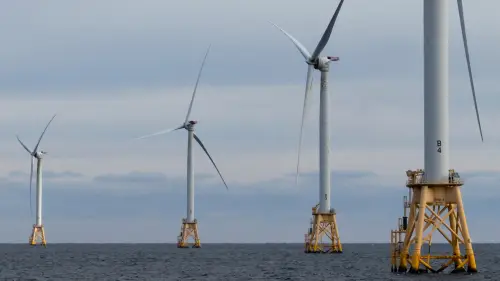
Nova Scotia Moves Forward With Offshore Wind Development
Nova Scotia could eventually produce enough offshore wind electricity to meet the province’s own needs while supplying additional power to other Canadian markets. Turning that possibility into a functioning energy industry, however, requires detailed research, infrastructure planning, and substantial private investment.
On October 15, 2026, the Government of Canada announced a $100-million commitment to advance offshore wind development in Nova Scotia. The announcement, made in Dartmouth, brings federal support to Premier Tim Houston’s Wind West initiative, a plan to develop large-scale offshore wind farms and connect their electricity to customers.
The investment is intended to help collect essential information about wind conditions, ocean environments, and potential transmission routes before major construction decisions are made. It is an early step toward establishing a new renewable energy industry in Atlantic Canada.
What the $100 Million Investment Will Fund
The funding is focused on research, data collection, and technical analysis rather than the immediate construction of a completed offshore wind farm. This distinction matters because developers need reliable information about the marine environment before they can accurately assess costs, engineering requirements, and project risks.
According to Natural Resources Canada, $5 million of the federal commitment will support the deployment of floating light detection and ranging, or FLiDAR, buoys. These instruments gather information about offshore wind speeds, weather, and ocean conditions that can help developers evaluate potential turbine locations.
The government is also providing nearly $3 million to Net Zero Atlantic, a regional research organization, to expand modelling of electricity transmission from offshore wind developments. The work will examine potential connections from Nova Scotia to markets in Quebec, Ontario, and beyond, alongside marine survey work to support the planning of transmission cable routes.
These activities address two important questions: where offshore wind facilities could operate effectively and how the electricity they generate could reach customers. Better data can help investors, engineers, regulators, and governments evaluate proposals before committing to expensive construction.
The remainder of the $100-million commitment supports the broader work required to advance offshore wind development. The announcement does not mean that the full amount is being spent directly on building turbines.
Wind West Is Central to Nova Scotia’s Energy Plans
Wind West is a Nova Scotia-led initiative designed to develop offshore wind farms and connect their output to electricity customers. The project forms part of the federal government’s Atlantic Energy Strategy, which aims to use the region’s energy resources and strengthen electricity connections between provinces.
The strategy includes offshore and onshore wind, hydroelectricity, and nuclear power as potential contributors to a stronger regional electricity system. Wind West is intended to help Nova Scotia develop a substantial supply of zero-emissions electricity, with additional power potentially transmitted outside the province.
The federal government referred the Atlantic Energy Strategy to its Major Projects Office in September 2025. The $100-million announcement builds on that earlier step by supporting the research and planning needed to move offshore wind proposals closer to development.
Nova Scotia’s government has set a goal of licensing up to five gigawatts of offshore wind energy by 2030. That is a development target, not confirmation that five gigawatts of generating capacity will already be operating by that date.
Achieving the goal will require more than identifying suitable wind resources. Developers must prepare competitive proposals, assess environmental and engineering conditions, establish transmission arrangements, and secure the financing necessary to build and operate large marine energy facilities.
Why Nova Scotia Is Attracting Offshore Wind Interest
Nova Scotia’s Atlantic coastline offers access to strong offshore winds, while its maritime industries provide an existing base of marine expertise. The province also has experience with offshore oil and gas operations, which may offer transferable skills in areas such as marine logistics, engineering, vessel operations, and challenging offshore working conditions.
These advantages could help support a new supply chain involving ports, manufacturing, construction, marine services, engineering, and skilled trades. However, the scale of those opportunities will depend on whether proposed projects progress through development and attract the investment needed for construction.
The Nova Scotia government says the first phase of offshore wind development has the potential to attract $60 billion in private-sector investment. That figure represents anticipated investment potential, not money already committed or spent.
The federal government has also pointed to the wider international market for offshore wind. Natural Resources Canada noted that nearly 30 countries are ahead of Canada in offshore wind development, highlighting the opportunity to build domestic expertise while the global industry continues to expand.
For Atlantic Canada, the economic case includes the possibility of creating jobs, attracting suppliers, and developing electricity exports. Yet these benefits depend on the project’s eventual design, costs, approvals, financing, and ability to deliver electricity at competitive prices.
What the Announcement Means for Jobs and Electricity
The $100-million commitment is intended to reduce uncertainty during the early stages of development. By providing better information about wind resources and transmission options, the research can help project developers prepare proposals and determine whether specific locations and infrastructure plans are technically and financially viable.
The investment may also support workforce planning and give businesses a clearer picture of the services and equipment future projects could require. Ports, marine contractors, engineering firms, and skilled trades could all have roles if offshore wind development advances into construction.
For electricity customers, the longer-term objective is to increase the availability of clean power and potentially make additional electricity available to other regions. However, the announcement does not establish a date when Wind West will begin delivering electricity or guarantee lower utility bills.
New transmission infrastructure will be particularly important if Nova Scotia intends to export power. Connecting offshore generation to provincial grids and markets farther away requires careful technical planning, regulatory coordination, and investment in cables and related facilities.
What Happens Next for Offshore Wind in Canada?
One of the next major milestones is the planned call for bids from offshore wind developers. Natural Resources Canada said the Canada–Nova Scotia Offshore Energy Regulator is expected to launch that process in winter 2027. The information gathered through the federal investment is intended to help companies prepare their proposals.
For readers following the project, the most useful developments to watch are the publication of bidding requirements, updates on offshore wind measurements, transmission studies, and announcements identifying successful project proposals. These will provide a clearer picture of which plans are progressing beyond the research stage.
Businesses interested in participating can also monitor official announcements from Natural Resources Canada, the Government of Nova Scotia, and the Canada–Nova Scotia Offshore Energy Regulator for procurement information and project updates.
Nova Scotia’s offshore wind ambitions are now backed by a specific federal research commitment, but the larger undertaking remains a multistage development process. The next test will be whether the new data and planning work help attract developers, establish viable transmission connections, and turn Wind West’s long-term clean-energy ambitions into projects that can be built and operated.