
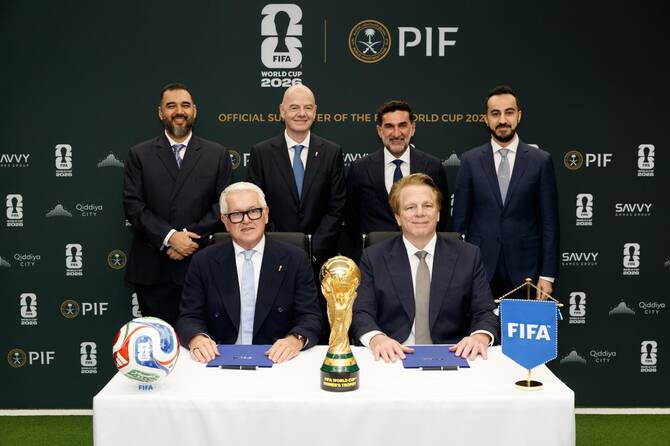
Saudi Sovereign Wealth Fund Backs FIFA World Cup 2034 as Official Partner
A Strategic Alliance That Reshapes Global Football Financing
The landscape of international football sponsorship just shifted dramatically. Saudi Arabia’s Public Investment Fund (PIF) has officially signed on as a principal supporter of the FIFA World Cup, cementing a partnership that extends far beyond the 2034 tournament hosted on Saudi soil.
This isn’t a run-of-the-mill sponsorship agreement. It’s a deliberate, calculated move by one of the world’s most aggressive sovereign wealth funds to embed itself at the very core of football’s premier event. For FIFA, it secures a financial anchor with virtually unlimited resources. For PIF, it’s the culmination of years of sports investment strategy — from Newcastle United to LIV Golf — now directly tied to the World Cup brand.
What This Deal Actually Means for Football Governance
Let’s break down the mechanics. By becoming an official supporter, PIF gains premium brand exposure across FIFA’s global ecosystem, not just during the 2034 tournament but in the years leading up to it. This is a long-term play. The fund isn’t just buying a logo on a backdrop; it’s buying influence over how mega-events are structured, marketed, and monetized.
For tournament organizers, the benefit is clear: financial certainty. Major events face escalating costs, and having a state-backed investment vehicle as a partner eliminates many of the fundraising risks that plagued previous World Cups. This model could set a precedent for future host nations — why rely on scattered corporate sponsors when your own sovereign fund can anchor the entire program?
The Broader Strategy Behind PIF’s Sports Empire
PIF’s portfolio reads like a who’s-who of global sports properties:
- Newcastle United FC — majority ownership of a Premier League club
- LIV Golf — the controversial but well-funded rival to the PGA
- eSports and gaming — significant stakes in competitive gaming platforms
- Entertainment and hospitality — partnerships with live-event giants
Adding the FIFA World Cup to this list accomplishes three critical objectives:
1. It elevates PIF from a club-level investor to a global tournament financier.
2. It aligns the fund with FIFA’s regulatory and commercial apparatus, not just individual teams.
3. It reinforces the Kingdom’s soft-power ambitions through sport — a strategy that has drawn both praise and criticism.
Why This Partnership Is Different from Other Sponsorships
Most World Cup sponsors are consumer brands — Coca-Cola, Visa, Adidas. They sell products. PIF doesn’t sell anything. It’s an investment fund. That distinction matters because it shifts the relationship from commercial transaction to strategic alliance.
The fund’s involvement will likely extend beyond marketing. Expect PIF to finance stadium infrastructure, fan technology, and transportation networks for the 2034 tournament. These are capital-intensive projects that traditional sponsors rarely touch. PIF can fund them directly, creating a seamless link between the host nation’s development goals and the tournament’s operational needs.
The Financial Calculus
While exact terms remain undisclosed, industry analysts estimate the deal could be worth hundreds of millions of dollars over multiple cycles. For FIFA, this is particularly valuable as it battles declining interest in certain markets and seeks to lock in revenue streams far in advance.
For PIF, the return is harder to quantify but arguably more significant. The fund’s brand value increases globally, and its positioning as a serious, long-term sports investor becomes undeniable. This matters as Saudi Arabia competes with other Gulf states — namely Qatar and the UAE — for dominance in the sports investment landscape.
What Critics Will Say — and Why It Might Not Matter
Sovereign wealth funds sponsoring major sporting events inevitably raise questions about sportswashing — the use of sports investments to distract from human rights records or political controversies. Critics will point to Saudi Arabia’s treatment of migrant workers, restrictions on women’s rights, and the 2018 killing of journalist Jamal Khashoggi as reasons to scrutinize this partnership.
But the reality is that FIFA has shown limited appetite for moral conditions on sponsorship. The governing body needs capital, and PIF has it in abundance. As long as the checks clear, the relationship will deepen.
From a purely business perspective, the partnership makes sense. Sovereign wealth funds are natural partners for mega-events because they think in decades, not quarters. They can absorb losses that public companies cannot. They can also leverage their government connections to streamline permitting and construction.
The Ripple Effect on Future Tournaments
This deal could change how other host nations approach financing. Instead of relying solely on traditional sponsors, future hosts may create their own national investment vehicles to back World Cup bids. The 2030 World Cup — co-hosted by Spain, Portugal, and Morocco — will be closely watched to see if any of those countries follow Saudi Arabia’s lead.
For now, PIF’s move sets a new benchmark. The fund is not just supporting a tournament; it’s owning the narrative around the world’s most-watched sporting event on its own soil.
What Comes Next for Football Fans
Expect a steady stream of announcements over the next nine years. PIF will likely partner with tech firms to develop AI-powered fan experiences, energy companies to build sustainable stadiums, and media conglomerates to control broadcast rights across the Middle East and North Africa.
For fans, this means a World Cup that feels vastly different from previous editions — more digitally integrated, more commercially aggressive, and more tightly aligned with the host nation’s economic ambitions. Whether that’s a good thing depends on your perspective.
Bottom Line: A Win-Win on Paper
FIFA gets financial stability and a committed partner. PIF gets global prestige and a direct stake in the tournament it will host. The partnership is logical, inevitable, and likely to be profitable for both parties.
The bigger question is whether this model — where a single sovereign fund controls both the host nation’s economy and the tournament’s sponsorship — will concentrate too much power in one place. That debate will unfold over the next decade.
For now, the deal is done. And it’s a clear signal that the future of major event financing belongs to state-backed capital.
What do you think? Share your perspective in the comments below.

