
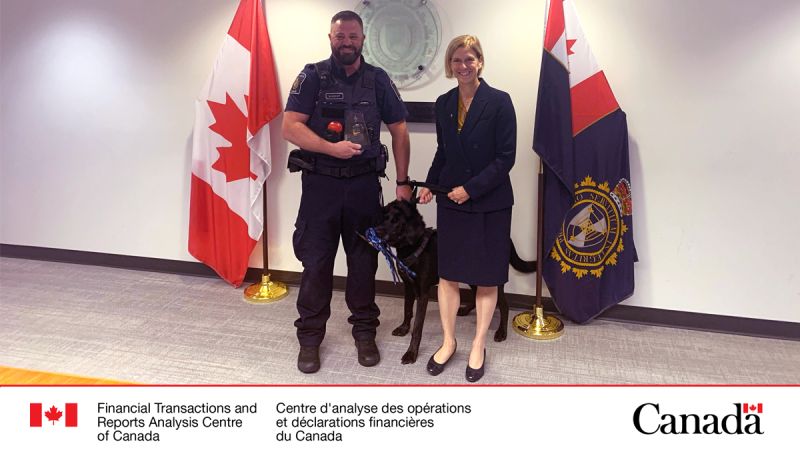
Sarah Paquet Steps Down as Director of Canada’s Anti-Money Laundering Watchdog
The Canadian financial intelligence community is bracing for a significant leadership vacuum. Sarah Paquet, the Director of the Financial Transactions and Reports Analysis Centre of Canada (FINTRAC), has announced her departure, marking the end of a tenure defined by aggressive modernization and heightened enforcement.
This is not merely a routine retirement; it represents a strategic inflection point for an agency that has long been viewed as a sleeping giant in the global fight against financial crime.
Under Paquet’s watch, FINTRAC shed its reputation as a passive recipient of suspicious transaction reports. She forced the financial sector to take compliance seriously, issuing penalties that made headlines and sent a clear message: the era of “check-the-box” anti-money laundering (AML) programs was over.
The Context Behind the Exit
While the official statement from FINTRAC frames this as a standard career transition, the timing is anything but neutral.
Canada is currently under the microscope of the Financial Action Task Force (FATF), the global standard-setter for AML protocols. The country is desperate to avoid a grey-listing, which would cripple its international banking reputation.
Paquet’s departure comes at a moment when the agency needs continuity the most. The groundwork she laid—specifically around data sharing and technological overhaul—is only just beginning to bear fruit.
The risk now is that a change in leadership could slow momentum, allowing bad actors to exploit the transition period.
Key Achievements of the Paquet Era
To understand the gravity of this departure, one must look at the structural changes she implemented:
- Technological Overhaul: She pushed FINTRAC away from outdated, paper-based systems toward a digital-first intelligence platform. This allowed for faster analysis of complex transaction patterns.
- Record Enforcement: Under her leadership, FINTRAC levied historic fines against major Canadian banks and money services businesses, including penalties in the millions for non-compliance with reporting obligations.
- Real Estate Focus: She aggressively targeted the real estate sector, identifying it as the primary vehicle for laundering illicit cash from the drug trade and fraud.
- Cryptocurrency Regulation: Paquet brought virtual asset service providers into the regulatory fold, forcing crypto exchanges to register and report suspicious transactions for the first time.
The Successor’s Impossible Inbox
The next Director of FINTRAC will inherit a complex, high-stakes portfolio. The search for a replacement is arguably the most critical hiring decision the Department of Finance will make this year.
The new leader must immediately address three pressing challenges without missing a beat.
1. The Real Estate Money Laundry
Despite FINTRAC’s increased scrutiny, the Canadian real estate market remains a safe haven for global illicit wealth.
The Beneficial Ownership Registry, a tool Paquet championed, is still in its infancy. The successor must find a way to penetrate the opaque shell company structures that hide the true owners of luxury properties in Vancouver and Toronto.
2. The Crypto Conundrum
Digital assets pose a unique threat. While Paquet successfully brought centralized exchanges under FINTRAC’s purview, the real danger lies in decentralized finance (DeFi) platforms and unhosted wallets.
The next director must be a technologist as much as a regulator, understanding blockchain analytics to trace funds that move outside the traditional banking system.
3. Data Privacy vs. Intelligence Sharing
This is the most delicate balance. Paquet worked hard to build trust with banks and law enforcement, but privacy advocates remain wary of FINTRAC’s expanding powers.
The new director must navigate the political minefield of information sharing without violating the Charter of Rights and Freedoms. A misstep here could derail major investigations.
What This Means for the Financial Sector
For compliance officers and financial institutions, Paquet’s departure is a double-edged sword.
On one hand, there is the potential for a cooling-off period. A new director may take months to find their footing, potentially easing the pressure on reporting entities.
On the other hand, the structural changes Paquet implemented are now institutionalized. The administrative monetary penalty regime is not going away.
Banks should expect the new leadership to maintain the same high bar for compliance, if not raise it, in an effort to appease the FATF.
- Expectations for Banks: Reporting entities should not expect any leniency during the transition. If anything, the Department of Finance will want to demonstrate that FINTRAC remains effective regardless of who is at the helm.
- The Real Estate Sector: Real estate agents and lawyers should anticipate continued scrutiny. The new director will almost certainly prioritize the housing market to prove that the agency is serious about tackling this vulnerability.
A Defining Moment for Canadian Security
Sarah Paquet’s departure is not just a personnel change; it is a stress test for Canada’s financial intelligence system.
The country has spent years trying to shake off the reputation of being a weak link in the global AML chain. Paquet was the face of that rehabilitation.
The question now is whether her successor can sustain the trajectory. There is a narrow window before the FATF delivers its final assessment.
A weak or inexperienced director could set the agency back years, leaving Canada vulnerable to the very criminal networks Paquet worked to dismantle.
Final Thoughts
The financial world will be watching closely.
The next appointment will signal whether Canada is serious about cleaning up its act, or whether this was just a temporary crackdown.
For now, the spotlight shifts from the outgoing director to the empty chair she leaves behind.